Outdoor Science: The Homeschool Advantage You're Not Using
Most science curricula are indoor, textbook-based affairs. The outdoor world offers something they cannot: real science, happening in real time, available every day.
A child who can name all the parts of a flower from a textbook diagram, but has never looked closely at an actual flower, has learned something. But not much.
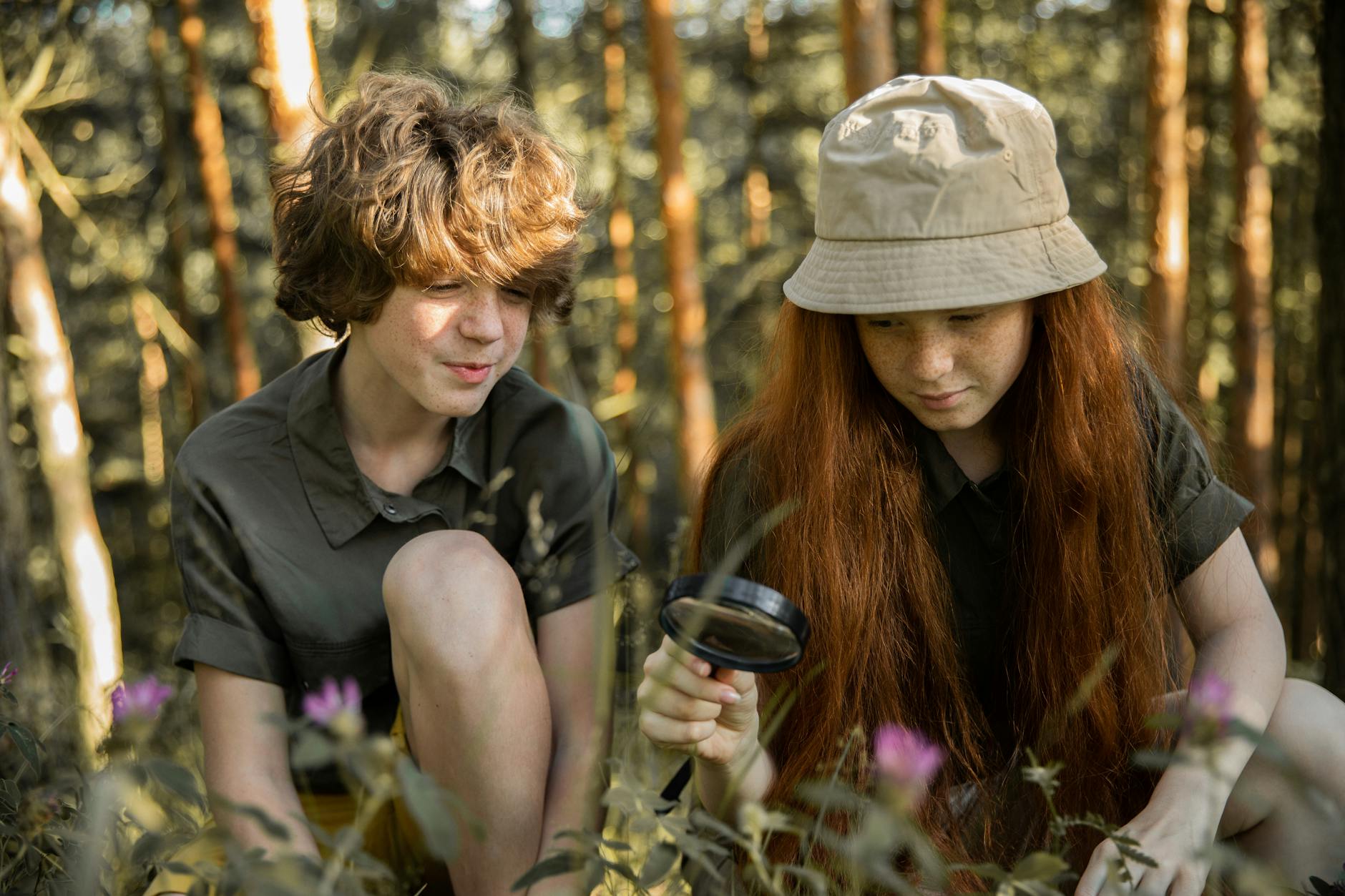
A child who has spent an hour with a magnifying glass looking at the interior structure of a dandelion has learned something different: how to see. And what they see has connected to the real world in a way that no diagram can replicate.
Outdoor science is not a supplement to curriculum. For homeschool families, it can be the curriculum.
What Outdoor Science Teaches
Observation as a skill. The ability to look carefully and notice accurately is the foundation of all scientific work. It is also the thing most commonly bypassed in indoor, textbook-based science instruction. You cannot observe a drawing of a beetle. You can observe a beetle.
Ecological literacy. Understanding how living things interact, depend on each other, and change over time is only possible through sustained contact with actual ecosystems. A child who visits the same pond or the same woods over four seasons develops an ecological understanding that no textbook provides.
The scientific method in practice. Real questions in real environments: Why do more slugs appear after rain? What is eating the leaves on this plant? Where do the monarch butterflies go in October? These questions are answerable through observation, hypothesis, and repeated observation — the scientific method, lived rather than described.
Wonder. This is the thing that is hardest to manufacture and most important to protect. A child who regularly encounters the strangeness of the natural world — the iridescent wings of a dragonfly, the precision of a spider's web, the way an ant colony organizes its traffic — retains something that no classroom can produce: genuine astonishment at how the world works.
Getting Started
You do not need a nature preserve or a wilderness area. You need:
- Whatever outdoor space you have regular access to
- A consistent practice (this is the hard part)
- Basic equipment: a magnifying glass, a field guide for your region, a journal
Start with what is nearest. The backyard. The park down the street. The lot between buildings.
The naturalist John Muir spent years studying a single valley. The insects, plants, and weather patterns accessible in any small outdoor space are sufficient for years of study.
We live in a suburban neighborhood. Our outdoor science is done in a small backyard, a local park about a ten-minute walk away, and a retention pond at the edge of the subdivision that most people walk past without looking at. In three years of paying attention to those three places, my kids have documented twenty-six bird species, tracked the phenology of three different trees, observed a complete monarch caterpillar-to-butterfly cycle, and maintained a small weather journal. None of this required anything beyond regular presence.
The Equipment Worth Having
The basics are enough. More equipment does not produce more learning.
A magnifying glass. A decent handheld loupe (10x) costs about eight dollars. It opens the world of small things in a way that nothing else does. Soil, bark, seeds, insect wings, leaf surfaces — all transformed.
A regional field guide. One for birds, one for plants, one for insects if insects are a particular interest. The Peterson Field Guides series and the National Audubon Society guides are both reliable. A single good field guide is worth more than a shelf of mediocre ones. Buy the one specific to your region.
A nature journal. Plain blank paper works fine. The journal is for recording: what was seen, where, when, and any observations about behavior or condition. Drawings do not need to be beautiful. They need to be accurate enough to capture what was noticed.
Binoculars. Optional for young children. Worth adding around age ten or eleven for a child who has developed genuine interest in birds. A basic 8x42 pair runs fifty to eighty dollars and will last years.
A thermometer, rain gauge, and compass. Weather observation and direction add additional layers to outdoor science without significant cost.
What you probably do not need: a microscope (useful but not essential), an expensive camera (a phone camera works for documentation), any kind of structured kit or pre-packaged outdoor curriculum.
Connecting Outdoor Science to Curriculum
Biology: Every outdoor observation is biology. Insects, plants, fungi, birds, soil organisms — the living world is the laboratory.
A concrete connection: after reading about photosynthesis in a textbook, go outside and find two leaves from the same plant — one that has been in full sun and one that has been partly shaded. Compare them. Are they the same size? The same color? The same thickness? This is not a scheduled experiment. It is an observational question that takes five minutes and connects the abstract concept to a real object.
Earth science: Soil composition, weather patterns, erosion, seasonal change — available in every outdoor environment.
Physics: Water flow, sound, light and shadow, heat retention — physics that can be observed directly without equipment.
Chemistry: Decomposition, plant nutrition, the carbon cycle — observable in any outdoor setting over time.
The skill is not creating a curriculum around outdoor observation. It is recognizing the curriculum that is already there and giving children the time to encounter it.
The Seasons as Curriculum
The single most powerful structure for outdoor science is sustained observation of the same place across the seasons.
This means returning to the same location, regularly, for months or years. The same tree. The same pond. The same patch of meadow or woods.
What happens when you do this: change becomes visible. The tree that looks completely uniform in January reveals its first buds in February, flowers in April, full leaf canopy in June, seed dispersal in September. A child who has watched this cycle once has an experience of botanical change. A child who has watched it three times has scientific data — is this year's leafing earlier than last year's? What does that correlate with in the winter temperature records?
This kind of longitudinal observation is rare in conventional schooling because classrooms rotate topics and teachers change annually. It is a natural advantage of homeschooling that most families underuse.
A Simple Weekly Outdoor Science Practice
Thirty minutes outdoors, twice a week, with a journal.
The only requirement: attention. Put down the phone. Be present. Model the looking that you want the child to develop.
"What do you notice?" is often enough. "What is this?" as a genuine question rather than a test. "I wonder why..." as an actual expression of curiosity rather than a leading question.
The child who sees an adult genuinely curious about the natural world learns something that no curriculum teaches: that wonder is appropriate. That not knowing is the beginning, not the failure. That the world repays attention.
One specific suggestion for starting: on the first outdoor session, spend the entire time in one square meter. Mark the boundaries with sticks or string. Do nothing except look. Look at the soil, the plants, the insects, the light. Count species. Count individuals. Notice what is moving and what is not. A single square meter of outdoor space, examined with full attention, is usually enough content for an hour of observation.
What to Do When Kids Resist
Some children come to outdoor time naturally. Others find it boring, especially at first, especially if they are used to screens or structured activities.
A few approaches that have worked for us:
Give them a mission. "Find five different kinds of seeds" is more engaging than "go look at nature." The mission creates a frame for attention.
Let them bring a sketchbook with no requirement to draw nature. Some children who resist "nature study" will spend an hour outside if they are allowed to draw anything they want. They usually end up drawing what they notice.
Combine outdoor time with another interest. A child who loves to build might spend outdoor time building a dam in a small stream or constructing a shelter from sticks. This is outdoor science. The engineering thinking, the interaction with materials, the observation of water flow — all of it counts.
Do not force narration or journaling in the first weeks. Build the outdoor habit before adding the documentation practice.
Nature journaling provides the documentation practice that complements outdoor observation. And nature study for beginners covers the full outdoor science approach in more depth.
Written by
The High Vibe Homeschool Team
We are a homeschool family that has been doing this for seven years across three kids. We write about what we have actually tried, what failed, what surprised us, and what we would do again. No credentials. Just lived experience.
ENJOYED THIS ARTICLE?
Get more like it every week
Real homeschool life, in your inbox.
Keep Reading
More in Daily Life
 Daily Life
How to End the Homeschool Year Well
The end of the homeschool year deserves more than quietly stopping. Here is how we close out the year intentionally — what we review, what we celebrate, and how we rest well before the next one begins.
 Daily Life
Homeschool Summer: How to Rest Without Losing Everything You Built
Summer in a homeschool is not the same as summer vacation. Here is how we structure ours — enough rest to restore everyone, enough continuity to make September feel like a continuation rather than a restart.
 Daily Life
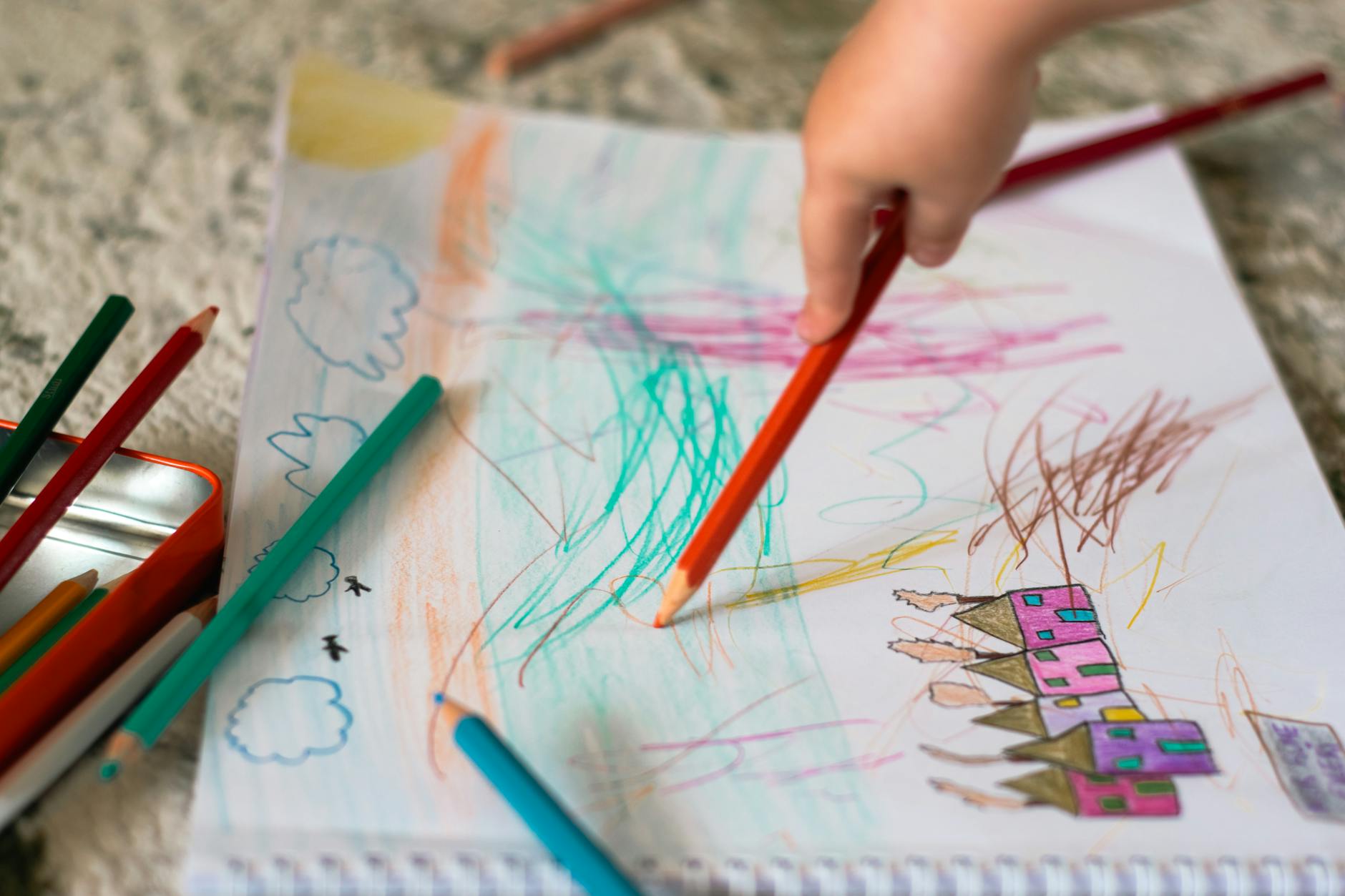
Art in Our Homeschool (And Why We Finally Ditched the Curriculum)
Three curricula, two years, and zero children who liked art class. Then we stopped doing art class and started making art. Here's what that actually looks like.