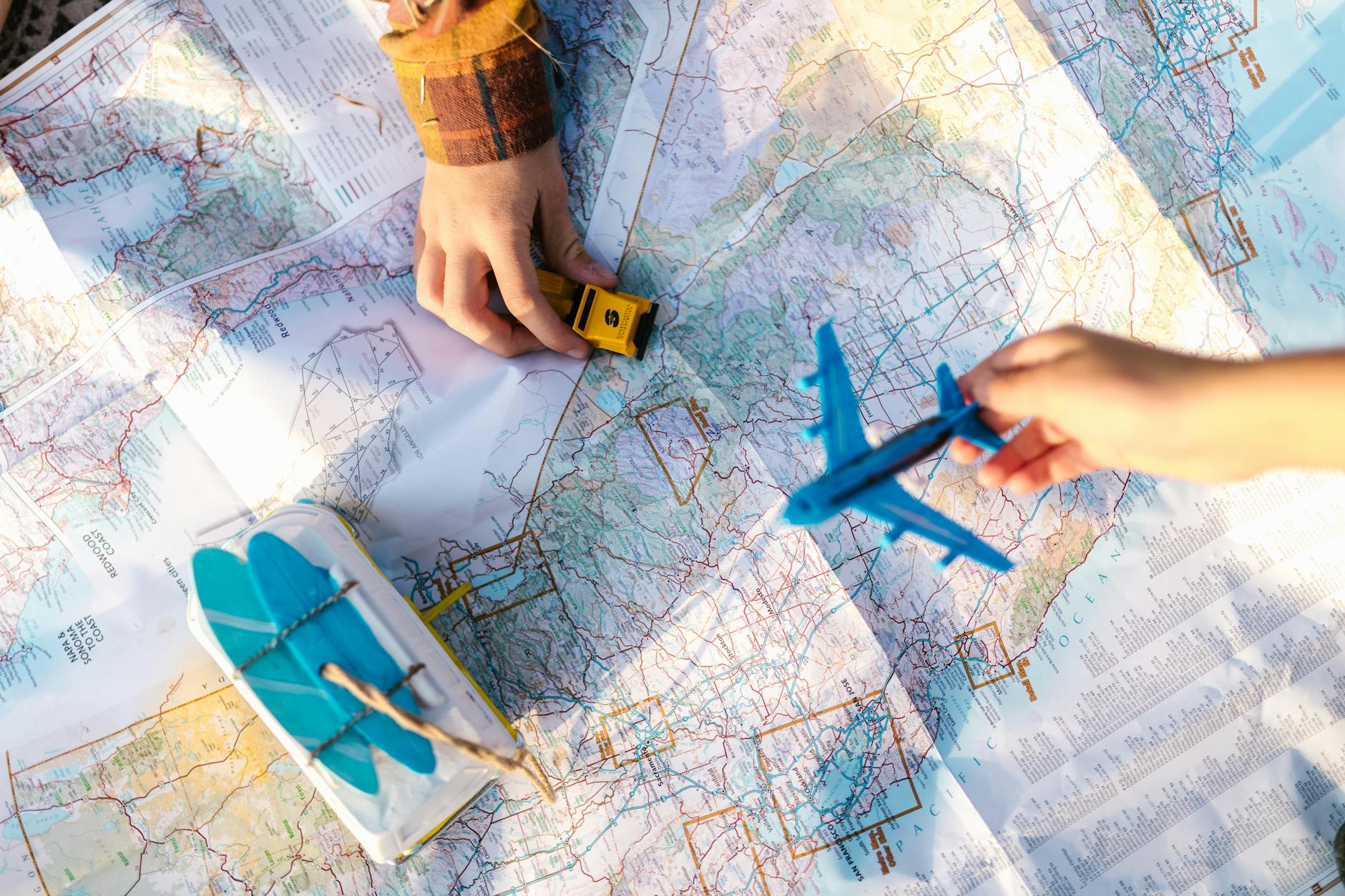
Travel as Curriculum: How to Homeschool Through Adventure
Some of the best homeschool education happens on the road. Here is how to make travel genuinely educational — not just enriching, but curriculum-worthy.
There is a version of homeschool travel that is just a family vacation with a learning label attached.
And there is a version that is something genuinely different — a weeks-long immersion in a place, a culture, a period of history, or a natural environment that teaches things that cannot be taught at a kitchen table.
Both are fine. The second is extraordinary.
The Case for Travel as Real Curriculum
Geography learned on a map is one thing. Geography understood through arriving in a city, navigating its streets, eating its food, and hearing its language is something else entirely.
History studied in a book is one thing. Standing in the place where it happened — walking through the Colosseum, sitting in the quiet of a battlefield, seeing how small a famous house actually is — is something else.
Science surveyed in a curriculum is one thing. Hiking through a national park, tide-pooling on a coast, visiting a working volcano is something else.
Travel at its best does not supplement the curriculum. It is the curriculum.
Making It Count Educationally
Prepare before you go. The family that arrives in Rome having spent a month reading about ancient Rome experiences something completely different from the family that shows up and reads the plaques. Preparation turns a tourist visit into a living lesson.
Read books about the destination. Watch documentaries. Study the history. Look at the geography. If there is a language, learn basic phrases. Create anticipation and context before the place.
Keep a travel journal. A dedicated notebook for the trip — sketches, descriptions of what was seen, questions that came up, things that were surprising — is both a learning tool and a memory artifact. Require one entry per day minimum. Make it illustrated.
Assign a project. Something to research, document, or create during the trip. A child who is assigned to become the family expert on one aspect of the destination — the local cuisine, the historical context, the architecture — has a purpose that sharpens their observation.
Let the questions lead. Some of the best learning happens when something unexpected sparks genuine curiosity. When the child asks "why is everything destroyed?" or "who lived here before?" — follow that question. It is more valuable than the prepared itinerary.
Counting Travel as School Credit
You can count travel time as school credit or school days, depending on your state's requirements.
A two-week trip that involves daily journaling, prepared reading, documentary watching, and site visits is easily worth credit in geography, history, language arts, and possibly science or arts. Document it: what was studied, what was visited, what was produced.
For portfolios and assessment purposes, the travel journal, any projects completed, and a simple log of what was covered during the trip is sufficient documentation.
Travel That Does Not Require a Passport
The instinct is to think of educational travel as international. Most educational travel for most families is much closer to home.
Every region has history, natural environments, cultural institutions, and communities that most local families have never visited. A week exploring national parks within driving distance. A few days in a city neither of you has spent time in. A visit to a type of landscape your child has never seen.
The learning does not require the distance. It requires the intention.
How to Prepare Children for a Trip
Preparation is what separates a trip that produces lasting learning from a trip that produces photographs.
Four to six weeks before the trip, start a unit study. If you are going to a national park, read about the geology of the region, the plant communities, the wildlife. If you are visiting a historical site, read about the events that happened there. If you are traveling internationally, read about the country's history, look at the art and music, try some of the food before you go.
One thing that works especially well: give each child a question to try to answer during the trip. Something specific. "Find out why the Romans built aqueducts." "Learn three things about how the indigenous people of this region lived before European contact." "Figure out why this city was built here and not somewhere else."
The question gives them a lens. It turns passive observation into active inquiry.
The Travel Journal in Practice
The travel journal is more valuable than most families expect, and the expectations matter.
Establish before the trip that everyone keeps one. Not just the children. You too.
Each entry does not need to be long. A paragraph describing one thing observed, one question that came up, one surprising thing. A sketch of something seen. A ticket stub or leaf taped in.
The act of writing about an experience forces a different kind of attention to the experience. A child who knows they will write about what they see tends to look more carefully at what they see.
After the trip, the journal becomes a reference. Questions that came up during the trip often become the starting point for further study when you return home. The journal is the bridge between the experience and the learning that continues afterward.
Making Museums Actually Work
Museums are often less effective than they should be because families try to see everything.
The approach that works better: choose five to ten things to actually look at, and spend real time with those things.
If you are at a natural history museum, spend twenty minutes with one dinosaur skeleton. Read everything posted about it. Talk about how paleontologists know what they know. Sketch it. Then move on.
If you are at an art museum, sit with three paintings for ten minutes each. Look carefully. What do you notice? What do you wonder about? Then go home.
This approach feels counterintuitive when you have paid admission to a large museum. But depth produces learning. Breadth produces fatigue. The child who spent forty-five minutes with a Roman mosaic remembers it. The child who walked past two hundred Roman artifacts remembers nothing specific.
Slow Travel and What It Teaches
The most educationally powerful form of travel for homeschool families is slow travel: staying somewhere long enough that it starts to feel familiar.
A month in one place. A semester abroad. A summer in a different region of your own country.
Slow travel teaches things that short trips cannot. The rhythms of a different place. How people's daily lives differ from your own. What it feels like to be a foreigner and slowly become slightly less so. How language works when you need it to, not as an academic exercise.
Short trips are valuable. Slow travel is transformative.
If this sounds out of reach financially, it is worth knowing that long-term rentals in many places cost less per week than short-term ones. A month somewhere is often cheaper than two separate week-long trips. And the reduced logistics of staying put rather than moving around reduces cost and stress both.
Coming Home: Continuing the Learning
The trip ends. The learning does not have to.
The week after a trip is one of the most productive weeks in a homeschool year, if you use it. The experiences are fresh. The questions are alive.
Follow up on the questions that came up during the trip. Read the book that you wish you had read before you went. Find more about the one thing that fascinated someone. Watch the documentary that covers what you saw.
The trip is not the destination of the curriculum. It is the spark. What you do with that spark in the weeks after determines how much of it stays.
Homeschool field trips covers day-trip educational outings closer to home. And nature study for beginners is a natural complement to travel in natural environments.
Written by
The High Vibe Homeschool Team
We are a homeschool family that has been doing this for seven years across three kids. We write about what we have actually tried, what failed, what surprised us, and what we would do again. No credentials. Just lived experience.
ENJOYED THIS ARTICLE?
Get more like it every week
Real homeschool life, in your inbox.
Keep Reading
More in Community
 Community
Homeschool Co-ops: How to Find One, Join One, and Know If It's Right for You
Co-ops can be the best part of your homeschool week or a significant source of stress. Here's what they actually are, how to find a good one, and the honest tradeoffs.
 Community
Building a Diverse Homeschool Community
Homeschool communities can be homogeneous by default. Building one that exposes your children to different perspectives, backgrounds, and experiences takes intention — here is how.
 Community
Homeschool Graduation: How to Make It Real and Meaningful
A homeschool graduation does not happen automatically. You have to build it. Here is what families who have done it well have in common — and what made ours worth remembering.