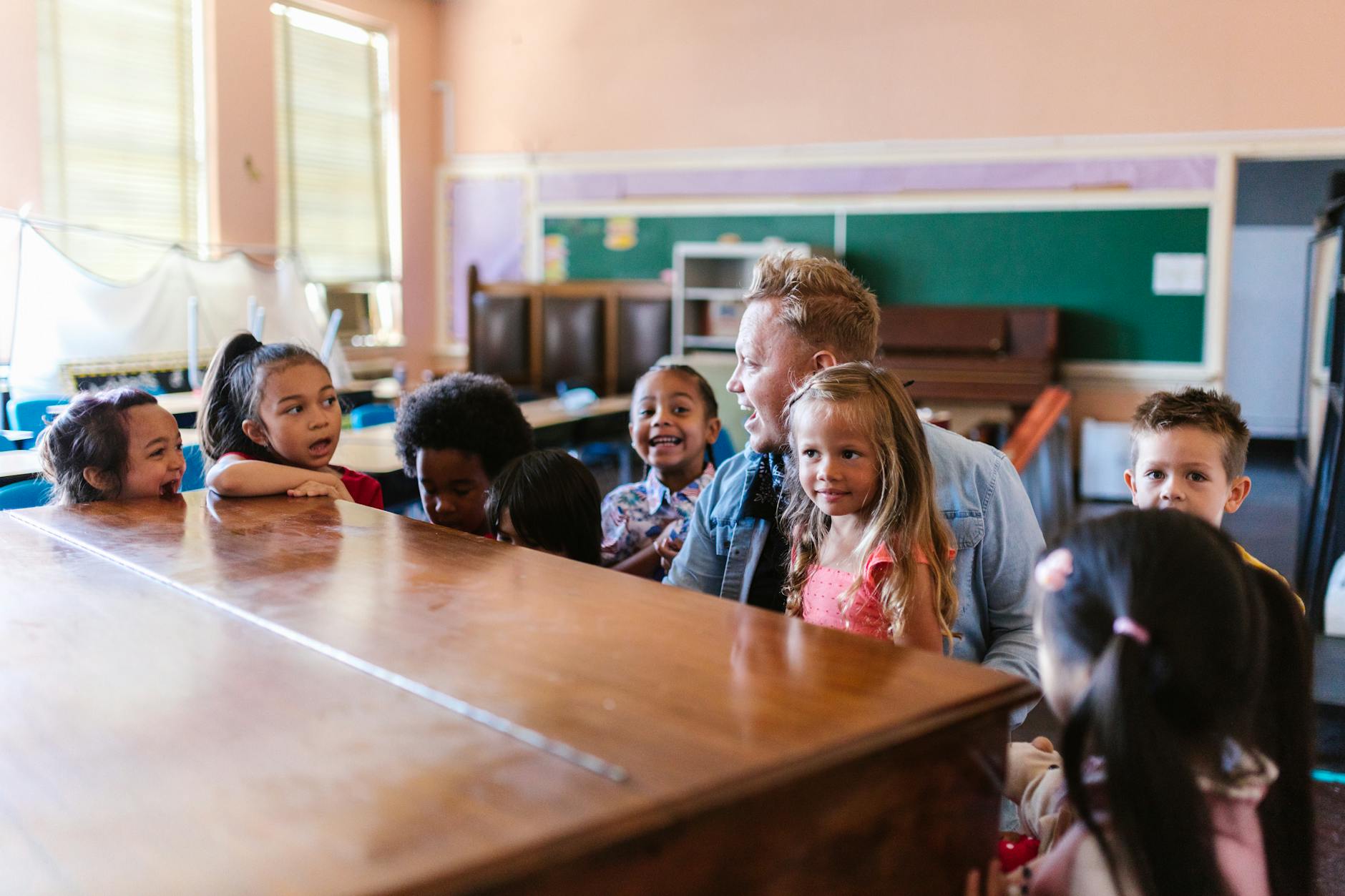
Building a Diverse Homeschool Community
Homeschool communities can be homogeneous by default. Building one that exposes your children to different perspectives, backgrounds, and experiences takes intention — here is how.
Many homeschool communities are more homogeneous than parents would choose if they were choosing.
They form through the networks that already exist — church communities, neighborhood groups, social circles. Because homeschooling is still primarily a choice made by certain demographic groups, the communities that form from those networks tend to reflect the demographics of those groups.
This is not inevitable. It is a default. And defaults can be changed with intention.
Why Diversity Matters in a Homeschool Community
Children who grow up in homogeneous communities — communities that look like them, think like them, share their values and assumptions — have not been prepared for the actual world they will inhabit.
A child who has never had a sustained, genuine friendship with someone significantly different from themselves in race, class, religion, or worldview has a gap in their education that no curriculum covers.
Community is not only about belonging. It is also about exposure — the education that comes from sustained relationship with people who have different experiences and different ways of seeing.
How to Build More Intentionally
Seek out communities organized around shared interest rather than shared identity. When the organizing principle is "we all homeschool" rather than "we all attend the same church" or "we all live in the same neighborhood," the resulting community is more likely to be diverse.
Groups organized around a shared interest — a sport, a creative practice, a subject area — often bring together families who would not otherwise encounter each other. A robotics club draws children from different backgrounds who share a love of making things. A theater group brings together children who might have nothing else in common.
Use public library programs. Many public libraries offer homeschool programs that serve all homeschooling families in a community, creating natural mixing.
Try community college dual enrollment. For older homeschooled students, community college courses create genuine immersion in a diverse peer environment.
Be deliberate about what your curriculum teaches. The stories you center, the perspectives you include, the history you tell — curriculum choices about diversity send messages about whose experiences matter. An exclusively Eurocentric history curriculum, read by a child in an all-white homeschool community, is an education in a particular kind of tunnel.
Talk openly about difference. When your child does have contact with someone whose experience is significantly different — through a community program, a field trip, a friendship — take the time to understand and name what is different and what is shared.
What This Is Not
This is not a call to manufacture diversity for its own sake — to drag children into interactions they find uncomfortable in order to check a box.
It is an observation that the best preparation for adulthood includes sustained relationship with the actual range of humanity, and that homeschool families who want this for their children need to build it deliberately because it does not arrive automatically.
The community your children grow up in shapes them as much as the curriculum they study. Both deserve attention.
What a More Diverse Curriculum Looks Like in Practice
One practical change: history told from multiple perspectives at once, not sequentially.
Rather than covering American history, then spending a separate unit on "other cultures," a more integrated approach looks at the same period from multiple vantage points. What was happening in West Africa during the Renaissance? Who were the Indigenous people living in the region you are studying when European settlers arrived, and what was their account of the same events? What did the Civil War look like from the perspective of a formerly enslaved person rather than only through the lens of political compromise?
These are not additions to a curriculum. They are ways of teaching history more accurately and more completely.
For literature, the same principle applies. Alongside the classics of Western literature, which are worth reading and knowing, are writers from every tradition whose work is equally rich. Gary Soto alongside John Steinbeck. Chinua Achebe alongside Joseph Conrad. Rumi alongside Shakespeare. Not as a comparison exercise, but as a genuine broadening of what literature means.
Finding Homeschool Groups That Are Already More Diverse
Secular homeschool groups tend to be more demographically diverse than faith-based ones, because the shared organizing principle is pedagogy rather than theology.
You can search for secular homeschool groups in your area through networks like Secular, Eclectic, Academic Homeschoolers (YEAH) or simply by searching for homeschool groups without religious affiliation. Many cities have Facebook groups or Meetup groups organized for secular or inclusive homeschoolers.
Inclusive homeschool co-ops, meaning co-ops that explicitly welcome all family structures, religious backgrounds, and cultural backgrounds, will also tend toward more diversity than the default neighborhood group.
This is not to say faith-based or faith-affiliated groups are not worth joining. Many are excellent. But if the goal is specifically a more diverse community, it is worth knowing that the organizing principle of a group shapes its membership.
When Your Child Notices Difference
Children notice race, economic difference, family structure, and religious practice earlier than many adults expect and later than many adults fear.
When your child notices and comments on difference, the response that serves them best is neither deflection ("everyone is the same inside") nor alarm. It is honest acknowledgment and curious inquiry. Yes, families are different in many ways. What do you notice? What do you wonder about?
This is a conversation that happens again and again over years, in different forms, with more complexity each time. Starting it early and keeping it low-stakes makes the harder conversations easier later.
Homeschool co-ops are often the easiest place to start building a broader community. And homeschool traditions — the recurring rituals of a homeschool community — are what make a group feel like a family over time.
Written by
The High Vibe Homeschool Team
We are a homeschool family that has been doing this for seven years across three kids. We write about what we have actually tried, what failed, what surprised us, and what we would do again. No credentials. Just lived experience.
ENJOYED THIS ARTICLE?
Get more like it every week
Real homeschool life, in your inbox.
Keep Reading
More in Community
 Community
Homeschool Co-ops: How to Find One, Join One, and Know If It's Right for You
Co-ops can be the best part of your homeschool week or a significant source of stress. Here's what they actually are, how to find a good one, and the honest tradeoffs.
 Community
Homeschool Graduation: How to Make It Real and Meaningful
A homeschool graduation does not happen automatically. You have to build it. Here is what families who have done it well have in common — and what made ours worth remembering.
 Community
How to Find (or Start) a Local Homeschool Support Group
A good local support group changes homeschooling. Here is how to find one, what to look for, and what to do if your area does not have what you need.