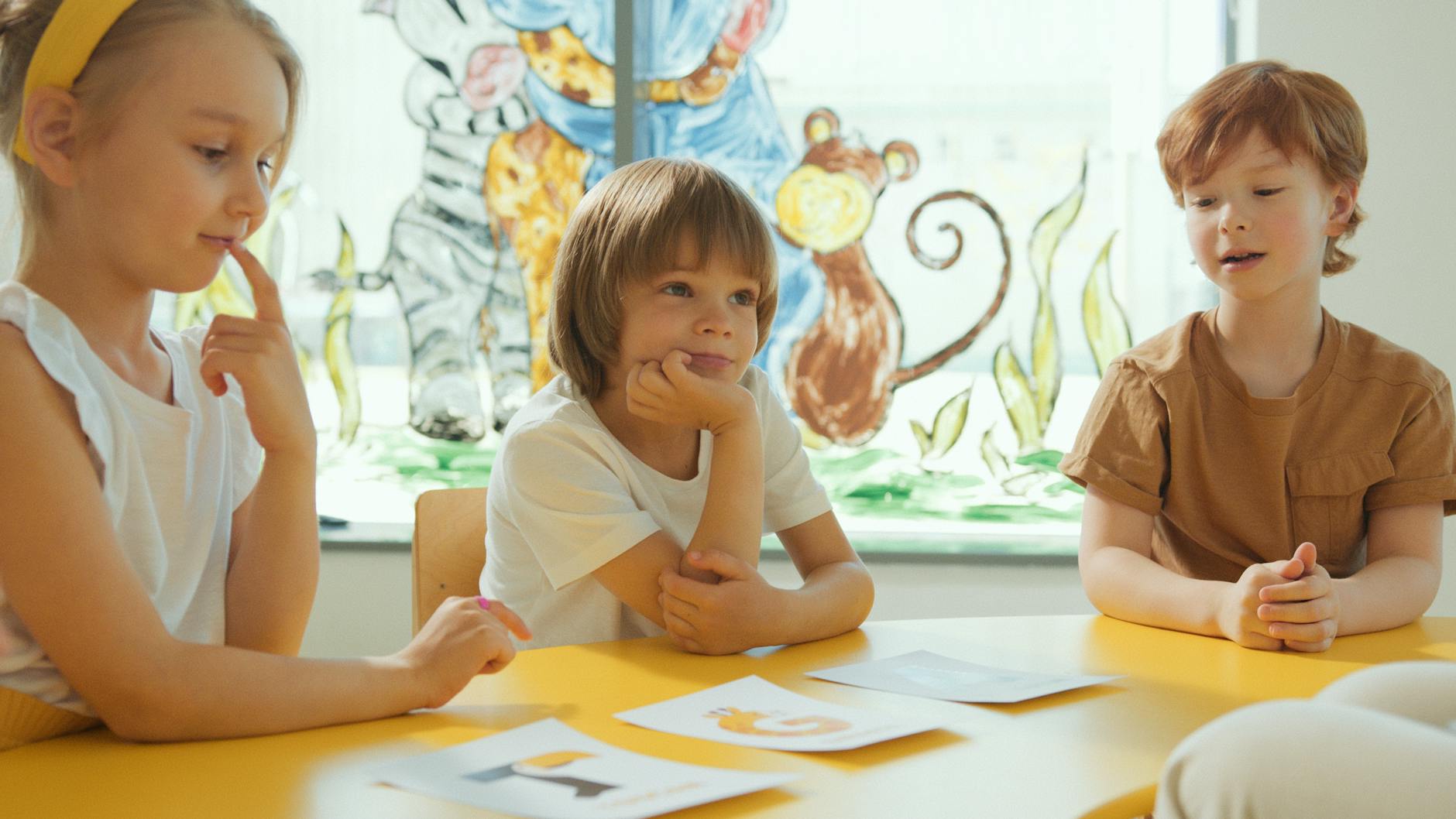
Homeschool Co-ops: How to Find One, Join One, and Know If It's Right for You
Co-ops can be the best part of your homeschool week or a significant source of stress. Here's what they actually are, how to find a good one, and the honest tradeoffs.
When we first started homeschooling, I was convinced a co-op would solve everything.
The socialization question would be answered. My kids would have peers. I would have adult humans to talk to about curriculum choices. Someone else would teach the subjects I did not feel qualified to teach. It was going to be wonderful.
Our first co-op was not wonderful. It was chaotic, the expectations were unclear, my oldest spent twelve weeks learning to make paper mache animals (which is fine, but was not what I was hoping for), and by spring I had decided that co-ops were not for us.
Then we found a different one. And that one changed our homeschool.
What a Co-op Actually Is
Homeschool co-operatives are groups of families who pool resources, time, and teaching skills. The exact structure varies enormously.
Some co-ops are drop-off: you bring your kids, other parents teach, you pick them up later. These function more like a small school day than a cooperative.
Some co-ops require parent participation: you teach a class in exchange for your kids attending others. This is the classic model. Every family contributes something.
Some co-ops are enrichment-only: art, music, drama, physical education, electives. They do not attempt to cover core academics and are designed to supplement a home-based curriculum.
Some co-ops are full-curriculum: structured classes across all subjects, meeting two or three days per week, with homework and grading.
Knowing which type you are joining matters more than most families realize before joining.
How to Find One
Local Facebook groups. Search for "[your city] homeschool" or "[your county] homeschool co-op." Most active co-ops recruit through local Facebook communities.
HSLDA's co-op finder: The Homeschool Legal Defense Association maintains a searchable database of co-ops by state. Free to search.
Your library. Many library systems maintain lists of local homeschool groups. The children's librarian often knows every active group in the area.
Other homeschoolers. Ask at the park, at the nature center, at the museum. Homeschool families recognize each other and are almost universally willing to share what they have found.
What to Ask Before You Join
Visit before you commit. Most co-ops allow visiting families to observe for a session or two.
Questions worth asking:
What is the teaching rotation? If you are required to teach, what are you expected to teach? Is there guidance and curriculum provided, or are you creating your own lessons?
What is the age range? A co-op that spans ages five through sixteen looks very different from one that is tightly grouped. Multi-age can work beautifully or create management challenges, depending on how it is organized.
What is the culture around faith? Some co-ops are explicitly Christian. Others are secular. Some are mixed and maintain neutrality on religious content. None of these is wrong, but knowing in advance avoids friction.
What happens when families do not follow through on commitments? This is the most revealing question. The answer tells you how the co-op handles accountability, conflict, and whether it has reliable systems or runs on hope.
What does drop-off or late arrival look like? Life happens. A co-op that handles occasional chaos gracefully is easier to sustain than one where missing a meeting creates lasting social awkwardness.
What Teaching at a Co-op Actually Involves
If you join a parent-participation co-op, you will teach. This surprises some families who joined partly because they wanted someone else to do the teaching.
Teaching a co-op class is different from teaching your own children. You have a group. You have a fixed amount of time. You cannot tailor your pace to one individual child's signals.
Some parents discover they love it. The energy of a group of children, the chance to share something they know well, the change from one-on-one home instruction. If you have a genuine interest or expertise in something — woodworking, coding, a foreign language, art history — a co-op class is a place to share it.
Others find it draining. Preparing a lesson for eight children every week on top of running your own home curriculum is not a small commitment. Before agreeing to a teaching role, be honest with yourself about whether you have the bandwidth.
The good news: most co-ops have classes ranging from very structured (you are given a curriculum and instructions) to very open-ended (you propose whatever you want to teach). Ask what the expectation is before you commit to a specific role.
Starting Your Own Co-op
If you live somewhere with no existing options, starting a co-op is less complicated than it sounds.
The minimum viable co-op: two or three families meeting weekly or biweekly to share teaching responsibilities. One family teaches science one week, another teaches art, another does a reading group or history discussion. You do not need a rented space, a formal name, or any organizational structure until you have more than five or six families.
What you do need: clear expectations about attendance, a rotation that is fair and understood by everyone, and someone willing to coordinate the schedule. The coordinator role does not have to be permanent — many small co-ops rotate it.
The hardest part of starting a co-op is not the logistics. It is finding families whose values, schedules, and teaching approaches are compatible enough to make sharing work. Start with families you already know and trust.
When a Co-op Is Not the Right Fit
Not every family benefits from a co-op. Signs it might not be for yours:
Your kid needs consistency more than variety. Some children do best in their home environment with a predictable rhythm. Adding two co-op days per week disrupts that rhythm and creates transition stress that undoes more than the co-op contributes.
The travel cost is high. A two-hour round trip twice a week is four hours of driving, which is roughly four hours of your homeschool day that cannot be recovered.
The teaching commitment is not sustainable. If you agree to teach a class and then dread it every week, you will resent the co-op. It is better not to join than to join and slowly burn out your goodwill toward the group.
Your teaching style is incompatible. A co-op that runs on worksheets and formal assessment may not serve a family doing Charlotte Mason. Not every co-op serves every approach.
What a Good Co-op Actually Provides
The best co-ops we have been part of did three things above everything else.
They gave my children peers who were also homeschooled. Not the only socialization they needed, but a particular kind of socialization: kids who understood what their life looked like and did not ask why they were not in school.
They taught things I was not equipped to teach. A parent with a background in chemistry teaches a different chemistry class than I would teach from a textbook. Real expertise in a subject room is irreplaceable.
They gave me a community of adults who understood my life. The Wednesday morning conversations with other homeschool parents, before pickup, have been worth more to me than any curriculum we ever found through that co-op.
Community is the thing no one lists as the reason they joined but the thing everyone names as the reason they stayed.
Co-ops are one of the primary sources of homeschool friendships — see how homeschooled kids actually make friends for the full picture. And homeschool extracurriculars covers the wider landscape of activities that do not require school enrollment.
Written by
The High Vibe Homeschool Team
We are a homeschool family that has been doing this for seven years across three kids. We write about what we have actually tried, what failed, what surprised us, and what we would do again. No credentials. Just lived experience.
ENJOYED THIS ARTICLE?
Get more like it every week
Real homeschool life, in your inbox.
Keep Reading
More in Community
 Community
Building a Diverse Homeschool Community
Homeschool communities can be homogeneous by default. Building one that exposes your children to different perspectives, backgrounds, and experiences takes intention — here is how.
 Community
Homeschool Graduation: How to Make It Real and Meaningful
A homeschool graduation does not happen automatically. You have to build it. Here is what families who have done it well have in common — and what made ours worth remembering.
 Community
How to Find (or Start) a Local Homeschool Support Group
A good local support group changes homeschooling. Here is how to find one, what to look for, and what to do if your area does not have what you need.