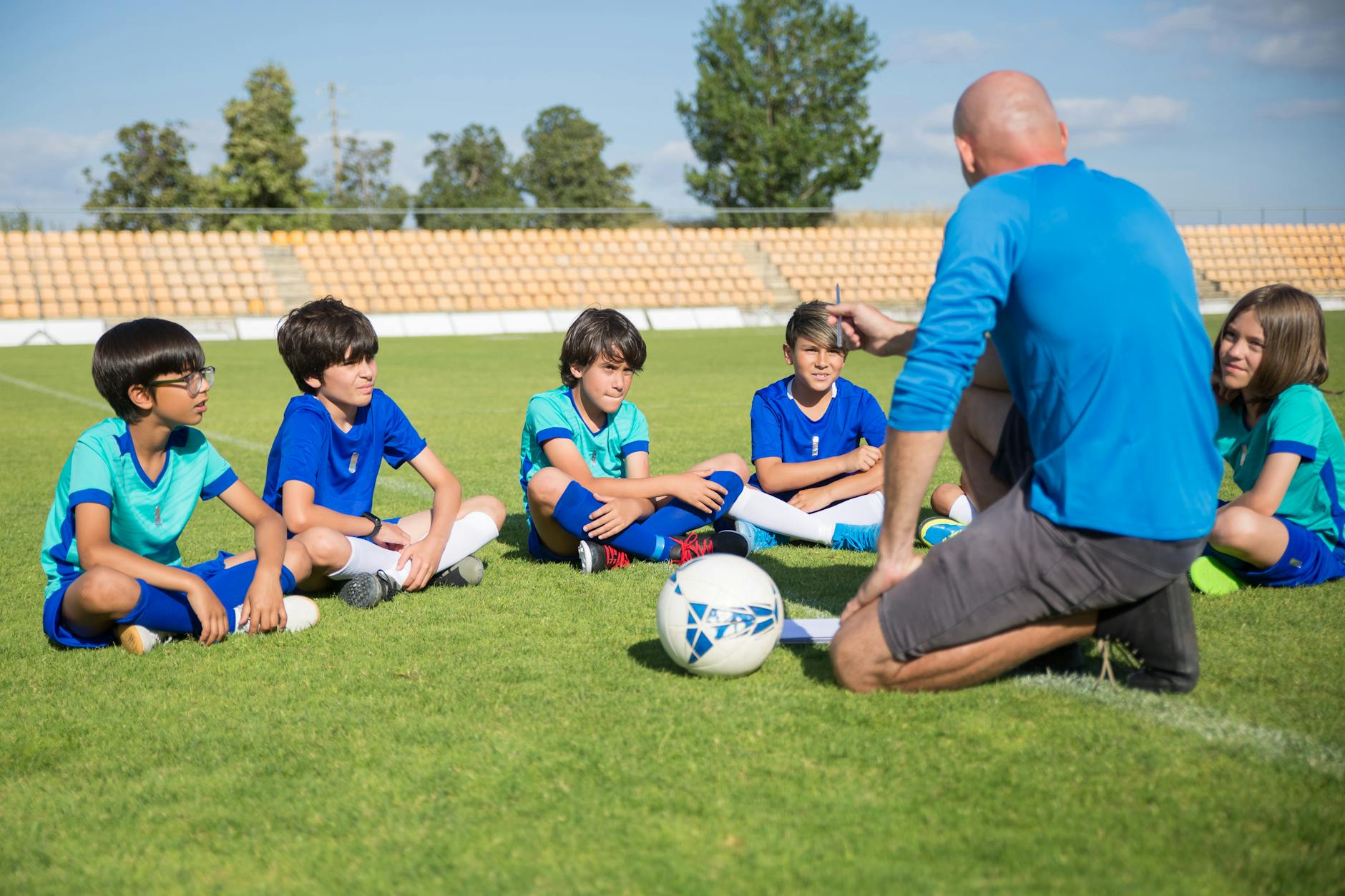
Homeschool Kids and Team Sports: Making It Work
One of the most common worries about homeschooling: will my child miss out on team sports and activities? The short answer is no. Here is how families actually make it work.
It is one of the first questions people ask when they hear you homeschool.
"But what about sports?"
The implication is that sports require a school — that team sports, competitive athletics, group activities are somehow school-specific. This is not true, and has not been true for a long time.
The Options Families Actually Use
Recreation leagues. Most communities have recreational leagues for every major sport that are open to all children regardless of schooling. Soccer, basketball, baseball, softball, swimming — these leagues do not require a school affiliation. They simply require registration and a fee.
Homeschool co-op teams. In areas with active homeschool communities, co-op sports teams are common. These are organized by homeschool families, for homeschool families, often using public park facilities. They offer the team experience — practicing together, playing games, building something with peers — in a setting where the schedule flexibility of homeschooling is built in.
Dual enrollment in public school sports. Many states have "equal access" laws that allow homeschooled students to participate in public school extracurricular activities, including sports. The rules vary by state and sometimes by district. If this matters to you, it is worth researching your specific state's laws.
Club and travel teams. For serious athletes, club teams exist in most sports and are entirely separate from schools. These often have higher commitment and cost, but they offer competitive-level training without school enrollment.
Dance, martial arts, gymnastics, swimming. These disciplines are almost always private studio or club-based. Homeschool families actually have an advantage here — they can attend weekday classes when the studios are less crowded and the instruction ratios are better.
The Scheduling Advantage
Here is something that does not get said enough: homeschooled children often have access to better athletic training than their school-enrolled peers.
When you control the schedule, you can train during the day. You can attend weekday practice sessions that are not available to children who are in school until 3pm. You can recover properly without the exhaustion of eight hours of school plus practice plus homework. You can prioritize rest on heavy training days.
Serious young athletes sometimes homeschool precisely for these reasons. We know a family whose son competes in competitive swimming at a high regional level. He does his morning workout at 6am, school from 8 to noon, and afternoon practice from 2 to 4. He is not tired from a full day of school before practice. He is not squeezing homework in at 9pm. His training and his academic work are both better for the flexibility.
That is not an outlier story. It is a pattern.
The Team Experience
What parents are actually asking about when they ask about sports is not usually the sport itself. It is the team experience. Learning to work toward a shared goal. Handling a loss together. Celebrating a win. Being accountable to teammates.
This experience is absolutely available to homeschooled children. It requires more intentionality to access than simply showing up to school, but it is not harder to find than you might think.
The key is committing. Join a league. Join a team. Sign your child up for the thing and follow through with it for at least one season. The community builds through shared time and shared effort, not through institutional proximity.
We have seen this with our own kids. Our daughter played two seasons of recreational soccer before the team became something she looked forward to every week. Not because we found a perfect team on the first try, but because we stayed. The connections that form between children who play together over a season are real.
What About Tryout Sports?
Some families worry specifically about competitive teams that require tryouts. Can a homeschooled child make a travel baseball team, a competitive dance company, a select volleyball program?
Yes. These programs evaluate athletic ability, not school enrollment. A child who has the skill and the physical conditioning makes the team.
The caveat is visibility. School-enrolled kids often get noticed by coaches through school programs. Homeschool families sometimes need to be more proactive, seeking out open tryouts, attending showcases, or having the child participate in a development program first. This is a logistical gap, not an impossible barrier.
Activities Beyond Sports
Sports get all the attention in this conversation, but the same logic applies to every activity.
Theater programs, youth orchestras, robotics teams, debate clubs, art classes, pottery studios, chess clubs, choir. Almost all of these exist outside of school. Many have weekday options specifically because the studios and programs know that homeschool families are looking for them.
Our kids have done theater with a community youth theater, taken violin lessons through a local music school, and participated in a homeschool co-op science club. None of those required school enrollment. All of them provided the group experience, the friendships, the sense of working toward something with other people.
The activity is almost always findable. The question is how much effort you are willing to put into finding it.
When the Town Does Not Have Much
Rural families and families in areas with thin homeschool communities sometimes face genuinely limited options. In these situations:
Drive. Yes, it is inconvenient. But an hour's drive to a regular practice that provides real community and skill development is often worth it.
Start something. Even two or three homeschool families who want a soccer practice can create one. A park, a ball, a shared schedule. It does not need to be formal to be real.
Look at what is available rather than what is missing. Every community has something. 4-H. Scouting. Martial arts. Swimming. Start with what is accessible and build from there.
Online connections lead to in-person ones. Homeschool Facebook groups and local networks often surface families you would not otherwise find. Posting in a local homeschool group has led us to activities we did not know existed.
A Practical Starting Point
If you are new to homeschooling and worried about this, here is what to do:
Pick one activity your child is interested in. Find where that activity happens in your area. Sign up. Commit to one full season or session before evaluating.
That is it. Do not try to replicate an entire school extracurricular menu at once. Start with one thing, let the child experience it, and build from there. Most families who have been homeschooling for a few years end up with more activity options than they can comfortably fit in the schedule, not fewer.
The homeschool children we know who thrive athletically and socially have one thing in common: parents who decided not to use the question "but what about sports?" as a reason to hesitate, but as a problem to solve.
It is always solvable.
Extracurriculars for homeschoolers covers the full picture beyond sports. And if you are worried about socialization more broadly, homeschool socialization addresses the real research.
Written by
The High Vibe Homeschool Team
We are a homeschool family that has been doing this for seven years across three kids. We write about what we have actually tried, what failed, what surprised us, and what we would do again. No credentials. Just lived experience.
ENJOYED THIS ARTICLE?
Get more like it every week
Real homeschool life, in your inbox.
Keep Reading
More in Community
 Community
Homeschool Co-ops: How to Find One, Join One, and Know If It's Right for You
Co-ops can be the best part of your homeschool week or a significant source of stress. Here's what they actually are, how to find a good one, and the honest tradeoffs.
 Community
Building a Diverse Homeschool Community
Homeschool communities can be homogeneous by default. Building one that exposes your children to different perspectives, backgrounds, and experiences takes intention — here is how.
 Community
Homeschool Graduation: How to Make It Real and Meaningful
A homeschool graduation does not happen automatically. You have to build it. Here is what families who have done it well have in common — and what made ours worth remembering.