The Socialization Question: What to Say When People Ask (And What the Research Actually Shows)
If I had a dollar for every time someone asked me about socialization, I could fund a very good co-op. Here is the honest, research-backed answer and some real talk about what homeschool social life actually looks like.
I have been asked about socialization approximately ten thousand times since we started homeschooling.
At the grocery store. At family gatherings. By the pediatrician. By strangers at the park. By people who seem genuinely concerned, and by people who seem to be testing me, waiting to see if I will admit what they already believe: that by homeschooling my children, I am raising isolated little weirdos who will not know how to function in the world.
I used to get defensive. Then I got defensive and sarcastic. Now I mostly just give the honest answer, which is more nuanced than either extreme and, I think, more useful.
What People Are Really Asking
When someone asks about socialization, they usually mean one or both of two things:
First, they want to know if your child will learn to get along with other people, navigate conflict, make friends, and function in group settings. This is a reasonable concern. Social skills matter.
Second, they want to know if your child will be "normal" by whatever cultural standard that person applies to childhood. This one is more complex and honestly less interesting to me.
Let me address the first one directly.
What the Research Actually Shows
The research on homeschooled students and social development is genuinely positive, and not in the way you might expect if you went into it hoping to find a problem.
Studies consistently show that homeschooled students score as well or better than their traditionally schooled peers on measures of social development, civic involvement, and emotional maturity. Brian Ray's research through the National Home Education Research Institute, and studies published in peer-reviewed journals over the past thirty years, find that homeschoolers are not socially isolated. They participate in community activities at higher rates than traditionally schooled kids. They volunteer more. They are more likely to be involved in civic and political life as adults.
A 2019 study by Peter Gray and Gina Riley found that homeschooled students reported higher life satisfaction, better self-direction, and stronger social relationships than their schooled counterparts.
These are not outlier studies. This is a consistent pattern in the literature.
What Homeschool Social Life Actually Looks Like
Here is where I want to be real with you, because I think the romanticized version is not helpful either.
Homeschool social life does not happen by default the way school social life does. In a traditional school, your child is surrounded by fifty or two hundred or five hundred age-peers every single day. The sheer proximity produces friendships, some of them meaningful, a lot of them circumstantial.
Homeschooling requires more intentionality. You have to build your social infrastructure. That means:
Co-ops and homeschool groups. These are everywhere now. Classes, social gatherings, field trips, sports, theater groups. They exist in big cities and in smaller towns. If there is not one near you, there are families near you who would love to start one.
Community activities. Sports teams, music lessons, theater, martial arts, religious youth groups, 4-H, scouts, coding clubs. Activities where your child pursues something they love alongside peers who share that interest.
Community service and real-world engagement. Some of the best social development happens when kids work alongside adults in real contexts.
Neighborhood friendships. Old-fashioned, but still real.
The families I know whose homeschooled kids are genuinely thriving socially are the ones who have built a rich web of community around their family. It takes effort. But it is absolutely possible.
The One Thing Worth Watching
I will say this honestly: homeschooling can attract introvert-heavy, reclusive families, and there are parents who use homeschooling to essentially isolate their children from the wider world. That is not healthy and it is not what I am advocating for.
If your child never interacts with anyone outside your immediate family, that is a problem. Not because traditional school is the answer, but because children genuinely need to learn to navigate relationships with people outside their household, including conflict, difference, and the experience of not always being the center of attention.
If you are homeschooling and your child's primary social contact is you and their siblings, put social infrastructure on your list. It matters. Build it.
What Homeschool Social Life Looks Like in Practice
This is what our week actually contains, because I think the abstract answer is less useful than the concrete one.
Monday: co-op. Ours runs from 9 AM to noon, with mixed-age classes in science, art, and a foreign language. After class, the kids have forty-five minutes of free play with whoever shows up.
Wednesday: swim team practice. My son has been on this team for three years and has friends there he would not have met through any homeschool connection.
Thursday: a writing workshop two of my kids attend, run by a retired English teacher in our area who has been doing it for twelve years.
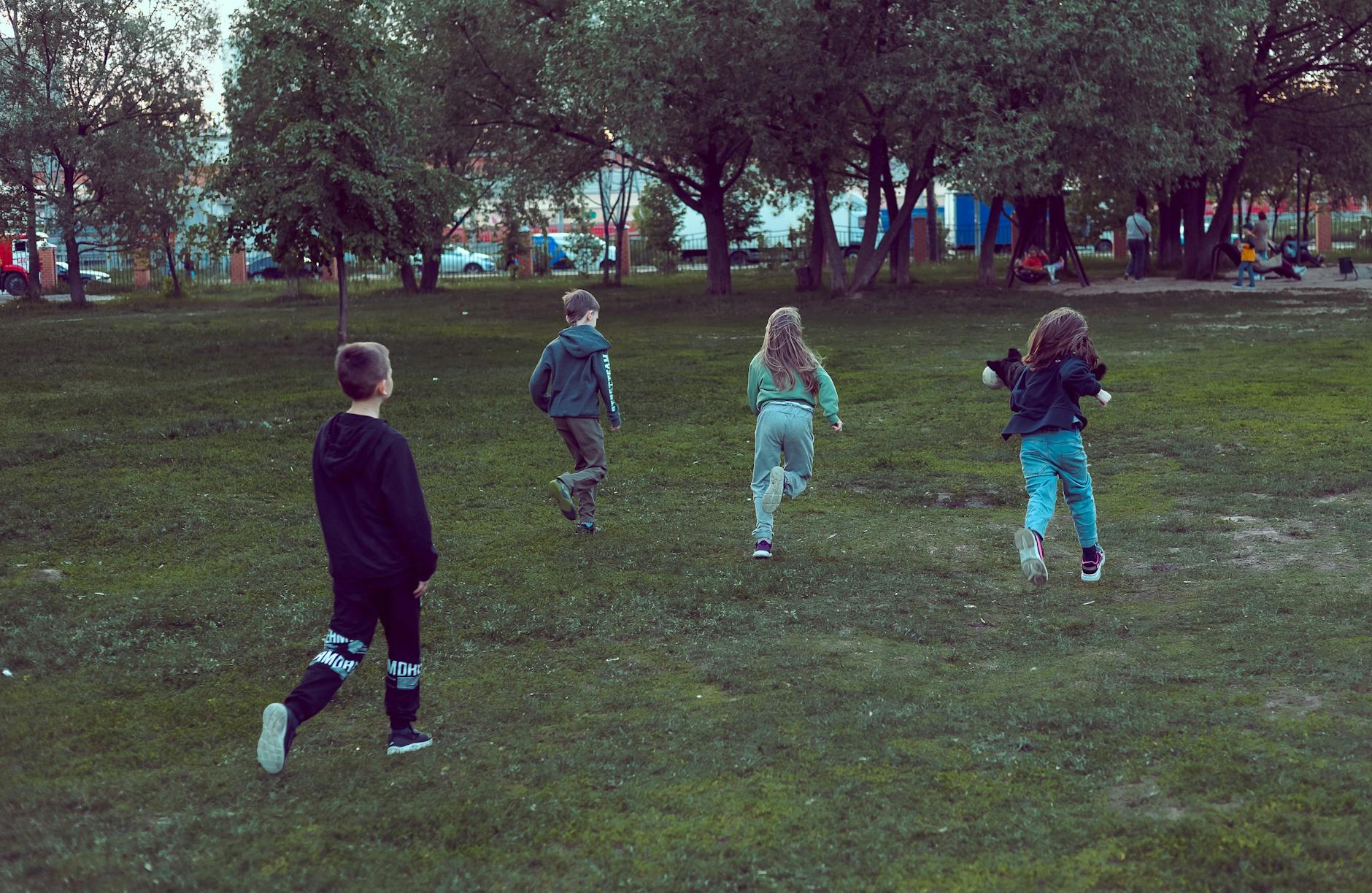
Weekly: neighborhood kids. This is the oldest model of socialization there is. Two doors down has three kids. We have three kids. They play.
That is not an unusual week for us. It is a normal week. Many homeschool families we know have more going on than we do.
The objection I sometimes hear is that this is not the same as school, where children have to learn to navigate a world they did not choose with people they would not have picked. That is a real point. But I would push back on the idea that compulsory proximity with age-sorted peers for six hours a day is the gold standard for social development. The research does not support that claim. And the homeschooled children I know are navigating a genuinely diverse range of relationships: older and younger children, adults who are not their parents, people from different backgrounds. That is not a narrow social world.
The Age Factor
Social needs change as children get older, and so does the calculus.
Young children (roughly under eight) generally do well with a few close playmates and minimal structured social activity. They play alongside each other more than they play with each other, and what they mostly need is time, space, and a relatively safe environment.
Middle childhood (roughly eight to twelve) is when peer relationships become genuinely important. This is the stage where a rich co-op or activity-based social life matters most. If your homeschool does not have meaningful peer connections for a child in this age range, it should.
Teenagers have a different set of needs. They need peers, but they also increasingly need relationships outside the family structure, access to a variety of adults and mentors, and space to develop their own identity outside your direct influence. A teenager whose social world consists entirely of homeschool co-op peers and church friends might be fine. But teenagers benefit from some interaction with the wider world, including people who hold different values, who challenge their assumptions, who are nothing like them.
This is the age at which part-time enrollment at a community college, workplace mentorships, serious involvement in an athletic or artistic program, or other external structures can be genuinely valuable even for families committed to homeschooling.
What About Friends? Like, Real Ones?
This is the question underneath the socialization question.
Yes, homeschooled kids have real friends. My children have real friends. Not thirty-five people they see every day regardless of whether they have anything in common, but three or four people they genuinely like and choose to spend time with.
Whether that is better or worse than what they would have had in school is a question I cannot answer, because I do not know what their school friendships would have been. What I can say is that the friendships they have are chosen rather than assigned by proximity, and they seem to be meaningful.
Some homeschooled children do struggle socially. Some find it difficult to connect with peers, feel isolated, or miss the built-in social structure of school. If your child is telling you that, listen to them. Their social needs are real and worth addressing. More co-ops, more activities, possibly a different structure for your homeschool. Some children do genuinely thrive better in a school social environment, and that is worth knowing.
What to Say When Someone Asks
Here is the short version I use now: "They have a pretty full social life. Between co-op and sports and activities, they probably see more of their friends than I did at their age. We just had to build it on purpose instead of getting it by default."
Most people find this satisfying. The ones who push further are usually working through something that has nothing to do with your kids.
Your children are going to be okay. More than okay.
For the practical side of building community, how homeschooled kids actually make friends covers what has worked for families we know. And homeschool co-ops goes deeper on the most reliable source of homeschool social connection.
Written by
The High Vibe Homeschool Team
We are a homeschool family that has been doing this for seven years across three kids. We write about what we have actually tried, what failed, what surprised us, and what we would do again. No credentials. Just lived experience.
ENJOYED THIS ARTICLE?
Get more like it every week
Real homeschool life, in your inbox.
Keep Reading
More in Encouragement
 Encouragement
The Thing I Did Not Expect to Feel About Homeschooling
Seven years in, the thing I feel most is gratitude. Not because it has been easy. Because it has been real. Here is what I mean.
 Encouragement
Is Homeschooling Worth It? The Honest Answer After Seven Years
We are seven years in. Here is the honest accounting — what we gained, what we lost, what surprised us, and whether, given everything, we would do it again.
 Encouragement
Slow Homeschooling: The Case for Doing Less, Better
Slow homeschooling is not for families who are not trying hard enough. It is for families who have tried hard enough and are ready to try less. Here is what it means and why it works.