The Best Free History Resources for Homeschoolers
History is one of the richest subjects in a home education — and some of the best history resources available are completely free. Here are the ones we actually use.
History is one of those subjects where a homeschool can do something remarkable: go deep. Not race through a timeline of dates and names, but actually inhabit a period. Read primary sources. Stand in the shoes of people who lived in different circumstances. Ask the questions that make history come alive.
The free resources below make that kind of history possible without a premium curriculum.
Primary Source Collections
Library of Congress. An extraordinary archive of primary sources — photographs, documents, maps, newspapers, letters. The "Teachers" section is organized by grade and period. loc.gov/teachers
Fordham University's Internet History Sourcebooks. Comprehensive collection of primary sources organized by period and region. Ancient, Medieval, Modern, African, Islamic, Indian, East Asian, and more. The best single collection of its kind, freely available. sourcebooks.fordham.edu
DocsTeach. From the National Archives. Curated primary source documents with built-in activities for students. Particularly strong on American history from the founding through the twentieth century. docsteach.org
Narrative and Reference
Historytoday.com. Long-form historical essays written by historians, covering events and periods across all of human history. High quality writing, accessible to strong middle school readers and up.
Wikipedia. Yes, Wikipedia. For building context, getting an overview of a period, and finding references that lead to deeper reading, it is genuinely useful. Just never use it as a primary source and always check the citations.
YouTube: Crash Course World History and US History. Fast-paced, accurate, engaging overviews. Best used for building overview understanding before going deep, or reviewing a period after more detailed study. The tone is aimed at high schoolers but works for motivated middle schoolers.
YouTube: History Hit. Longer, more substantive documentaries and interviews with historians. Excellent for high school students.
Maps
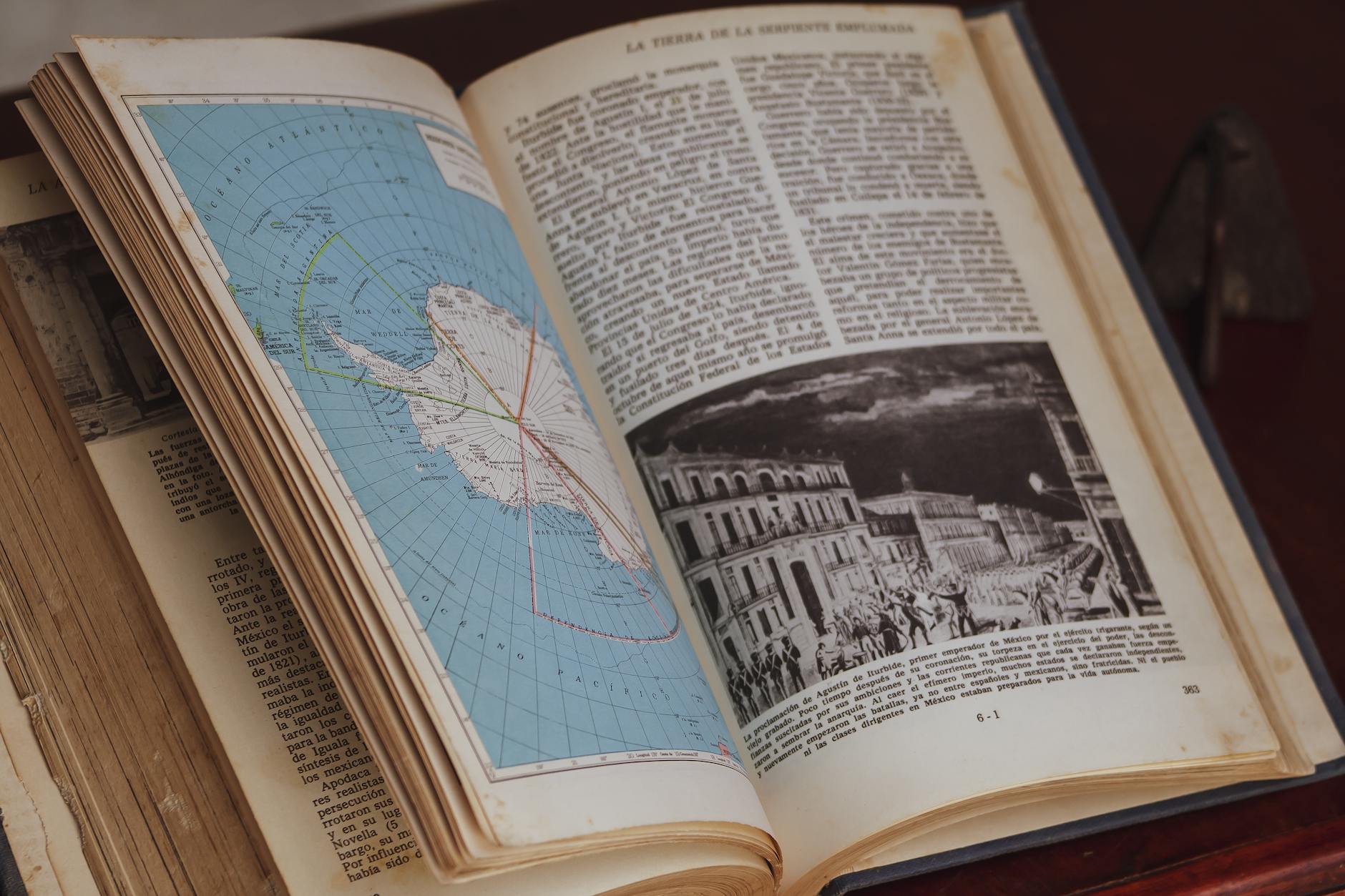
World History Atlas. whc.unesco.org and Old Maps Online oldmapsonline.org — for finding historical maps to use alongside your studies.
Understanding geography is inseparable from understanding history. Whenever you study a new period, find the map of how the world was divided at that moment. Let your child trace the routes, mark the territories, compare with what the map looks like today.
Our History Printable
The notebooking pages in our free resource pack include a timeline page and a "What Was Happening" spread for recording what was happening simultaneously in different parts of the world — the kind of cross-cultural context that is so often missing from single-perspective history curricula.
Download free. Works with any history curriculum or as a standalone notebooking tool.
How We Actually Use These
We do not use all of these all the time. Our usual pattern:
- Choose a period or event to study. Start with Crash Course for overview.
- Find one or two primary sources from the Library of Congress or Fordham. Read them together. Talk about what the author saw, believed, wanted.
- Read more deeply in a book about the period. (We almost always have one checked out from the library.)
- Narrate: What happened? Why did it matter? How does it connect to what we know about before and after?
The free resources support that structure. They are not a curriculum — they are the raw material for building one that fits your family.
Teaching History From Multiple Perspectives
The standard history curriculum tells one story at a time, usually the story of whoever held political power. This produces a coherent narrative, but it is necessarily incomplete.
When we study the American Revolution, we read about the colonists. We also ask: what was happening with the Indigenous nations during this period? What did enslaved people experience? What did Loyalists think, and why? What was this moment in the broader context of global British colonialism?
None of these are additional units or special add-ons. They are simply the rest of the story.
Primary sources make this easier because you can find voices from multiple vantage points rather than relying on a textbook's editorial decisions. The Fordham Sourcebooks include perspectives from across the world that are usually absent from American history curricula.
This is not about ideology. It is about accuracy. History told only from the victor's perspective is incomplete history.
Living Books for History
A living book is one written by a person who loves their subject, with a voice and a point of view, for a reader rather than as a curriculum document.
For ancient history, try Rosemary Sutcliff's novels: The Eagle of the Ninth, Outcast, and others. She wrote about Roman Britain with enough research behind them to count as educational and enough story to hold any child's attention.
For American history, Johnny Tremain by Esther Forbes for the Revolution. The Witch of Blackbird Pond by Elizabeth George Speare for Puritan New England. Island of the Blue Dolphins by Scott O'Dell for a different angle on California history.
For twentieth century history, Number the Stars by Lois Lowry for WWII Denmark. Roll of Thunder, Hear My Cry by Mildred Taylor for the Depression-era South. The Diary of a Young Girl by Anne Frank, which needs no recommendation.
Living books do something no textbook does. They make the period feel inhabited by real people rather than populated by historical forces and names.
Building a Timeline
The habit that connects everything in history study is a physical timeline.
Not a printed poster bought at a curriculum fair. A blank roll of paper or an ongoing document that your family builds together over years. Every person, event, and period you study gets added to the timeline. Ancient Greece connects to Rome. Rome connects to the medieval period. The medieval period connects to the Renaissance. The Renaissance connects to the age of exploration.
The connections are visible. History becomes a web rather than a sequence of unrelated units.
We have kept a running family timeline for six years. It has become one of the most-referenced things in our home. When something new comes up in our reading — a new person, a new event — the first question is often: when did this happen? Let us put it on the timeline.
Our favorite read-alouds for every age includes many historically-grounded books that make excellent complements to these resources. And nature study for beginners follows the same philosophy: free resources, deep engagement, no expensive program required.
Written by
The High Vibe Homeschool Team
We are a homeschool family that has been doing this for seven years across three kids. We write about what we have actually tried, what failed, what surprised us, and what we would do again. No credentials. Just lived experience.
ENJOYED THIS ARTICLE?
Get more like it every week
Real homeschool life, in your inbox.
Keep Reading
More in Resources
 Resources
Our Favorite Read-Alouds for Every Age (That the Whole Family Actually Loves)
Read-alouds are the heartbeat of our homeschool day. Here are the books that made our kids beg us to keep reading — sorted by age so you can find your next one fast.
 Resources
Yes, Audiobooks Count. Here's How We Use Them.
Audiobooks are not a shortcut or a lazy day substitute. In our homeschool, they are a core tool. Here's exactly how we use them and why listening absolutely counts as reading.
 Resources
10 Books Every Homeschool Mom Should Read (At Least Once)
Not books for your children. Books for you. The ones that changed how we think about education, restored our confidence on the hard days, and gave us the words for what we were trying to do.