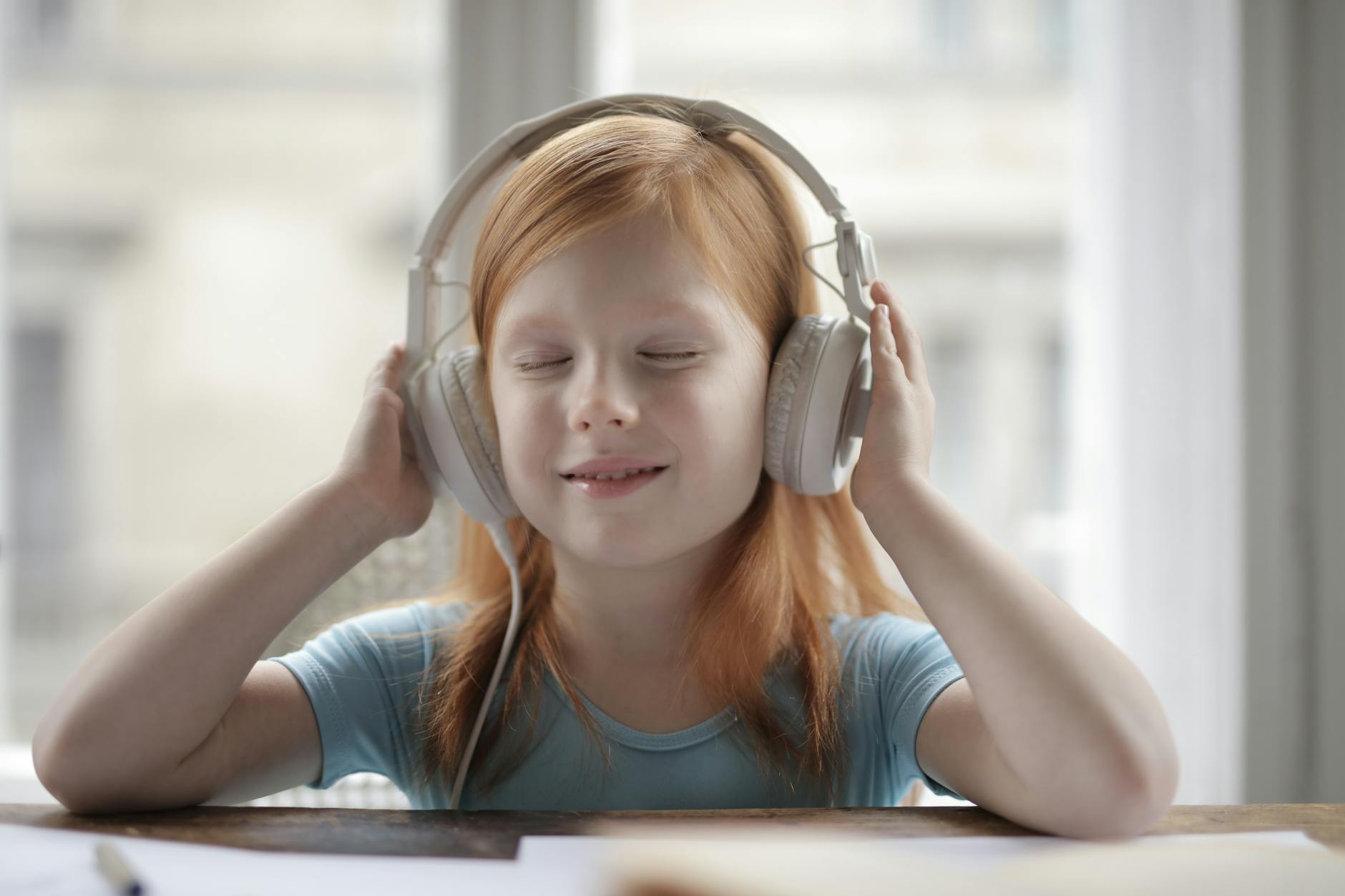
Yes, Audiobooks Count. Here's How We Use Them.
Audiobooks are not a shortcut or a lazy day substitute. In our homeschool, they are a core tool. Here's exactly how we use them and why listening absolutely counts as reading.
Someone told me once that letting my kids listen to audiobooks was cheating.
I have thought about this enough times that I have developed an actual response.
Listening to a book and reading a book activate the same comprehension pathways in the brain. A child who listens to Charlotte's Web and a child who reads Charlotte's Web are both encountering the same vocabulary, the same narrative structure, the same emotional arc. The delivery mechanism differs. The learning does not.
Beyond that: for children who are not yet fluent readers, audiobooks are not a workaround. They are a highway. They allow children access to books that are years ahead of their decoding level. My seven-year-old was listening to Tolkien two full years before he could read chapter books independently. That exposure shaped his vocabulary, his understanding of story structure, and his taste in ways that "books at his reading level" simply could not.
How We Actually Use Audiobooks
Morning work time. While my kids work through math problems or copy work, they can have an audiobook playing. This works better than music and better than silence for most of my kids. They associate the audiobook with focus, not with entertainment.
Driving. We have listened to entire series on drives. Our longest road trip finished two books and started a third. My kids do not watch movies in the car. We listen to stories.
Quiet time. Our younger kids have a daily quiet hour. During this time, audiobooks are fair game. Legos, drawing, building, and listening to a story. It does not require my involvement and produces genuinely restful focused time.
Before bed. We have a family audiobook that runs about thirty minutes before the older kids' bedtime. It winds the day down, we are all in the same story, and there is nothing to screen-stare at.
The Best Audiobooks We Have Found
Not all audiobooks are created equal. A great narrator makes a book ten times better. A poor narrator makes even a wonderful book hard to finish.
Jim Dale's narration of the Harry Potter series is the gold standard. If you have not heard it, it is worth doing even if your kids have already read the books.
Full-cast productions from Audible Studios also tend to be excellent. The Old Kingdom series (Garth Nix), read by Tim Curry, has been playing in our house on repeat for two years.
For younger children, the Naxos audiobooks narrated by Anton Lesser and others are beautiful and consistently well-produced.
Other narrators worth knowing: David Tennant reads How to Train Your Dragon and it is exactly as good as that sounds. Kate Reading and Michael Kramer trade off chapters throughout the Wheel of Time series, which is a genuinely impressive feat for books that long. For the Roald Dahl books, the Jeremy Irons recordings are the ones we keep returning to.
Where to get them:
Libby (free, library card required): Libby connects to your public library's digital collection. Most libraries have extensive audiobook catalogs. The app is excellent and works on every device. This is the first place I check for anything.
Hoopla (free, library card required): Hoopla is similar to Libby but uses a different catalog. Some libraries offer both. Between the two, we find about 80% of what we want for free.
Audible: We have a subscription for the books that do not appear in the library catalog. One credit per month, and the library fills in the rest.
Audiobooks and the Reading Progression
One question I get often: if my child can listen to audiobooks, will they have less motivation to learn to read?
Our experience, and the experience of many families I know, is the opposite. A child who is deeply inside a series in audiobook form and hits a point where a new book is not yet available in audio? That child has more motivation to read independently than any phonics reward chart ever produced.
The wanting-to-know-what-happens-next is a legitimate and powerful reading motivator. Audiobooks do not eliminate it. Sometimes they create it.
What About Following Along in the Text?
Some families use a hybrid approach: the child has the physical book in hand and follows along in the text while listening to the audio. This technique, sometimes called "ear-eye reading" in literacy research, has genuine benefits for struggling decoders.
The audio provides the correct pronunciation and phrasing. The child's eye tracks the text and builds the association between the spoken word and the written word. It is essentially scaffolded reading practice with the best possible model, which is a professional narrator, reading to you.
If your child has been resistant to reading practice but loves audiobooks, try sitting beside them with the physical copy open to the same page and see what happens. Some children slide naturally from tracking with their finger to reading ahead a few words to reading independently. The transition, when it happens this way, tends to feel like nothing changed, which is exactly what you want.
When Audiobooks Are Not the Right Tool
Audiobooks do not replace every kind of reading.
For a child who is actively learning to decode, the physical act of looking at words on a page and sounding them out is the skill being built. Audiobooks do not build that skill. Use structured phonics instruction for the decoding work and audiobooks for everything else.
For older students who need to interact with a text — annotating, underlining, re-reading a paragraph, pausing to take notes — a physical or digital text is more useful than audio. Academic work that requires close reading is harder to do by ear.
For reference books, textbooks, and anything the child will need to return to and find specific passages, a physical format is more practical.
The audiobook is not the answer to everything. It is one of the best tools in the homeschool toolkit. Use it where it fits.
One Practical Note on Listening Comprehension
Listening comprehension can be practiced and developed. If you want to use audiobooks more intentionally, try occasional narration: "Tell me what happened in the last two chapters." Or discussion: "What do you think is going to happen next?"
You are not testing. You are inviting them into conversation about a story you are both inside. The quality of those conversations, after months of audiobooks together, has been some of the best in our homeschool.
One easy way to gauge comprehension: ask your child to tell someone else about the book. A grandparent, a friend, a sibling who has not heard it. The act of retelling reveals what was absorbed and what was missed. It also builds narration skills, which are some of the most useful skills in any academic setting.
Books are not just what your child picks up off the shelf and reads alone. Books are the stories moving through your family. Audiobooks are one of the best ways to keep those stories moving.
Audiobooks pair naturally with read-aloud time — listening while someone else reads aloud and listening independently build different but complementary skills. And living books explains why the quality of what you listen to matters as much as the quantity.
Written by
The High Vibe Homeschool Team
We are a homeschool family that has been doing this for seven years across three kids. We write about what we have actually tried, what failed, what surprised us, and what we would do again. No credentials. Just lived experience.
ENJOYED THIS ARTICLE?
Get more like it every week
Real homeschool life, in your inbox.
Keep Reading
More in Resources
 Resources
Our Favorite Read-Alouds for Every Age (That the Whole Family Actually Loves)
Read-alouds are the heartbeat of our homeschool day. Here are the books that made our kids beg us to keep reading — sorted by age so you can find your next one fast.
 Resources
10 Books Every Homeschool Mom Should Read (At Least Once)
Not books for your children. Books for you. The ones that changed how we think about education, restored our confidence on the hard days, and gave us the words for what we were trying to do.
 Resources
The High Vibe Homeschool Reading List: 50 Books Across All Ages
A curated reading list of 50 living books for homeschool families — organized by age range and subject, with brief notes on what makes each one worth the time.