The Best Free Homeschool Resources We Actually Use (Updated for 2026)
You do not need to spend a thousand dollars a year on curriculum. Here are the free resources we genuinely use, across every subject, with honest notes on what works and what is just pretty.
Let me tell you the thing about homeschool curriculum costs that nobody warned me about before I started: they add up fast and they add up quietly.
A math curriculum here. A writing program there. The history spine your co-op uses. Science supplies. Books for the book list. A language arts program that looked good in a curriculum fair. And suddenly you have spent $800 on a school year that has not started yet.
I have spent a lot of money on curriculum over the years, some of it worth every penny and some of it sitting unopened in a closet. And I have also discovered that a surprising amount of what we use every single day is completely free.
Here is the honest list.
Khan Academy (khanacademy.org)
I would be doing you a disservice if I listed anything before Khan Academy. It is genuinely one of the best educational resources on the internet, it is completely free, and it covers mathematics from pre-K all the way through calculus and statistics.
My older one uses it as her primary math spine and has for three years. The mastery-based system means she moves when she is genuinely ready, not when the lesson plan says so. The explanations are clear. The practice is well-designed. And there is a parent dashboard so I can see exactly where she is and where she needs support.
Khan Academy also covers science, history, grammar, coding, economics, and test prep. It is not a complete curriculum by itself but it is a serious backbone for any homeschool.
Libby (libbyapp.com)
If you have a library card, you have Libby. This app connects to your local library system and gives you access to ebooks and audiobooks for free. We listen to audiobooks constantly — in the car, during lunch, in the evenings. Audiobooks count as reading. They are reading.
Many library systems also have access to Kanopy, which is a streaming service for films and documentaries. Kanopy has an enormous educational catalog and it is free with a library card.
Your library card is one of the most powerful homeschool tools you own.
AmblesideOnline (amblesideonline.org)
If you are interested in Charlotte Mason or just want a literature-rich curriculum with no cost attached, AmblesideOnline is an extraordinary resource. It is a full K-12 curriculum based on Charlotte Mason's philosophy, completely free, built by a volunteer community over many years.
The book lists are excellent. The structure is clear. They have a free forum where parents discuss every aspect of the curriculum and how it works in real families. You can use AO as a complete curriculum or pull from it selectively.
The most useful free component, even if you never follow the full curriculum: the book lists. AmblesideOnline has done the work of identifying excellent living books at every age level and in every subject. Even if you buy nothing and follow nothing else, those lists alone are worth bookmarking.
Brave Writer (bravewriter.com) — Mostly Free Resources
Brave Writer has paid products but their free resources are genuinely valuable. The Arrow and the Boomerang guides are paid, but Julie Bogart (the founder) produces free podcast episodes, blog posts, and tips that have shaped how I approach writing with my kids more than almost any purchased product.
The core idea: writing grows out of living and talking and having things to say, not from workbooks. This reframing alone is worth all the free content on the site.
YouTube Channels That Are Actually Good
I want to be honest with you: a lot of educational YouTube is mediocre. But a few channels are genuinely excellent.
Crash Course covers history, science, literature, and many other subjects at a middle and high school level with intellectual seriousness and genuine humor. Free, entertaining, and substantive.
SciShow covers science topics in a format that is accessible and accurate. My kids watch episodes voluntarily.
TED-Ed produces short, high-quality animated lessons on topics across every subject. Beautiful production and genuinely interesting ideas.
Numberphile is for math lovers of any age. Brilliant mathematicians talking about beautiful and strange mathematical ideas. My younger one got interested in prime numbers through this channel at age seven.
For history specifically: Overly Sarcastic Productions covers mythology, history, and literature with sharp writing and solid research. Knowing Better does long-form history essays. Both are free and both are better than most textbooks.
For science: Veritasium and Minute Physics handle physics and chemistry topics with real depth. PBS Eons covers natural history and paleontology and is consistently excellent.
Easy Peasy All-in-One Homeschool (allinonehomeschool.com)
A complete free curriculum that runs from preschool through high school. It is online, self-paced, and requires very little parental involvement for older students. It is not the richest or most ambitious curriculum available, but it works and it is genuinely free. For families in a tight budget season or parents who need something with less prep time, it is worth knowing about.
Starfall (starfall.com)
For early readers, Starfall is excellent and the basic version is free. Phonics-based, engaging, and well-designed for the pre-K through second grade range. Our kids both used it and loved it.
Core Knowledge (coreknowledge.org)
Core Knowledge publishes free downloadable curriculum materials for grades K-8 covering history, science, and language arts. The free materials are substantial. The scope and sequence is well-organized. It is not flashy but it is solid and it is free.
Smithsonian Learning Lab
This one is less well-known and worth knowing about. The Smithsonian Learning Lab (learninglab.si.edu) has thousands of free primary source images, objects, documents, and lesson plans organized by subject and grade level. Use it as a supplement to any history or science curriculum. The photographs and artifacts alone are worth exploring.
The Library of Congress (loc.gov/teachers) also has extraordinary free primary source materials. Photographs, maps, letters, newspapers from American history. For a classical or Charlotte Mason family doing American history, this is indispensable.
Project Gutenberg (gutenberg.org)
Every book published before 1928 is in the public domain and free at Project Gutenberg. That includes the Iliad and the Odyssey, Shakespeare, Jane Austen, Mark Twain, Jules Verne, Charlotte's Web era authors, and thousands of other texts that would cost money in a bookstore. If you are building a reading list from living books, significant portions of that list are available free.
The Library. Seriously, the Library.
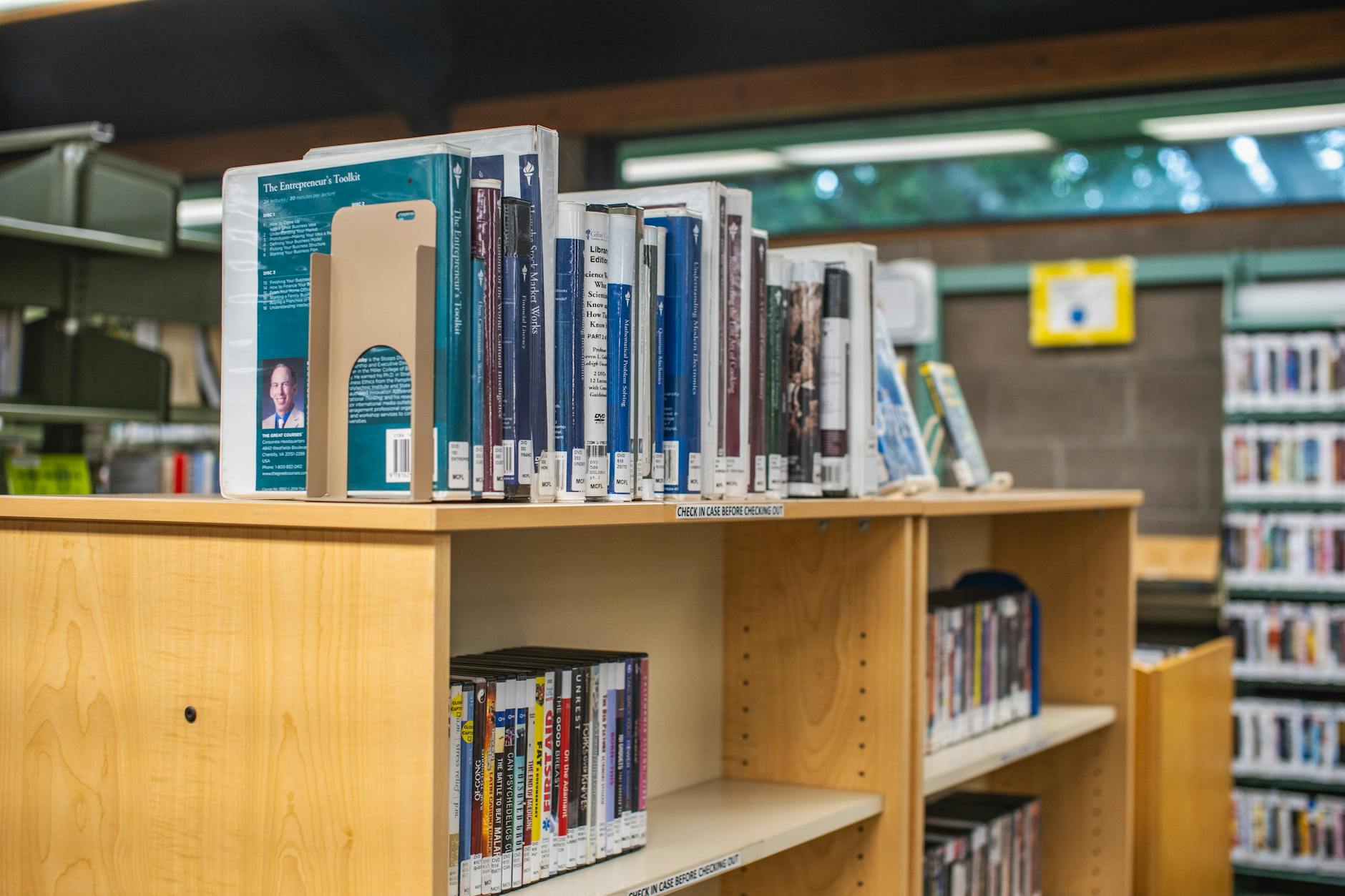
I know I mentioned this under Libby but I want to say it again more directly: your local library is one of the most underused homeschool tools there is. Librarians are often wonderful allies for homeschool families. Many libraries offer special programs for homeschoolers, library card access to databases that would otherwise cost money, and the ability to request interlibrary loans for any book you need.
We visit the library at least twice a month. Usually more.
Ask your librarian about access to Britannica Online, JSTOR, or other academic databases through the library card. Many library systems provide this for free and very few people know it exists. This matters more as your students get older and want to go deeper on topics.
Free does not mean low quality. Some of the most valuable things in our homeschool have cost us nothing.
We have created our own library of free downloads: nature journal pages, notebooking pages, copywork sets, activity packs, and more. All are email-gated and available immediately.
Written by
The High Vibe Homeschool Team
We are a homeschool family that has been doing this for seven years across three kids. We write about what we have actually tried, what failed, what surprised us, and what we would do again. No credentials. Just lived experience.
ENJOYED THIS ARTICLE?
Get more like it every week
Real homeschool life, in your inbox.
Keep Reading
More in Resources
 Resources
Our Favorite Read-Alouds for Every Age (That the Whole Family Actually Loves)
Read-alouds are the heartbeat of our homeschool day. Here are the books that made our kids beg us to keep reading — sorted by age so you can find your next one fast.
 Resources
Yes, Audiobooks Count. Here's How We Use Them.
Audiobooks are not a shortcut or a lazy day substitute. In our homeschool, they are a core tool. Here's exactly how we use them and why listening absolutely counts as reading.
 Resources
10 Books Every Homeschool Mom Should Read (At Least Once)
Not books for your children. Books for you. The ones that changed how we think about education, restored our confidence on the hard days, and gave us the words for what we were trying to do.