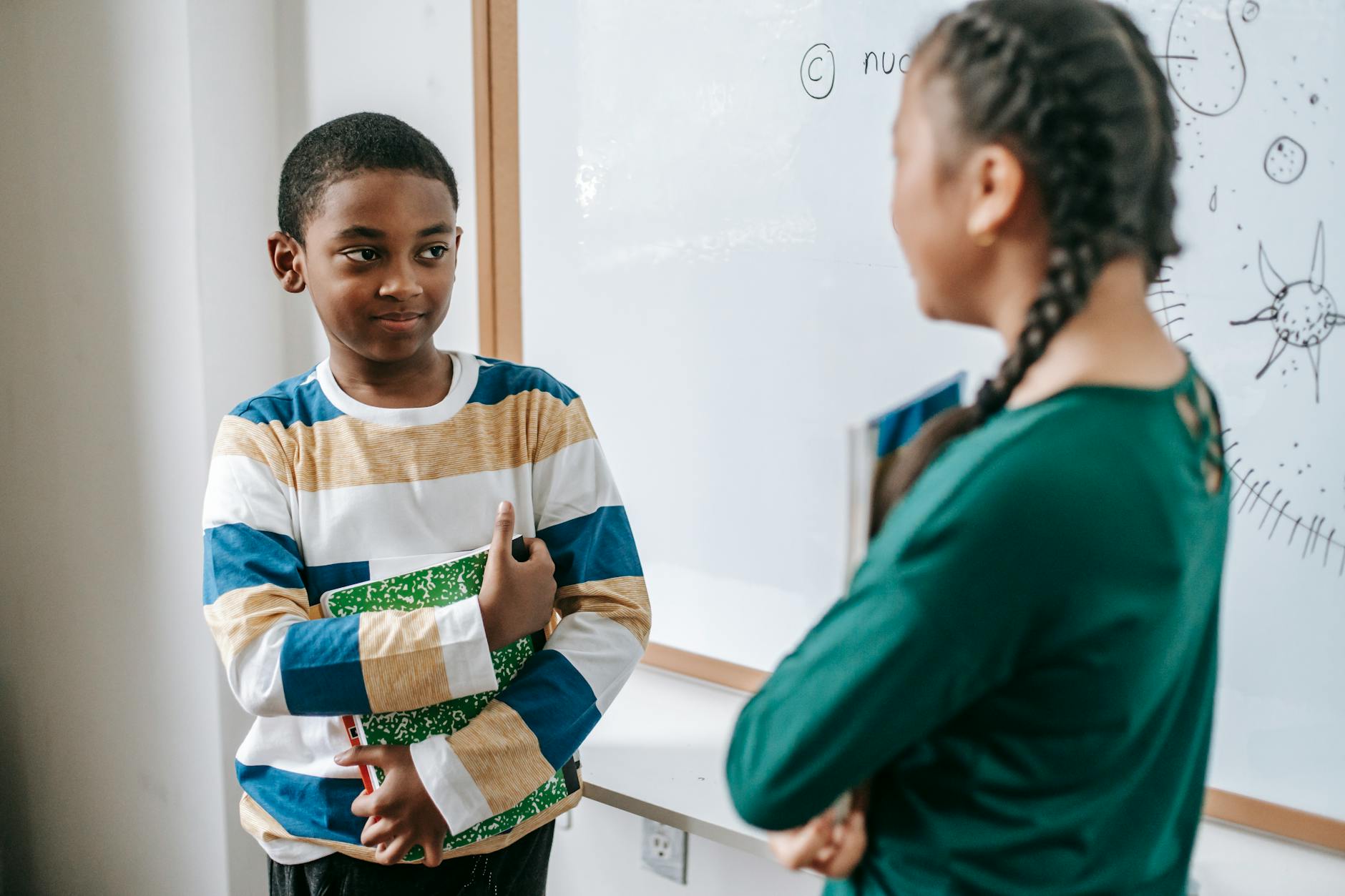
When Your Child Asks to Go Back to School
Every homeschool family hears it eventually: 'I want to go to real school.' Here is how to hear what your child is actually saying, how to respond well, and how to make the decision thoughtfully.
My daughter asked to go to school when she was nine.
Not because she was unhappy homeschooling. Because a girl from the neighborhood had told her that school was where you made best friends, and my daughter had a best-friend-shaped hole in her social life at the time.
She did not actually want to go to school. She wanted a best friend. Those are different problems.
Here is how I have come to think about these conversations.
What "I Want to Go to School" Usually Means
Children rarely want school itself. They want something they associate with school.
Friends. The most common driver. A child who wants school usually wants peer connection — specifically, the daily, consistent contact with same-age peers that school reliably provides. The question is whether there are other ways to build that, and whether those ways are actually available in your situation.
Structure. Some children find the predictability of a school day appealing, particularly if the homeschool has been disorganized or inconsistent. "I want to go to school" can mean "I want to know what is expected of me."
Novelty. The grass-is-greener phenomenon. School looks appealing from outside partly because it is unknown. A child who has friends in school hears the good parts of their day; the boring, frustrating, or difficult parts are not usually what gets shared.
Independence. For older children — twelve, thirteen, fourteen — "I want to go to school" sometimes means "I want an environment that is mine, separate from my family." This is developmentally appropriate. It does not necessarily mean school is the answer, but it is worth hearing.
Genuine unhappiness. Sometimes the child is telling you that something in the homeschool is not working. They may not be able to name it, but the desire for school is a signal worth taking seriously.
How to Respond
Take it seriously. "We already decided to homeschool" or "School isn't as great as you think" shuts down the conversation and signals that the child's feelings are not welcome.
Ask what specifically appeals. "What do you imagine school would be like?" "What would be the best part?" The answer usually tells you what the child is actually missing.
Listen for the underlying need. Once you know the real need — friends, structure, novelty, something specific — you can address it directly.
Tell the truth about school. Not as a dismissal, but as information. What is the school in your area actually like? What would their day consist of? What would they gain? What would they lose? If you do not know these things with any specificity, it is worth finding out before the conversation happens — or before it happens again.
Leave it open. "We can always make that choice" is not a capitulation. It is the truth, and hearing it often reduces the urgency of the request.
The Conversation You Actually Need to Have
The most useful version of this conversation is not about school at all. It is about what the child is missing.
When my daughter said she wanted to go to school, I asked her to walk me through what a week at school would look like. What would the best day be like? The worst day? What would be hard about it?
She described the bus ride with her neighborhood friend. She described eating lunch in a cafeteria with other kids. She described having a desk and putting things in a locker.
None of that was actually about learning. She wanted proximity, daily contact, a shared physical environment with peers. The bus ride was the thing.
I told her: "It sounds like what you really want is a friend who is somewhere you go every day, not someone you see by arrangement." She agreed. That was the problem we solved.
We found a co-op that met three days a week. Consistent. Predictable. The daily contact she was looking for within an environment that worked for our family.
If I had reacted to "I want to go to school" with defensiveness, we never would have gotten to the actual conversation.
When to Take the Request at Face Value
If, after honest conversation, the underlying need cannot be met within homeschooling, the request may be genuine.
Signs the child is genuinely miserable — not just having a hard week but persistently unhappy over months — are worth taking seriously as a family. Homeschooling is a choice, not a sentence. Children who are genuinely suffering in their educational environment deserve to have that heard.
The goal is not to preserve the homeschool at all costs. The goal is the child's flourishing.
Some questions worth sitting with honestly:
- Has the child been unhappy most days for more than a few months?
- Does the unhappiness extend beyond school hours into the rest of their day?
- Have you made concrete changes in response to their concerns, and has nothing helped?
- Does your child have meaningful peer relationships, or are they genuinely isolated?
If most of your answers are yes, the request deserves a real family conversation about what school would actually look like — specifics, logistics, what would change — rather than a discussion that ends with a reason to keep homeschooling.
What About Older Kids
The conversation changes in the middle school and high school years.
A fourteen-year-old asking to go to school is expressing something different from a nine-year-old asking. By fourteen, children have a clearer sense of what they want from their education. They are also closer to independence and to environments where their own agency matters more.
Some things worth considering for older kids:
- Can they take a class at a community college to get a taste of a more structured environment?
- Is there a part-time option at the local school for electives or a specific course they want?
- Are there dual enrollment programs in your area that provide peer community while maintaining homeschool flexibility?
The binary — full homeschool or full school — is not the only option for older students. And sometimes providing a hybrid path that addresses the actual need makes the question moot.
What Happened With My Daughter
We had the conversation. She told me she wanted a best friend who went to the same place every day.
We found a co-op that met three days per week. She is now fourteen. She has a best friend she has known since they were nine. The friend has been homeschooled the whole time.
My daughter has not mentioned school since.
The conversation we had when she was nine was one of the better parenting moments I have had — not because I handled it with great skill, but because I listened to the actual problem rather than defending against the surface request. The outcome was better for everyone because we were honest about what was really being asked.
Homeschool co-ops are the most reliable source of the consistent peer connection that often drives these requests. And how homeschooled kids actually make friends covers the full range of approaches that have worked for families we know.
Written by
The High Vibe Homeschool Team
We are a homeschool family that has been doing this for seven years across three kids. We write about what we have actually tried, what failed, what surprised us, and what we would do again. No credentials. Just lived experience.
ENJOYED THIS ARTICLE?
Get more like it every week
Real homeschool life, in your inbox.
Keep Reading
More in Encouragement
 Encouragement
The Thing I Did Not Expect to Feel About Homeschooling
Seven years in, the thing I feel most is gratitude. Not because it has been easy. Because it has been real. Here is what I mean.
 Encouragement
Is Homeschooling Worth It? The Honest Answer After Seven Years
We are seven years in. Here is the honest accounting — what we gained, what we lost, what surprised us, and whether, given everything, we would do it again.
 Encouragement
Slow Homeschooling: The Case for Doing Less, Better
Slow homeschooling is not for families who are not trying hard enough. It is for families who have tried hard enough and are ready to try less. Here is what it means and why it works.