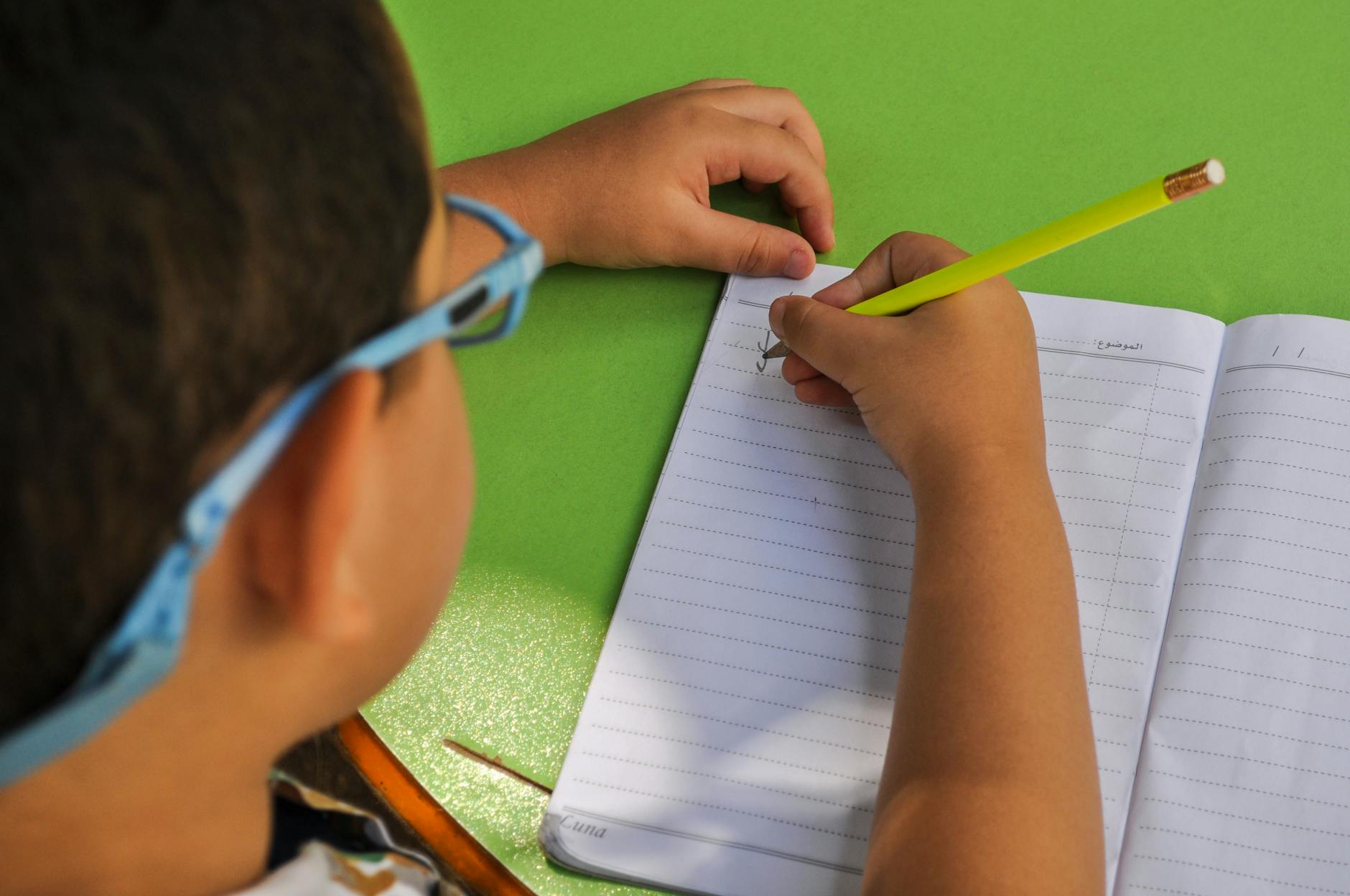
Narration: The Foundation of Every Writing Program Worth Using
Before paragraphs and essays, before outlines and thesis statements, there is narration. Charlotte Mason's central writing method is the most powerful thing you can do for your child's language development.
Charlotte Mason's method has produced more confident, articulate writers than almost any formal writing curriculum on the market.
The reason is not magic. It is sequence. And the heart of the sequence is narration.
What Narration Is
Narration is simple. After a child reads a passage, hears a chapter, or studies a topic, they tell back what they understood in their own words.
No leading questions. No multiple choice. No fill in the blank. Just: "Tell me what you just read."
The child who does this regularly develops several capacities simultaneously:
Comprehension. You cannot narrate accurately what you did not understand. The act of narration makes the gaps in comprehension visible immediately.
Language. To tell back something accurately, you need the vocabulary, the syntax, and the sentence structures to express it. Narration builds language capacity from the inside — not through grammar instruction, but through use.
Organization. A good narration has a beginning, middle, and end. The events and ideas are presented in a logical order. The child is doing narrative organization with every narration, without ever hearing the word "outline."
Memory. Information that has been narrated is retained at a significantly higher rate than information that has been passively absorbed.
How Narration Works in Practice
After reading or listening: close the book. "Tell me what you just read."
Do not help. Do not prompt. Let the child do the work of retrieval. If they miss something significant, you can ask a question after they have finished: "You mentioned the king made a decision — do you remember what it was?" But the first narration should be theirs.
For young children (ages 6-8): oral narration only. Two to four sentences is enough. The habit is what matters.
For middle children (ages 8-12): oral narration, then begin asking for written narration of one or two paragraphs for a portion of the reading. The transition from oral to written should be gradual and without pressure.
For older students (ages 12+): written narration is the standard. One to two pages on a significant chapter or reading. This is, functionally, literary summary — the precursor to analytical writing.
What Good Narration Actually Sounds Like
This is the thing that trips up new homeschoolers. When you start narration with a six-year-old, the narrations are often very short, sometimes off-topic, and occasionally wrong about key details.
This is normal. The first month of narration is about building the habit, not evaluating the product.
A six-year-old's first narration after hearing a chapter of a history book might sound like: "There were soldiers. They were fighting. The man got hurt."
A few months later: "The Battle of Trenton was when George Washington crossed the Delaware River at night. It was very cold. The British soldiers were surprised because they didn't expect anyone to come in winter."
The difference between those two narrations is not instruction. It is practice. The second narration shows comprehension, sequence, and the beginning of cause-and-effect reasoning — and it came from repeating the same simple prompt over many weeks.
Do not evaluate early narrations harshly. The question to ask is not "was that good?" but "is the child learning to retrieve and organize?" If the narrations are getting more detailed and more accurate over time, the practice is working.
Common Objections
"My child says they don't remember anything." This is common in the first weeks of narration and almost always resolves. The child has not been asked to retrieve information this way before. The skill develops with practice.
If it persists past the first month, consider whether the reading material is too difficult. Narration requires that the child actually understood something. A passage that is beyond the child's comprehension level produces accurate narration of nothing. The problem may be the text, not the child.
"My child's narrations are very sparse." Sparse is fine in the beginning. The narrations grow as the habit deepens. Adding a simple question ("Was there anything that surprised you?") can prompt more detail without forcing it.
"We're not Charlotte Mason — does this still apply to us?" Yes. Narration is not a Charlotte Mason practice in any exclusive sense. It is a pedagogically sound method for developing comprehension and language, rooted in how memory and language actually work.
"My child can narrate orally just fine but freezes when asked to write it." This is very common and usually means the gap between oral and written narration was introduced too quickly. Go back to oral narration for several weeks, then try a very short written narration — one or two sentences only — while the child is still warm from having done it orally. Gradually extend the written narration as confidence builds.
"I have multiple children at different ages — how do I manage different narration levels?" Read aloud together. Let each child narrate at their own level. A six-year-old and a ten-year-old can listen to the same chapter and produce appropriately different narrations. The older child's narration is not a model the younger child is expected to match; it is a demonstration of what comes with practice.
Narration Across Subjects
Most families begin narration with history or literature. It works equally well across subjects.
Science: After an observation, an experiment, or a chapter: "Tell me what you just saw" or "Tell me what you just read." A child who can narrate accurately what happened in a science experiment is also practicing the scientific skill of careful observation and clear reporting.
Art and music: "Tell me what you noticed in that painting." "What happened in that piece of music?" These narrations are more impressionistic, but the practice of close attention and articulation transfers.
Math: Narration works differently in math — "tell me how you solved that problem" is a form of narration that reveals whether the process is understood, not just the answer. This is particularly useful when a child produces a correct answer but cannot explain how they got there.
Narration as a Writing Foundation
The path from narration to essay is direct.
A child who can narrate accurately (comprehension) and in organized sequence (structure) and with appropriate vocabulary (language) is most of the way to writing an essay. What they still need to learn: the convention of the formal essay, the thesis, the citation of sources, the revision process.
These are learnable conventions. The underlying capacities — comprehension, structure, language — are what narration builds.
This is why families that have used narration for years are often surprised by how smoothly their children make the transition to formal essay writing. The foundation was already there.
We introduced formal essay structure to my daughter at eleven, after four years of narration. She was irritated by the conventions — the five-paragraph form felt artificial to her, because she had already developed a more organic sense of how to organize writing. We worked through the conventions anyway, because college and workplace writing require them. But the irritation was itself evidence that the foundation had been built: she had enough instinct about writing to recognize when a convention was constraining.
A child who has never developed that instinct has nothing to chafe against. They just follow the five-paragraph form because they have no other sense of what writing can do. Narration is what builds the underlying sense.
Teaching writing at home covers the full writing curriculum. And Charlotte Mason for beginners has the full context for narration within the Charlotte Mason method.
Written by
The High Vibe Homeschool Team
We are a homeschool family that has been doing this for seven years across three kids. We write about what we have actually tried, what failed, what surprised us, and what we would do again. No credentials. Just lived experience.
ENJOYED THIS ARTICLE?
Get more like it every week
Real homeschool life, in your inbox.
Keep Reading
More in Curriculum
 Curriculum
Math Games That Make Numbers Come Alive (Even for the Kid Who Hates Math)
My son cried at math worksheets for two years. Then we found games. Here are the ones that changed everything — no flashcards required.
 Curriculum
Living Books: What They Are and How to Find Them
Charlotte Mason's term for books that feel alive. Here's what makes a book 'living,' why it matters, and a list of the ones that have done the most for our homeschool.
 Curriculum
Teaching Writing at Home (When You Don't Feel Like a Writing Teacher)
Writing is the subject most homeschool parents fear most. Here's how we finally made it work — and the approach that produces the most growth for the least friction.