
Teaching Writing at Home (When You Don't Feel Like a Writing Teacher)
Writing is the subject most homeschool parents fear most. Here's how we finally made it work — and the approach that produces the most growth for the least friction.
A little note: Some links in this post are affiliate links. If you click through and buy something, we earn a small commission at no extra cost to you. We only ever link to things we would genuinely recommend to a friend.
Writing was the subject I dreaded most in our first year.
I was not afraid of math. Math has right answers. I was not afraid of reading. I know how to teach phonics. Writing scared me because I did not know how to evaluate it, and I did not know if I was doing it right, and every time my son produced three miserable sentences after forty-five minutes of blank-paper staring, I felt like I was failing him.
Here is what I have learned after several years of trying things that did not work and a few things that did.
The Mistake Almost Everyone Makes
We ask children to write about topics they have no investment in.
"Write about your favorite animal." "Write three sentences about your weekend." "Describe your bedroom."
These prompts produce exactly the kind of writing they deserve: obligatory, flat, and finished as quickly as possible.
Children write well about things they care about. They write badly about things they are manufacturing caring about for the sake of an assignment.
The fix is not a better prompt. It is building up something to write about first.
The Narration Foundation
Charlotte Mason's insight here is still the most useful one I have found: oral narration precedes written narration by years.
Before a child writes, they should narrate. Daily. From whatever they have read or heard. "Tell me what happened in those chapters." Not a quiz, not a summary exercise, just a retelling.
Oral narration builds the exact skills writing requires: sequencing, selecting what matters, using the right words, understanding that the listener/reader needs information you already have. All of this happens in the mouth before it can happen on the page.
When a child who has been narrating for two years sits down to write, they already know how to find the shape of a story. The bottleneck becomes handwriting and spelling, not ideas or structure.
Copy Work: The Underestimated Tool
Three to five sentences, three to four days per week, copied from something beautiful.
Not dictation yet. Not creative writing yet. Just copying excellent sentences and absorbing their structure.
The sentences children copy become the sentences they eventually write. This is not a metaphor. I have watched my daughter's writing adopt sentence structures she encountered first in copy work, months before she was consciously doing anything like "writing with varied sentences."
Good copy work sources: passages from living books you are reading aloud, Scripture, poetry, well-written nonfiction. Avoid excerpts designed to teach writing. Use excerpts that are simply good writing.
A few sources that have worked well for us: passages from E.B. White, C.S. Lewis's Narnia books, Wendell Berry's essays, and Mary Oliver's poetry. The quality of the source matters enormously. If you read the sentence aloud and it sounds flat, find a different one.
How to Move from Narration to Written Work
The transition is gradual and it should be. Here is the progression that has worked in our family:
Stage 1 (ages 5-7): Oral narration only. Parent writes down what the child says if they want a record. The child's only job is to find the words.
Stage 2 (ages 7-9): Child narrates, then parent helps them write one sentence of that narration in their own notebook. Just one. They pick the sentence they like best from what they said.
Stage 3 (ages 8-10): Child writes two to four sentences independently summarizing what they narrated. Speed and neatness are not the goal. Getting thoughts from mouth to paper is.
Stage 4 (ages 10 and up): Begin structured paragraph writing. A topic sentence, supporting details, a closing thought. This is where programs like Writing With Ease or IEW become genuinely useful.
Rushing any of these stages produces the thing we all dread: a child who hates writing before they have had a fair chance to find out whether they might like it.
Programs That Have Worked for Us
After trying several approaches, the one that has produced the most consistent growth for the least drama:
Writing With Ease takes narration and copy work seriously and builds toward independent writing slowly. It is not flashy. It works.
For older students ready for structured essay writing:
IEW's Structure and Style approach is prescriptive in a way that some students find constraining and others find liberating. Worth trying a single unit before committing to the full program.
One thing worth saying about IEW specifically: the keyword outline method is either exactly what your child needs or completely wrong for how their brain works. My older one used it for two years and it gave him the scaffold he needed. My younger one found it more constraining than helpful and we dropped it after six weeks. Same program, very different results.
What to Do When You Cannot Evaluate Their Writing
This trips up a lot of parents, especially those who did not study writing or literature themselves. You sit down with your child's paragraph and you genuinely do not know if it is good.
Here is a practical approach: read it aloud. Slowly. If it sounds like a human being wrote it and you understand what they are saying, that is a success at the elementary level. If it sounds choppy or confusing in certain spots, those are the spots to work on.
Ask one question at a time: "What is this paragraph about?" If they cannot answer easily, the topic sentence needs work. "Can you tell me more about this part?" If the answer makes the paragraph better, have them add that.
Evaluation at the elementary level does not need to be rubric-based. It needs to be: is this communicating something real? Is the reader getting what the writer intended? That you can assess by listening.
The One Habit That Changed Everything
We read good writing aloud every day.
Not writing lessons. Not writing analysis. Just reading aloud from books where the prose is worth reading. When your child spends years hearing what excellent sentences sound like, they begin to internalize that standard.
This is slow. It works over months, not weeks. But it is also zero extra work, because you are already reading aloud. You are just reading from books that are beautifully written.
The test: does reading this aloud feel like a pleasure or an obligation? If you dread reading it, the writing is not good enough to serve as a model.
What to Do When Writing Produces Tears
Sometimes it is a sensory issue with handwriting. Sometimes it is perfectionism making them freeze before they start. Sometimes it is genuine resistance to expressing internal thoughts in any form.
In those moments:
Separate composition from mechanics. Let them dictate while you transcribe. What appears on the paper is theirs. How it gets there is a tool, not the point.
Shrink the ask. One sentence, not five. One good word to replace a dull one. Progress is progress.
Read the draft back to them. Children who resist writing often warm up when they hear their own words read aloud. There is something there. It is yours.
Writing is the hardest subject to teach because it is the most personal. What comes out on the page is what is inside. That is vulnerable for adults. It is doubly vulnerable for children. The most important thing you can do is be a reader who loves what they have made, even when it is rough.
That response is what makes them try again.
What About Spelling and Grammar?
Teach them separately. This is the clearest thing I can tell you about the mechanics.
Asking a child to compose and spell correctly and punctuate correctly at the same time is asking them to juggle three balls when they are still learning to catch one. Composition is about ideas. Mechanics are about conventions. They develop on different timelines and combining them produces writing that is mechanically acceptable and intellectually empty.
Our approach: composition happens in a draft, freely. Spelling practice happens separately three days a week. Grammar is taught as its own subject from a good grammar text, not corrected in drafts. Once the composition is drafted and the ideas are solid, then we do a light editing pass for the most obvious errors.
This means some years the writing looks messier than it might otherwise. But the ideas are there, and ideas are what writing is actually for.
A Note on Common Concerns
"My child is nine and cannot write a complete sentence." Check whether the issue is handwriting or composition. Many children who struggle to write can dictate excellent sentences. If dictation works and writing does not, handwriting is the bottleneck, not composition. Treat them separately.
"My ten-year-old's spelling is terrible." Normal. Spelling and writing develop somewhat independently. A dedicated spelling program (All About Spelling pairs well with All About Reading) will help more than correcting spelling in composition drafts.
"How do I know if my child is on grade level?" Honestly, grade levels for writing vary so widely that they are not a useful comparison point at home. A better question: is this child able to communicate ideas in writing that are getting more complex than they were six months ago? If yes, they are progressing.
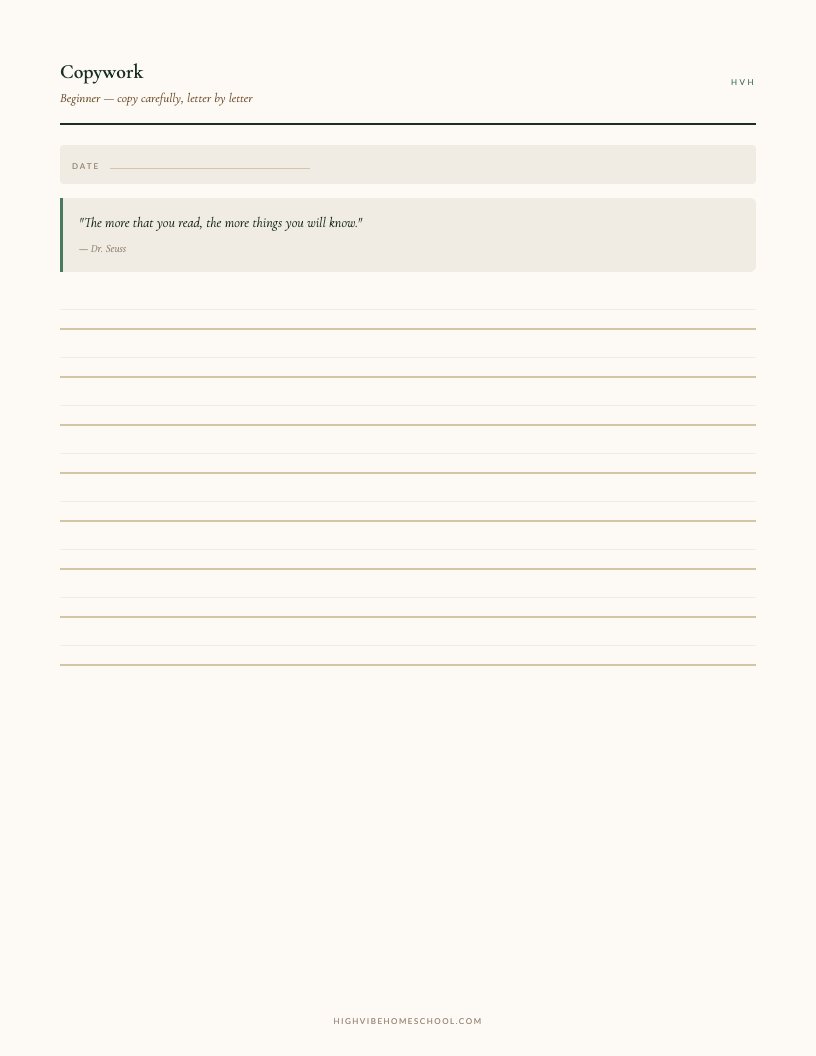
Free Download
Copywork Pages
6 pages of handwriting practice: 3 beginner pages with large lines and 3 intermediate pages, botanical header on each.
No spam. Unsubscribe anytime.
Homeschool language arts places writing in context among the five components of literacy. And copywork pages — our free printable — is the tool we use for the daily copywork practice that builds the ear for good writing.
Written by
The High Vibe Homeschool Team
We are a homeschool family that has been doing this for seven years across three kids. We write about what we have actually tried, what failed, what surprised us, and what we would do again. No credentials. Just lived experience.
ENJOYED THIS ARTICLE?
Get more like it every week
Real homeschool life, in your inbox.
Keep Reading
More in Curriculum
 Curriculum
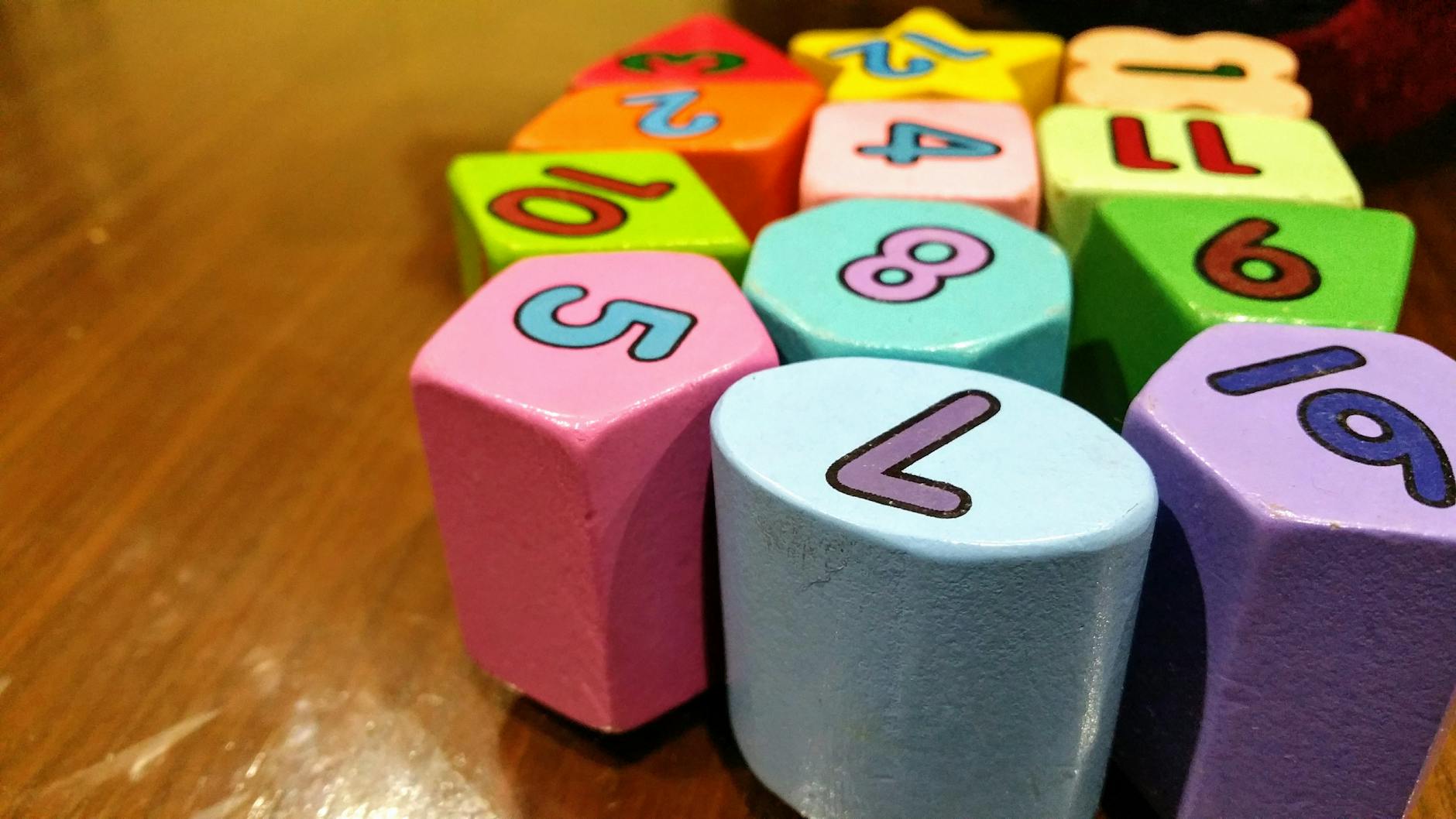
Math Games That Make Numbers Come Alive (Even for the Kid Who Hates Math)
My son cried at math worksheets for two years. Then we found games. Here are the ones that changed everything — no flashcards required.
 Curriculum
Living Books: What They Are and How to Find Them
Charlotte Mason's term for books that feel alive. Here's what makes a book 'living,' why it matters, and a list of the ones that have done the most for our homeschool.
 Curriculum
Classical Education: What It Actually Is and Whether It's Right for Your Family
Classical education is having a revival. Here's an honest explanation of the trivium, who it works for, who it does not, and what the best resources look like.