Homeschool Supplies We Actually Use Every Day (No Clutter, No Gimmicks)
After years of buying things that sounded great and ended up in a closet, here is the short list of supplies that genuinely earn their shelf space in our homeschool.
A little note: Some links in this post are affiliate links. If you click through and buy something, we earn a small commission at no extra cost to you. We only ever link to things we would genuinely recommend to a friend.
I have a box in the garage that I call the Homeschool Graveyard.
It is full of things that sounded like exactly what we needed: a timeline kit still in its plastic sleeve, a geography game nobody ever wanted to play, a set of science experiment cards that required twelve items we never had, a very expensive manipulative my youngest used twice.
I am not proud of the box. But I have learned from it.
What follows is not a comprehensive homeschool supply list. It is the short list of things that have survived the Graveyard, that get used almost every day, and that I would buy again without hesitation.
Writing and Recording
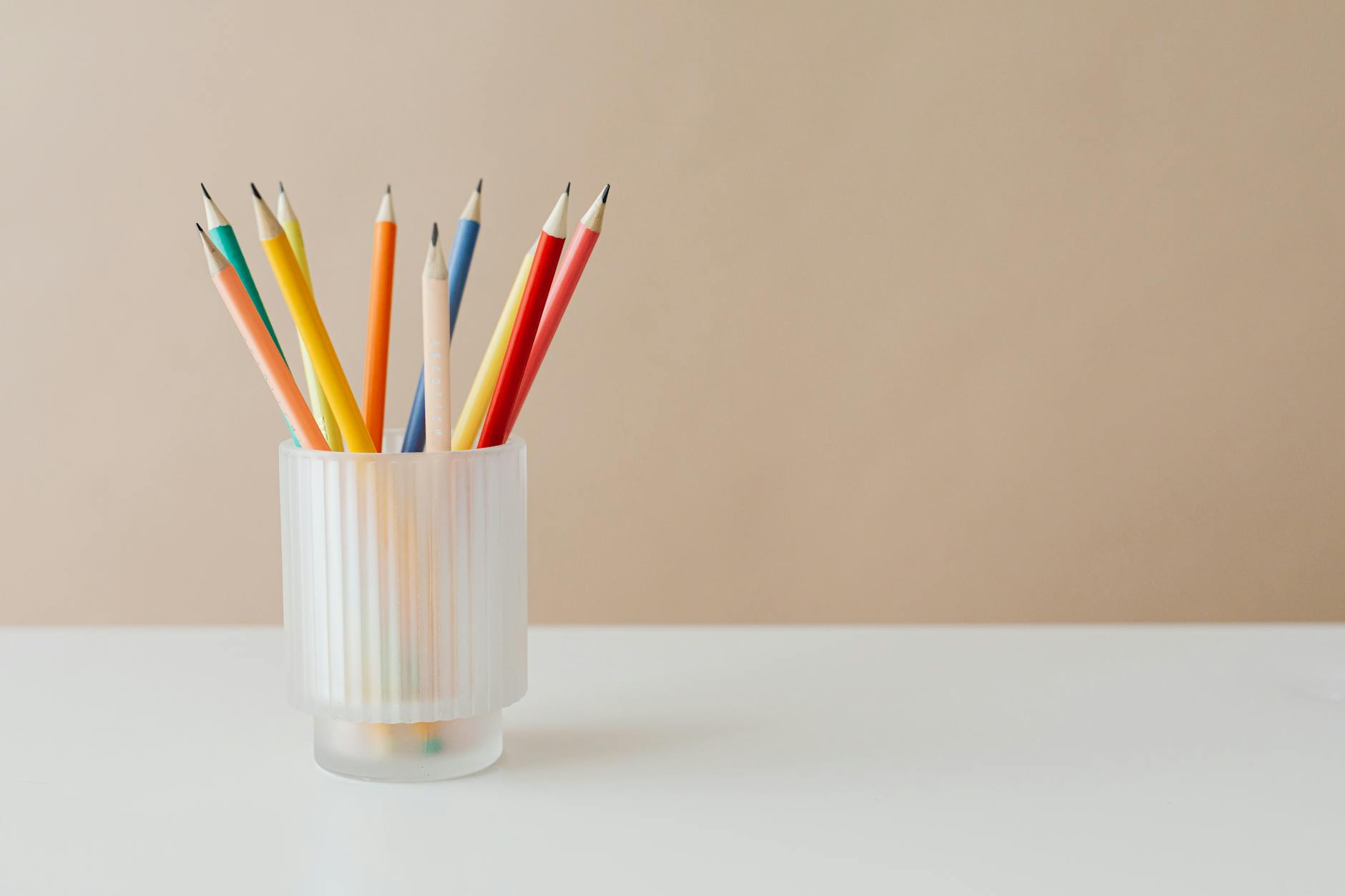
These are the pens my kids reach for first, every time. The grip is comfortable, the colors are consistent, and they last forever if you put the caps back on. We use them for narration notebooks, nature journals, copywork, and anything where the goal is for a child to actually want to write.
Not cheap. Worth every penny. The blendability alone puts them in a different category from anything else we have tried. We use the 24-set for daily work and pull out the full 72 for special projects. Once you have used these, the waxy drugstore pencils feel like drawing with a candle.
Buy them in bulk. Use them for everything: morning pages, narration, nature journaling, math scratch work, gratitude lists, whatever needs a home. The humble composition notebook is one of the best learning tools ever made and nobody talks about it enough.
A word on notebooks: resist the temptation to buy beautiful bound journals for daily use. Children are hard on notebooks. Composition notebooks survive being dropped, stuffed in bags, and used as drawing surfaces for younger siblings. Buy a case at the start of the year and do not think about it again.
For Cutting and Crafts
We have tried every brand. We always come back to Fiskars. They cut clean, they are comfortable, and they survive being dropped approximately 400 times a year.
A glue stick, not liquid glue. We keep a twelve-pack on hand. For notebook projects, timeline work, nature journals, and anything that needs to be stuck to paper without a disaster, the glue stick is always the right answer. Liquid glue everywhere is not.
For the Nature Table and Science Work
Every child needs a real magnifying glass, not a toy one. We have a set of three different magnifications that live in a basket near the back door for impromptu nature observations. They have been used to examine caterpillars, soil, feathers, ice crystals, and one very unhappy spider.
A field journal. Not a special nature journal — a plain spiral notebook dedicated to outside observations. Ours lives in a zip pouch with the magnifying glasses. Date at the top of each entry, quick sketch, a few observations. The habit of observing and recording before you analyze is more valuable than any science worksheet.
Twine and a measuring tape. Sounds odd but they are in constant use: measuring plant growth, estimating distances on nature walks, building projects, geometry in action. Cheap, small, and surprisingly useful.
For Organization and Display
A simple whiteboard is one of the most versatile things in our school room. We use it for: math instruction, spelling lists, planning the day's order, keeping track of where each child is in their independent reading, drawing diagrams, and occasionally letting my youngest draw whatever she wants to draw while the older two work. A basic 2x3 magnetic whiteboard is plenty.
Index cards in multiple colors. I know this sounds like nothing but we use them constantly: flashcards for spelling and math facts, vocabulary cards, timeline cards, notecards for narration summaries. The color-coding by subject has been useful enough that I buy them by the 500-card pack.
For Reading Aloud and Listening
A simple book stand or book rest is one of those items that sounds unnecessary until you use one. Holding a 400-page read-aloud for forty-five minutes while managing a wiggly listener is tiring in a way that a stand solves entirely. We use ours every single day.
A small portable speaker for audiobooks and music during independent work time. We do not use an expensive one. A basic Bluetooth speaker that can survive being knocked off a shelf is all you need. Audiobooks and classical music during art time are low-effort, high-value additions to any homeschool day.
For Math and Manipulatives
The honest answer on manipulatives: you need fewer than you think, and you need them to be accessible rather than put away.
The ones that earn their shelf space in our home: a set of base-ten blocks, a hundred chart (laminated, on the wall at child height), a good ruler and a measuring tape, and pattern blocks. That is roughly it. Everything else we have tried ended up ignored or used only as toys.
One thing that has made more difference than any manipulative: a dedicated math fact practice time that happens every day regardless of what else is going on. Five minutes, flash cards or an app, consistent. The consistency is the tool. Nothing physical substitutes for daily practice.
Things That Sounded Good and Were Not
Since I am being honest: the interactive notebooks I spent an evening preparing. The lapbook that took three hours to assemble for twenty minutes of learning engagement. The laminator (used six times in three years). The subscription box that was excellent the first month and redundant after that.
These are not bad products in most cases. They are products that did not match how we actually work. Before you buy anything that requires significant preparation time from you, ask: will I actually do this prep? Not in theory, actually?
The same question applies to anything that requires assembling materials before each use. If you have young children and a packed morning, any supply that requires ten minutes of prep before it can be used will be used less than you plan. Supplies that are ready to go in a basket or on a shelf get used. Supplies that need to be gathered, set up, and put away tend to stay in their boxes.
The Graveyard box is a useful teacher. Before buying anything new, I picture it on the Graveyard shelf twelve months from now. That visualization has saved us a surprising amount of money and closet space.
The Graveyard box still exists. But it has not had a new resident in about two years. I hope this list helps keep yours from growing too.
These supplies pair naturally with organizing your homeschool space — where you put everything matters as much as what you have. And our morning rhythm shows how these supplies get used in practice.
Written by
The High Vibe Homeschool Team
We are a homeschool family that has been doing this for seven years across three kids. We write about what we have actually tried, what failed, what surprised us, and what we would do again. No credentials. Just lived experience.
ENJOYED THIS ARTICLE?
Get more like it every week
Real homeschool life, in your inbox.
Keep Reading
More in Resources
 Resources
Our Favorite Read-Alouds for Every Age (That the Whole Family Actually Loves)
Read-alouds are the heartbeat of our homeschool day. Here are the books that made our kids beg us to keep reading — sorted by age so you can find your next one fast.
 Resources
Yes, Audiobooks Count. Here's How We Use Them.
Audiobooks are not a shortcut or a lazy day substitute. In our homeschool, they are a core tool. Here's exactly how we use them and why listening absolutely counts as reading.
 Resources
10 Books Every Homeschool Mom Should Read (At Least Once)
Not books for your children. Books for you. The ones that changed how we think about education, restored our confidence on the hard days, and gave us the words for what we were trying to do.