Music in Our Homeschool: How to Include It Without Becoming a Music Teacher
Music education in a homeschool does not require you to read sheet music, play an instrument, or know anything about theory. Here is what we actually do and what has made a real difference.
A little note: Some links in this post are affiliate links. If you click through and buy something, we earn a small commission at no extra cost to you. We only ever link to things we would genuinely recommend to a friend.
I do not play an instrument. I cannot read sheet music. My singing voice is what a kind person would describe as enthusiastic.
This did not prevent us from having music as a genuine part of our homeschool. It required accepting that music education does not look like what I imagined from my own school experience.
Here is what it actually looks like for us.
The Three Parts We Keep
Daily music in the environment. Not as a lesson. Just present. Classical music in the morning while we work. Folk songs in the car. Hymns before dinner some nights. Jazz on Saturday mornings. We cycle through composers the way some families cycle through history topics.
This single practice has produced more music knowledge in our children than anything else we have tried. My son can identify Baroque from Classical period music by ear. Not because I taught him. Because he has heard both for thousands of hours.
Composer study. Parallel to artist study in visual art. We spend three to four weeks with one composer — listening to their major works, learning a little about their life and era, noticing what is distinctive about their sound.
The resources we like: the AmblesideOnline composer rotation is free and well-organized. The Listening to Learn curriculum is more structured if you prefer that.
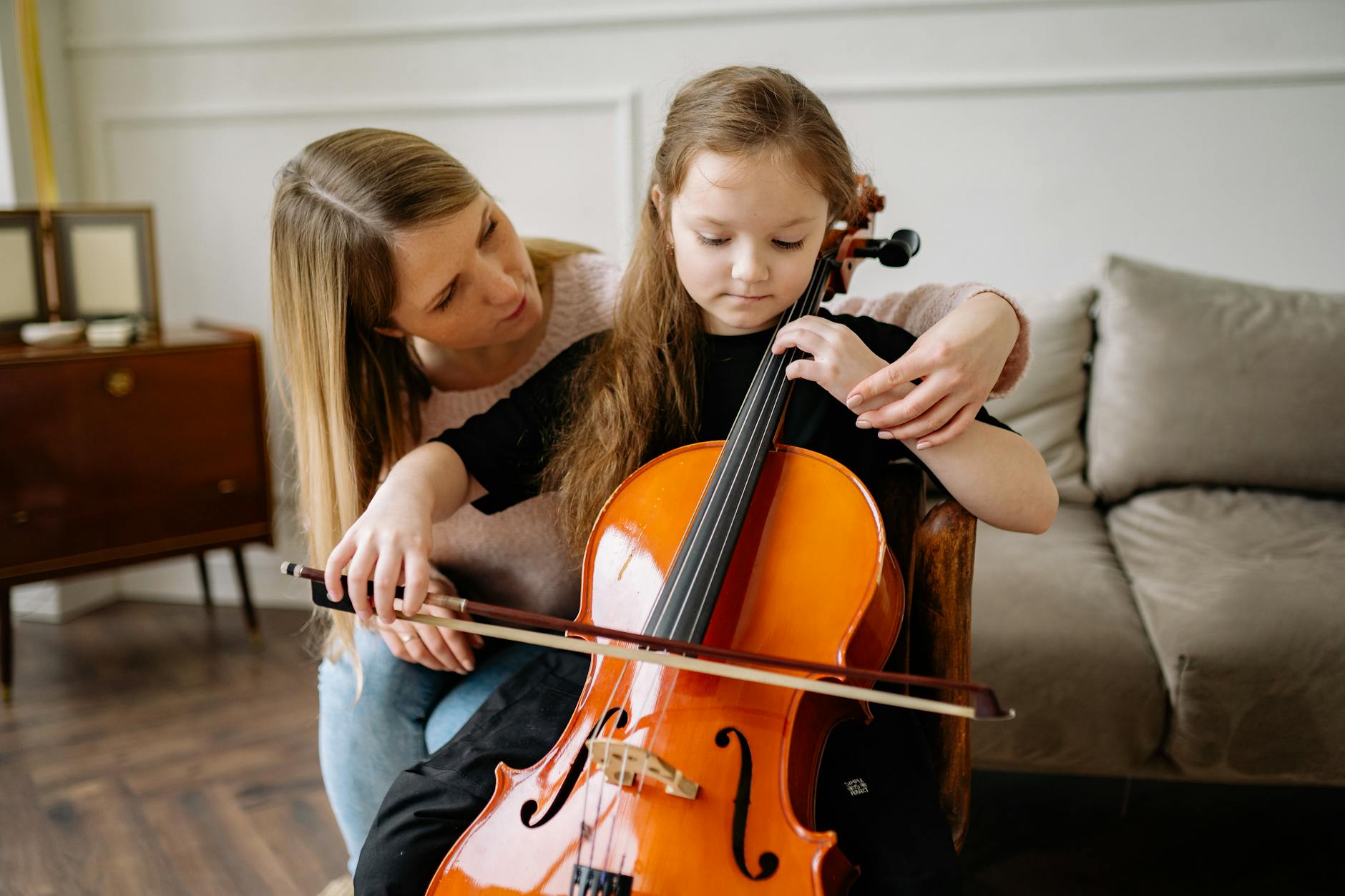
Instrument lessons, eventually. This is the component where an expert matters. We started our oldest with piano at seven — not because seven is the ideal age, but because she asked. Our son started viola at nine, again at his request. The timing followed the child.
What We Dropped
Structured music theory for young children. This sounds more useful than it is at the elementary level. Children who are actively making music and listening to music absorb theory naturally over time. Explicit instruction in notation and intervals before a child can play anything well produces frustration and no lasting benefit in our experience.
Group music classes at the wrong age. We tried a Kindermusik class when our youngest was three. She was not ready to sit in a structured group setting. We left after six weeks and simply sang at home for another year. The forced structure was worse than no structure.
Instrument Learning in a Homeschool Context
The best thing about homeschooling and instrument learning: daily practice is possible.
For most children in conventional school, instrument practice gets squeezed into twenty minutes after homework, sports, and dinner. In a homeschool, thirty minutes of focused practice in the morning, when the brain is fresh, is not only possible but typical.
Our oldest made more progress in her first year than her conventionally schooled peers who had started at the same time. The difference was not talent. It was available daily practice time.
Choosing an Instrument
The best instrument is the one your child wants to play. This sounds obvious but it gets overridden all the time by parents who want their child to play piano because it is foundational, or violin because it builds discipline, or guitar because it is practical.
All of those reasons are real. But a child who chose their instrument will practice it. A child who was placed on an instrument will fight you about practicing it, possibly for years.
Piano is genuinely foundational. If you have a child who does not have a strong preference, piano is a reasonable first instrument because it makes learning music theory, reading notation, and understanding harmony significantly easier. Many musicians who play other instruments have said they wished they had piano first.
For children who are resistant to piano specifically: ukulele is accessible and immediately rewarding, guitar is motivating for children who love popular music, and percussion instruments often appeal to children who are kinesthetic learners and have struggled to connect with pitched instruments.
When to Start
There is no single right age. The research on Suzuki method suggests children as young as three can begin with the right teacher and parental involvement. Many music teachers prefer to wait until a child can read.
What matters more than age is readiness: can the child focus for twenty to thirty minutes with guidance? Do they have the fine motor development the instrument requires? And most importantly, do they want to?
A child who starts at seven because they asked is more likely to continue than a child who starts at four because their parent decided it was time.
For Families Who Cannot Afford Lessons
YouTube has excellent free instruction for beginning guitar, piano, and ukulele. The ukulele in particular is genuinely accessible for children — four strings, simple chord shapes, immediate gratification.
Community music schools offer lessons at reduced rates for families with financial need. Many do not advertise this — ask.
Library music rooms and music programs are available in many cities.
One underrated option: find a high school student who plays your child's chosen instrument and can teach beginning lessons for a lower rate than a professional teacher. Many music students in high school are excellent beginning teachers, and the peer element can be genuinely motivating for younger children.
How to Do Composer Study Without Any Music Background
Composer study requires only one thing from the parent: the willingness to listen together.
We use this rough structure across a three to four week unit:
In the first week, we listen to two or three of the composer's most famous pieces — the ones you would recognize from commercials or movies. We just listen. No worksheets. No quizzing. Just listening, ideally while the kids are drawing or doing something with their hands.
In the second week, we add some context. Who was this person? When and where did they live? What was happening in the world around them? We are not doing a history deep dive. Five minutes of background, maybe a picture of the composer, something that makes them a real person.
In the third week, we go a little deeper. We listen for specific things: the instruments in the orchestra, whether the music is loud or soft, fast or slow, happy or sad. We might listen to the same piece twice and notice different things each time.
By the end of three weeks, my children can usually identify the composer by sound — not because I drilled them, but because they heard the music enough times that it became familiar. That is the goal.
The Case for Singing
Charlotte Mason placed singing at the center of music education, and I have come to agree with her.
Singing requires no equipment, no purchase, and no skill to begin. Children who sing daily develop pitch recognition, musical memory, breath control, and an embodied relationship with music that listening alone does not produce.
We sing at morning basket. We sing in the car. We sing the songs we learned as children. My children have absorbed an enormous repertoire of folk songs, hymns, and rounds that will live in them longer than any quiz I have given them.
Some folk songs we come back to repeatedly: "Shenandoah," "Simple Gifts," "Scarborough Fair," "This Land Is Your Land," "Down in the Valley." These are not just songs. They are pieces of cultural inheritance.
You do not have to be able to sing well. You have to be willing to sing.
Music and the Rest of the Homeschool
Music connects to almost every other subject if you let it.
History comes alive when you listen to music from the period you are studying. Baroque music alongside a unit on the 1600s and 1700s. American folk songs during a unit on westward expansion. Gospel music during a unit on the Civil Rights era. The music is not decorative. It is evidence.
Math connections appear naturally in music theory — rhythm is fractions, scales are ratios, tuning is acoustics. We have not made this explicit with young children, but older students interested in music theory find these connections genuinely interesting.
Literature and poetry connect to songs. Many folk songs are poems set to music. Many poems, including much of Shakespeare, were meant to be sung or performed. Reading them aloud changes them.
You do not need to engineer these connections. Just keep music in the air and the connections will appear on their own.
Music connects naturally with morning basket — many families include a musical piece or composer study as part of their daily gathering. And art in our homeschool without curriculum covers the parallel approach for visual art.
Written by
The High Vibe Homeschool Team
We are a homeschool family that has been doing this for seven years across three kids. We write about what we have actually tried, what failed, what surprised us, and what we would do again. No credentials. Just lived experience.
ENJOYED THIS ARTICLE?
Get more like it every week
Real homeschool life, in your inbox.
Keep Reading
More in Daily Life
 Daily Life
How to End the Homeschool Year Well
The end of the homeschool year deserves more than quietly stopping. Here is how we close out the year intentionally — what we review, what we celebrate, and how we rest well before the next one begins.
 Daily Life
Homeschool Summer: How to Rest Without Losing Everything You Built
Summer in a homeschool is not the same as summer vacation. Here is how we structure ours — enough rest to restore everyone, enough continuity to make September feel like a continuation rather than a restart.
 Daily Life
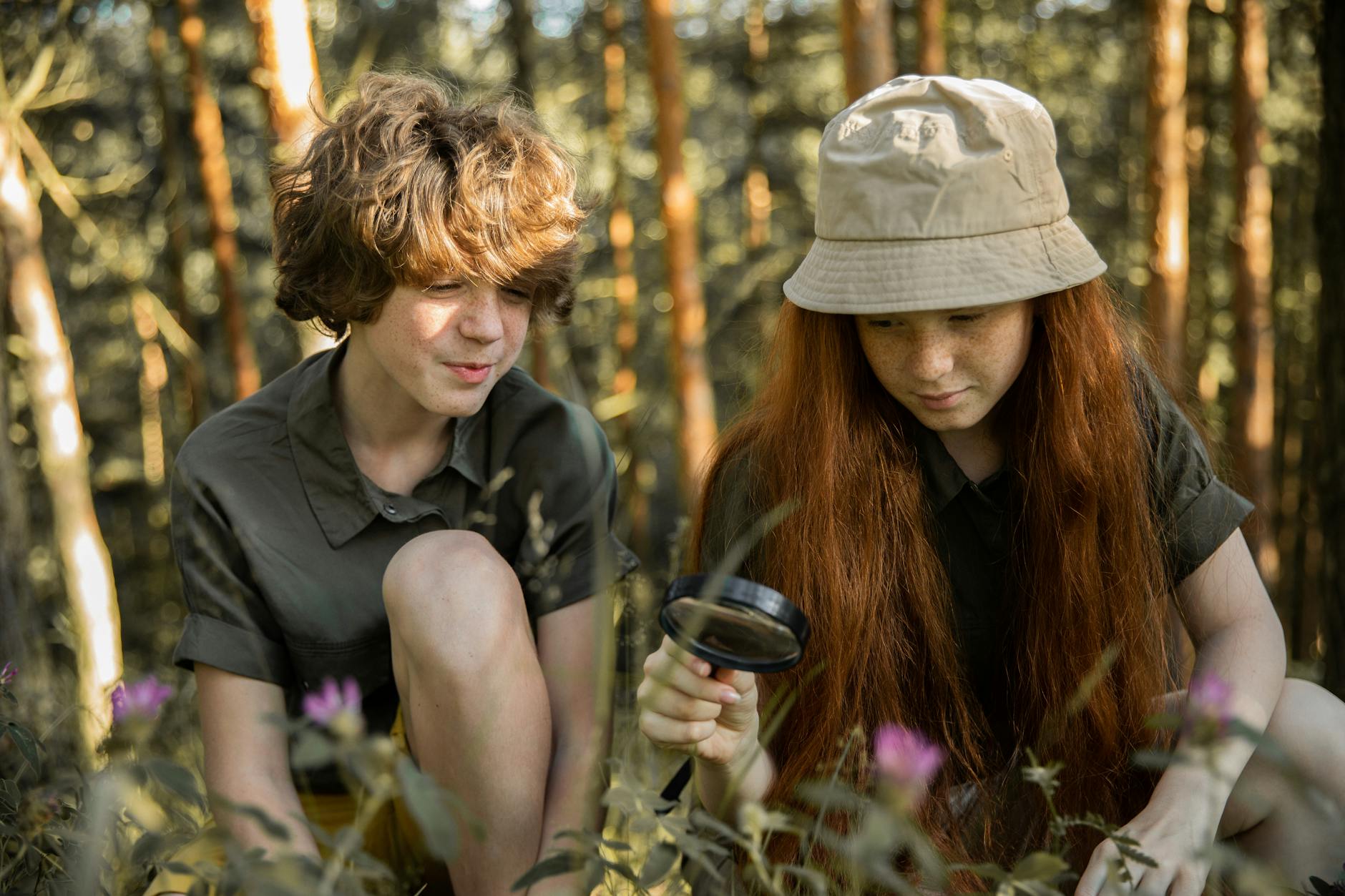
Outdoor Science: The Homeschool Advantage You're Not Using
Most science curricula are indoor, textbook-based affairs. The outdoor world offers something they cannot: real science, happening in real time, available every day.