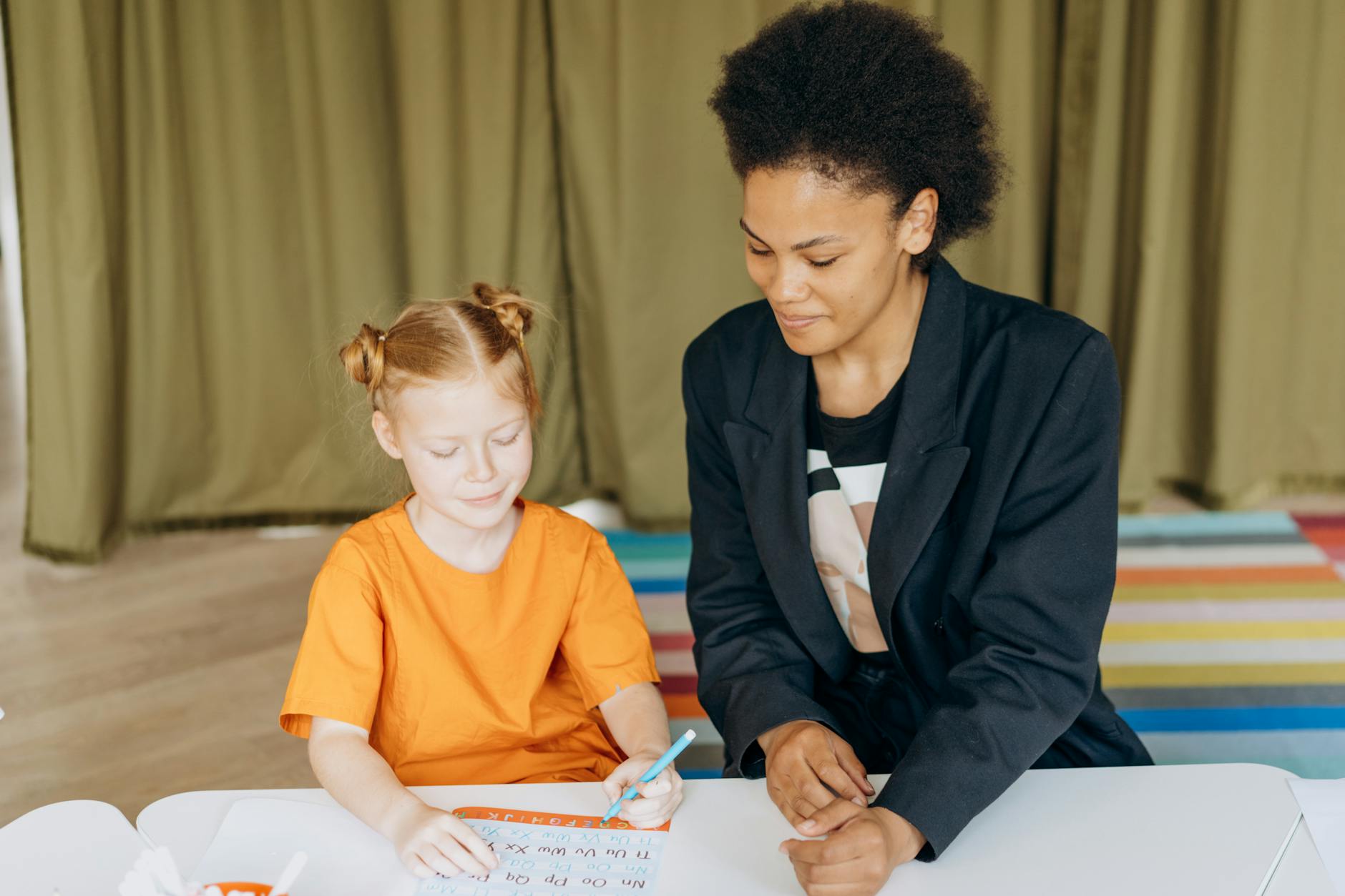
Homeschooling a Child with Learning Differences: An Honest Guide
Dyslexia, ADHD, sensory processing differences, and other learning differences look different in a homeschool than they do in a school setting. Here is what you need to know.
Many families come to homeschooling because school was not working for a child whose learning is different from the norm.
The child who could not stay in her seat. The child who read brilliantly aloud but could not get the words onto paper. The child who was so overwhelmed by the noise and sensory input of a classroom that he shut down before lunch. The child who knew everything on the test and then blanked completely when the time limit was announced.
These children often do better in a home education. Not always, and not automatically, but often — because the home education can be structured around how this particular child's brain actually works.
What the Research Says
The research on homeschooling children with learning differences is largely positive, though the studies are smaller than we would like.
Children with dyslexia frequently thrive in homeschool settings — partly because the one-on-one instruction catches errors in real time, partly because the stigma of "being different" is absent, and partly because the pace can be adjusted to what actually works rather than what works for a class of twenty-five.
Children with ADHD often benefit from the ability to move, to take breaks, to pursue interests in depth, and to study in shorter, more intense bursts rather than sustained periods of forced attention.
Children with sensory processing differences can be educated in an environment with managed sensory input rather than the sensory chaos of most classrooms.
What does not change: the underlying difference. Homeschooling does not cure dyslexia or ADHD. It changes the environment so that the difference matters less.
What Is Different About Teaching a Child with Learning Differences
You will need to be more deliberate about finding what works. With a neurotypical child, many approaches work. With a child whose learning is different, the range of things that work may be narrower, and the consequences of using the wrong approach may be more immediate and more dramatic.
You will need to separate the child from the curriculum. When a curriculum is not working for a neurotypical child, the problem may be the curriculum. When a curriculum is not working for a child with dyslexia, the problem is almost certainly the curriculum — specifically, that it assumes a reading and writing pathway that this child cannot use. The solution is to find the pathway that works, not to push harder on the one that does not.
You will need to track what works. Keeping a record of what is effective — and what produces resistance, tears, shutdown — is more important for children with learning differences than for other children. The pattern is what tells you what to try next.
You will need specialists. A good homeschool parent is a generalist who becomes a specialist over time. For children with learning differences, you will almost certainly need help from actual specialists — an educational psychologist for evaluation, a reading specialist for dyslexia, an occupational therapist for sensory processing. These people provide what you cannot provide on your own.
Common Learning Differences and What Helps
Dyslexia. Structured literacy approaches (Orton-Gillingham and its descendants) are the evidence-based first line. Audiobooks are not a workaround — they are a legitimate accommodation that allows full access to content while reading skills develop. The Reading Well and All About Reading programs are both well-regarded.
ADHD. Short sessions. Movement breaks. Novelty. Interest-based learning. External structure (timers, checklists, visible schedules). High stimulation alternatives to worksheets. Exercise before focused academic work. Medication, if your family has gone that route, often makes the difference between a day that works and one that does not.
Sensory processing. Control the environment. Natural light where possible. Noise-reducing headphones for sensitive children. Fidget tools used legitimately (not as toys). Understanding which sensory inputs help versus hurt for this specific child.
Anxiety. This deserves its own article — and we have one. See homeschooling an anxious child for specifics.
Getting an Evaluation
Many families homeschool for years without a formal diagnosis, teaching to what they observe and adjusting as they go. That approach can work.
But a formal evaluation, done by a qualified educational psychologist or neuropsychologist, gives you information you cannot get any other way. It tells you not just that your child struggles with reading, but exactly which components of reading are affected and why. It tells you whether what looks like attention difficulty is actually processing difficulty. It identifies strengths as well as weaknesses, and those strengths are often where you build from.
In the United States, your local public school district is required by law (IDEA) to evaluate any child who may have a disability, free of charge, even if you are homeschooling. The quality of these evaluations varies considerably. Private evaluations through a neuropsychologist are typically more thorough but cost several hundred to several thousand dollars.
The evaluation report is yours. You are not required to enroll your child in any program the school recommends. The report is information. You decide what to do with it.
Building Your Day Around How the Brain Actually Works
Once you know what you are working with, you can build a school day that fits.
A child with ADHD who does their hardest academic work immediately after thirty minutes of physical activity outside will produce more learning in forty minutes than in two hours of desk work without that movement. This is not a workaround. It is the correct approach for that brain.
A child with dyslexia who receives all new content through listening first, before any reading is required, can access grade-level or above-grade-level material while reading instruction continues in parallel. The two tracks — content acquisition and reading skill building — do not need to wait for each other.
A child with sensory processing difficulties who does school in a quiet room with filtered light and no competing auditory input is not getting special treatment. They are getting the conditions their nervous system requires to learn.
These adjustments feel significant when you are making them. In a few years, they just become how school works in your house.
The Grief Part
This section is for the parents.
When you are educating a child whose learning is different, there is often a grief process that happens somewhere in the middle of everything else. Grief for the easy school experience you imagined your child would have. Grief for the child who works twice as hard as their peers for half the output and knows it. Grief for the plans you had that did not account for this.
That grief is real. It deserves to be named.
It also does not have anything to say about the quality of your child's life or the outcome of their education. Dyslexia is not destiny. ADHD is not a ceiling. Many of the most capable adults in any field have learning differences. They found what worked, they built on their strengths, and they stopped letting what was hard define them.
Your job is to help your child find what works. You are doing that by being here and asking the questions. That counts.
What You Are Getting Right
If you are reading this because you are figuring out how to educate a child with learning differences — you are doing something many parents choose not to do.
You have decided that this child's way of learning is real and deserves to be accommodated rather than overridden. You are building a school around a child rather than expecting a child to fit a school.
That is exactly the right thing to do. And it is hard, and it takes a long time to get right, and you will make many mistakes along the way.
You are doing it anyway. That counts for a great deal.
Homeschool anxious child covers the emotional side of learning differences. And slow homeschooling offers the philosophical foundation for the approach that works best for different learners.
Written by
The High Vibe Homeschool Team
We are a homeschool family that has been doing this for seven years across three kids. We write about what we have actually tried, what failed, what surprised us, and what we would do again. No credentials. Just lived experience.
ENJOYED THIS ARTICLE?
Get more like it every week
Real homeschool life, in your inbox.
Keep Reading
More in Encouragement
 Encouragement
The Thing I Did Not Expect to Feel About Homeschooling
Seven years in, the thing I feel most is gratitude. Not because it has been easy. Because it has been real. Here is what I mean.
 Encouragement
Is Homeschooling Worth It? The Honest Answer After Seven Years
We are seven years in. Here is the honest accounting — what we gained, what we lost, what surprised us, and whether, given everything, we would do it again.
 Encouragement
Slow Homeschooling: The Case for Doing Less, Better
Slow homeschooling is not for families who are not trying hard enough. It is for families who have tried hard enough and are ready to try less. Here is what it means and why it works.