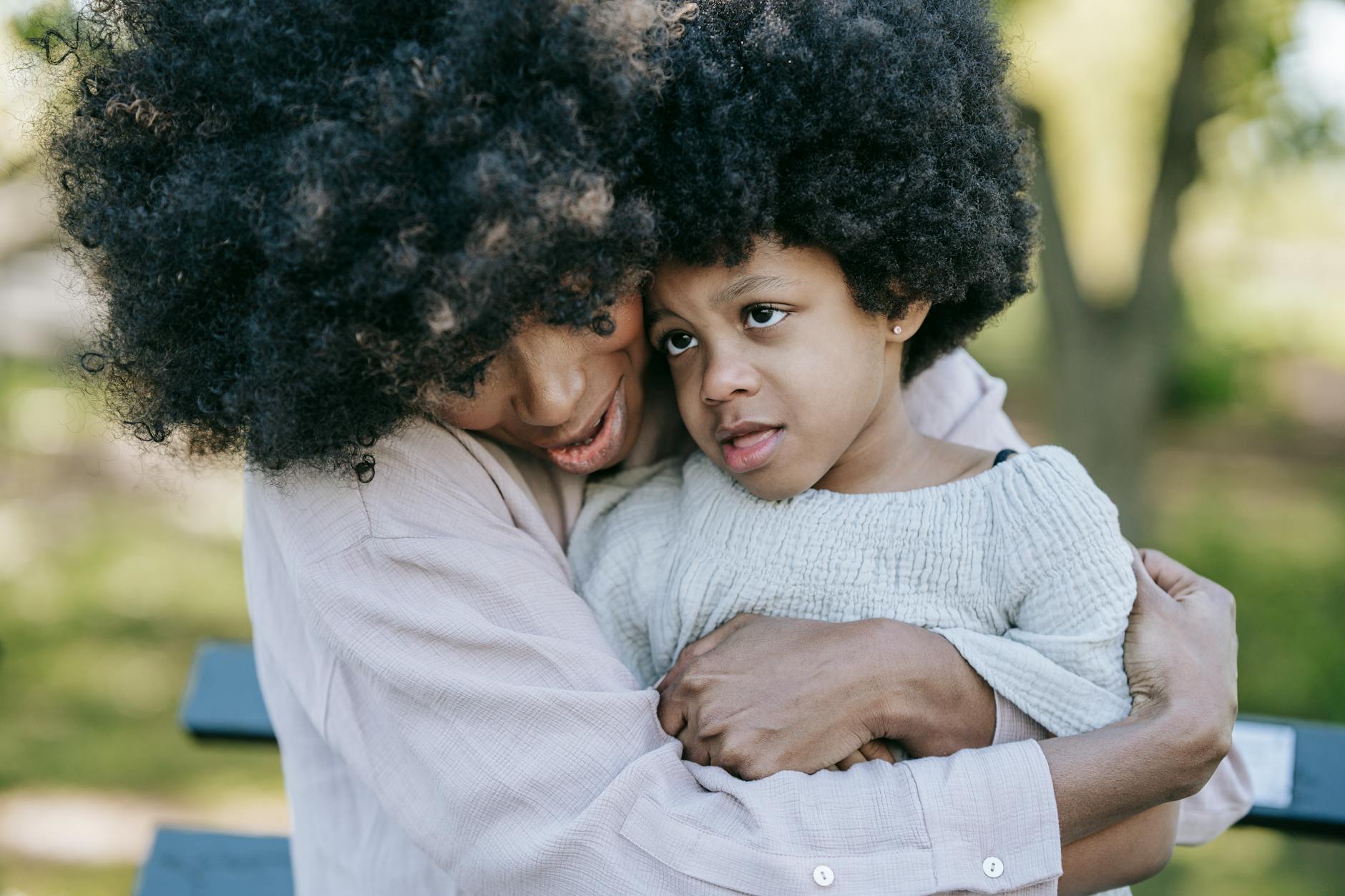
Homeschooling an Anxious Child: What Actually Helps
Many families pull their children from school specifically because anxiety was getting in the way of learning. Homeschooling can help — but only if you approach it differently than you would with a non-anxious child.
My daughter was eight when we finally understood that what was happening in her school was not a discipline problem or an attitude problem. It was anxiety.
She had been labeled as difficult, avoidant, and occasionally oppositional. The teachers were not wrong about the behaviors. They were wrong about the cause.
We pulled her and brought her home. The anxiety did not disappear. But everything we could do about it became accessible in a way it had not been when she was spending six hours a day in an environment that was, for her, physiologically overwhelming.
What Anxiety Looks Like in a Homeschool Context
Anxiety in children does not always look like visible worry. It often looks like:
- Resistance to new things, even things the child was previously interested in
- Perfectionism — refusal to do something they might not do perfectly
- Physical complaints before school time (stomach aches, headaches)
- Shutdown or withdrawal rather than engagement
- Extreme need for control over the learning environment
- Difficulty tolerating uncertainty, ambiguity, or open-ended tasks
These behaviors are maddening to manage as a teacher. They are worse in conventional school, where the environment cannot flex and the pace cannot slow. In a home environment, they become navigable.
The maddening part is that these behaviors can look a lot like laziness or defiance from the outside. My daughter would flatly refuse to write a single sentence when she was activated. Not because she did not know how. Because the possibility of doing it wrong felt more threatening than the consequences of not doing it at all. That is not a motivation problem. That is a nervous system in threat-response mode.
What the Homeschool Environment Can Provide
Sensory predictability. The child knows the space. The sounds are familiar. The people are known and safe. Sensory overwhelm, which is a major driver of anxiety in many children, is dramatically reduced.
Flexible pacing. On high-anxiety days, school can be shorter and gentler. On low-anxiety days, more is possible. Conventional school cannot do this.
Known expectations. An anxious child who knows exactly what will happen today has less threat response than an anxious child who does not know what is coming. Routine is not boring for these children. It is regulating.
Permission to try imperfectly. In a home environment where the only audience is a trusted adult, the stakes of imperfect performance are lower. Anxious children often perform significantly below their actual ability level in conventional school because the social evaluation is too threatening. At home, the safety allows for the risk.
Fewer transition points. Every transition — hallway change, subject bell, lunch line, recess — is a potential trigger for an anxious child. Homeschooling has far fewer transitions. When a transition does need to happen, you control the pace and the warning.
What Helps
Predictable routines with gentle flexibility. The anxious child needs to know what is coming. Write out the day's schedule, or at least the morning. Warn before transitions. "In about ten minutes, we'll switch to math." The warning reduces the startle and the threat.
Starting with mastery. Begin each school day with something the child can do well. Anxiety is threat-based, and beginning with something threatening escalates it. Beginning with competence establishes safety before challenge.
For us this meant starting with read-aloud for a year and a half. Not math. Not writing. Reading together, where my daughter had nothing to perform and nothing to get wrong. Once she was settled, we could move to harder things.
Co-regulation first. A child in an anxious state cannot learn. Before attempting any instruction on a high-anxiety day, spend time in co-regulation: side-by-side activity, reading aloud, a walk outside, something that is calming and connective. The nervous system needs to settle before the brain can engage.
Separating the anxiety from the schoolwork. "You don't have to do this perfectly. I just want to see what you know." "We're going to try and see what happens." "It doesn't matter if you get it wrong." The anxious child needs explicit permission to fail, stated often.
What Not to Do
Do not force it on a high-anxiety day. I spent months trying to push through my daughter's shutdowns with more structure, more firmness, more consequences. This produced exactly nothing except a worse relationship and a child who associated school time with threat. You cannot coerce your way through an anxious nervous system.
Do not avoid everything hard forever. This is the flip side. Accommodating anxiety indefinitely means the child's world gets smaller, not larger. The goal is to build the safety and relationship such that gentle challenges become possible. Avoidance feels kind in the moment and is genuinely harmful long-term.
Do not make the anxiety the center of every conversation. An anxious child who hears constant narration about their anxiety becomes more anxious. Keep the language neutral. "This feels hard today" rather than "your anxiety is really bad right now." Name it when it helps; step back when naming it becomes its own pressure.
Choosing Curriculum for an Anxious Child
This matters more than most people think.
Anxious children do badly with: open-ended assignments, unclear expectations, self-directed projects without scaffolding, competitive elements, timed tests.
Anxious children do well with: clear step-by-step instructions, mastery-based progression (they do not move on until they genuinely understand), gentle repetition, visual predictability about what the lesson involves.
We use mastery math, meaning we stay on one concept until it is solid before moving forward. This is slower than grade-level sequential curricula. It is also dramatically less anxiety-producing because there are no gaps that fester into confusion later. My daughter now has solid math foundations that she did not have when she was anxious and rushing through material she had not mastered.
Avoid anything with a timer for anxious kids. The ticking clock activates threat response. Better to do more practice problems in a relaxed way than fewer problems under time pressure.
When Professional Support Helps
Anxiety that significantly interferes with daily functioning — eating, sleeping, friendships, basic activities of daily life — needs professional evaluation.
Homeschooling can reduce the environmental triggers that make anxiety worse. It cannot treat an anxiety disorder. Therapy, particularly cognitive behavioral therapy and exposure-based approaches, has a strong evidence base for childhood anxiety.
A therapist who understands homeschooling (or is at least open to it) is an enormous asset.
We started therapy when my daughter was nine, about a year after we pulled her from school. By that point the worst of the environmental triggers had resolved and we could see more clearly what was underlying. The therapist we found worked with exposure-based CBT and had worked with homeschooled families before. The combination of the home environment and the therapy changed things substantially.
It took time. It is not a fast process. But the trajectory was clearly upward.
The Social Question
Many parents worry that an anxious child at home will become more isolated and the anxiety will worsen. This is a real concern worth taking seriously.
What I have found: the anxious child who was socially miserable in a six-hour forced-togetherness environment often does better with structured, lower-pressure social time. One friend for an afternoon. A small co-op group they know well. An activity where the relationship is built around a shared interest rather than being randomly assigned.
My daughter had almost no real friendships in school. She has genuine friendships now. They were built slowly, in smaller and safer contexts, and they are real. The anxiety about social situations has decreased as the experiences have been more consistently positive.
You are not protecting an anxious child from the world by homeschooling. You are giving them a chance to build the capacity to engage with it at a pace that does not overwhelm them every day.
What We Learned
My daughter is twelve now. The anxiety is still there. It is also significantly better managed — partly from therapy, partly from four years in an environment that allowed her to build competence at her own pace without daily social evaluation.
She knows herself better than she would have if we had stayed in school. She knows what helps her and what does not. She can ask for what she needs.
That is not a homeschool outcome. That is a person outcome. The homeschool was just the container that made it possible.
Homeschool self-care and daily self-care practices matter especially for parents teaching children whose needs are high. And slow homeschooling — deliberately doing less — is often the most effective intervention for a family whose pace is contributing to the anxiety.
Written by
The High Vibe Homeschool Team
We are a homeschool family that has been doing this for seven years across three kids. We write about what we have actually tried, what failed, what surprised us, and what we would do again. No credentials. Just lived experience.
ENJOYED THIS ARTICLE?
Get more like it every week
Real homeschool life, in your inbox.
Keep Reading
More in Wellness
 Wellness
Gratitude as a Homeschool Practice: Why It Changes Everything
A brief, concrete practice that has changed the tone of our homeschool days — and why starting with what went right is more powerful than most curricula I have ever purchased.
 Wellness
Daily Self-Care for the Homeschool Mom (That Actually Fits in Real Life)
Not a five-step morning routine. Not an hour of meditation. The small, sustainable practices that keep homeschool moms functioning on the ordinary days.
 Wellness
Movement in Your Homeschool Day: Why It's Not a Break From Learning
The research on movement and learning is clear enough that I now consider it non-negotiable. Here is how we have woven physical movement into our school day in ways that do not feel like P.E. class.