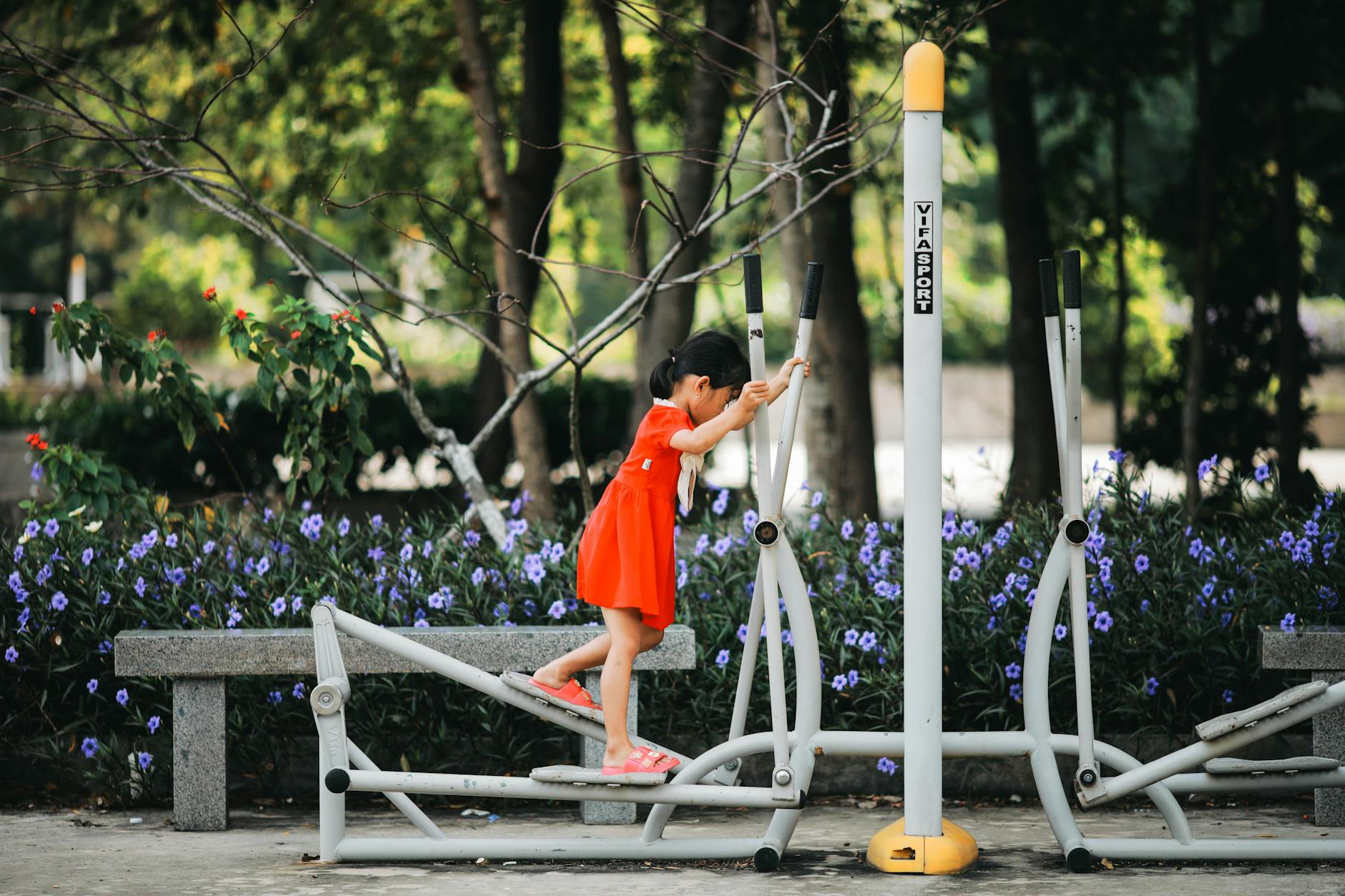
Movement in Your Homeschool Day: Why It's Not a Break From Learning
The research on movement and learning is clear enough that I now consider it non-negotiable. Here is how we have woven physical movement into our school day in ways that do not feel like P.E. class.
My son could not focus in the afternoons.
He would start the morning fine, but by one o'clock he was restless, inattentive, and producing work that did not reflect what he was capable of. I tried adjusting the schedule, moving the harder subjects to the morning, eliminating screens. Some of it helped. None of it solved the problem.
What solved the problem was going outside for thirty minutes after lunch.
Not structured exercise. Just outside. Walking, climbing things, whatever. When he came back in, the afternoon was a different thing than it had been.
I have since learned that this is not coincidental.
What the Research Says
The connection between movement and cognitive function is well established. Physical activity increases blood flow to the brain, raises levels of BDNF (a protein that supports learning and memory), and reduces the physiological stress response that makes sustained attention difficult.
Studies on school-aged children consistently show that incorporating more physical activity into the school day, even at the cost of academic time, produces better academic outcomes — not because the children are happier, but because movement is genuinely part of how learning consolidates.
For homeschool families, this is practically actionable in ways it is not for conventional schools. You do not need to fight for recess time. You can build movement in wherever your children need it.
How We Have Done It
The post-lunch walk. This is now non-negotiable in our house. Thirty minutes outside after lunch, every school day. We do not run or exercise with any intent. We walk, look at things, talk, sometimes listen to an audiobook. The cognitive reset it produces is consistent.
Movement breaks between subjects. When we transition from one type of work to another, we take five minutes to move. Jump on a trampoline, do five minutes of yoga stretches, walk to the mailbox and back. This is not a reward. It is part of the structure.
Kinesthetic activities as instruction. Anything that can be learned with the body is more deeply retained than the same thing learned at a desk. Tracing letter shapes in sand. Acting out historical events. Building physical models of concepts we are studying. These are not supplements to learning. They are learning.
Morning movement as setup. Before school begins, my children spend time outside. We do not call it exercise. We call it morning. The quality of the school that follows is consistently better than on days when we skip it.
Specific Movement Ideas That Actually Work for School
If you are looking for ways to incorporate movement that connect directly to what you are teaching rather than just pausing the school day, some things that have worked:
Skip-count while jumping rope. Multiplying while bouncing a ball. Walking a number line on the floor for addition and subtraction — tape a number line on a hallway floor and have the child physically move along it. For young children especially, the physical movement of going forward (adding) and backward (subtracting) internalizes the concept faster than any worksheet.
Acting out history. Assign roles and do a rough dramatization of an event you have been reading about. It does not need to be polished. It needs to involve the child's body as well as their mind. Kinesthetic learning of historical sequence tends to stick in a way that reading alone does not.
Spelling on a trampoline. Call out a word; the child spells it aloud while bouncing. This is absurd and completely effective. The physical rhythm reinforces the letter sequence in a different way than visual memorization does.
Science outside whenever possible. Do the experiment in the yard. Observe things where they actually are rather than in photographs of them. This seems obvious when stated, but it is easy to default to the table when outside is available.
For the Restless Child
Some children are simply more physically oriented than others. They need movement the way some people need sleep or water — consistently, not as a reward for good behavior.
A child who cannot sit still for twenty minutes does not have a deficiency. They have a body that needs to move. Fighting this produces frustration for both of you. Working with it produces a school day that functions.
Some strategies that have helped families with very movement-oriented children:
Standing or kneeling instead of sitting. A standing desk, a balance board, a stool instead of a chair. Children who cannot sit still can often focus fine when they are physically engaged in a different way.
Oral narration while moving. Walking around the room while narrating what they have learned. The movement and the narration do not interfere with each other. They often enhance each other.
Short work blocks. Fifteen minutes of focused work, five minutes of movement, repeat. This is more total work than a forty-minute block that unravels after fifteen.
What to Do When Movement Is Hard to Get
Not every family has a yard. Not every climate cooperates. There are days when outside is genuinely not possible.
Indoor movement that is better than nothing: a yoga video the child can follow independently, a dance break where someone picks the song, a set of jumping jacks between subjects, going up and down the stairs five times. None of these are as good as thirty minutes of unstructured outdoor time. All of them are better than nothing.
If your living situation genuinely limits outdoor access, prioritize getting outside the building at least once per day, even briefly. A walk around the block, a trip to a nearby park, even a parking lot where the child can run. The outdoor element matters beyond just the movement — fresh air, natural light, and the shift in sensory environment all contribute to the cognitive reset.
The Guilty Parent Problem
Some parents feel guilty about the movement breaks. This often comes from a particular picture of what a productive school day looks like: a child at a table, working, for a certain number of hours.
If that picture is your measure of a good day, movement breaks will always feel like lost time.
The reframe is straightforward but takes repetition: the child who moved for thirty minutes and then worked productively for an hour produced more actual learning than the child who sat for ninety minutes and produced nothing useful after the first twenty.
Measuring input (time at the table) instead of output (what was actually understood and retained) is a habit worth breaking. The measurement that matters is what the child can do and think and discuss at the end of the day, not how many hours they spent stationary.
The Reframe
Movement during the school day is not a break from learning. It is part of how learning happens. The brain that has moved recently is a different brain than the one that has been stationary for two hours.
When my son goes outside after lunch, I am not being indulgent. I am giving him the condition he needs for the afternoon to work.
That is school. It just does not look like school.
Nature study and outdoor time are the forms of movement that also produce learning — the double benefit that makes them non-negotiable for us. And slow homeschooling creates the schedule breathing room that makes daily outdoor movement actually happen.
Written by
The High Vibe Homeschool Team
We are a homeschool family that has been doing this for seven years across three kids. We write about what we have actually tried, what failed, what surprised us, and what we would do again. No credentials. Just lived experience.
ENJOYED THIS ARTICLE?
Get more like it every week
Real homeschool life, in your inbox.
Keep Reading
More in Wellness
 Wellness
Gratitude as a Homeschool Practice: Why It Changes Everything
A brief, concrete practice that has changed the tone of our homeschool days — and why starting with what went right is more powerful than most curricula I have ever purchased.
 Wellness
Daily Self-Care for the Homeschool Mom (That Actually Fits in Real Life)
Not a five-step morning routine. Not an hour of meditation. The small, sustainable practices that keep homeschool moms functioning on the ordinary days.
 Wellness
Building Executive Function Skills in Your Homeschooled Child
Executive function — the skills of planning, prioritizing, and following through — is as teachable as reading. Here is how the home education environment uniquely serves its development.