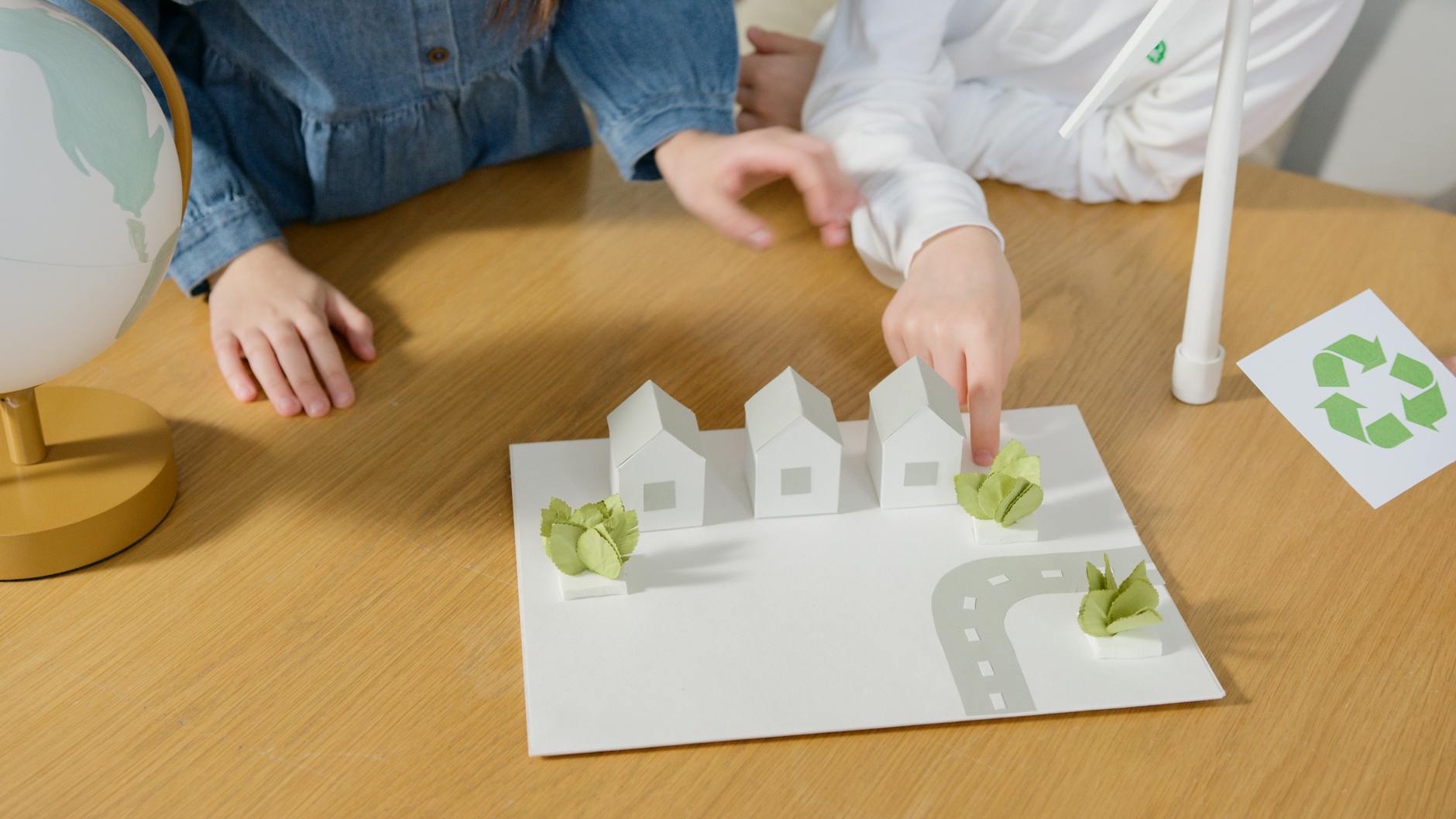
Unit Studies: The Most Flexible Thing in Homeschooling
Unit studies let you teach history, science, writing, and art all from a single topic. Here's how they work, when to use them, and how we build our own without a kit.
A little note: Some links in this post are affiliate links. If you click through and buy something, we earn a small commission at no extra cost to you. We only ever link to things we would genuinely recommend to a friend.
The week we studied ancient Egypt, my daughter built a sarcophagus out of a shoebox, my son tried to decode hieroglyphs for three days straight, and we made flatbread in the kitchen while I read aloud from a book about the Nile.
We covered history. We covered writing (she wrote an imaginary diary from the perspective of a twelve-year-old Egyptian girl). We covered geography, art, and a little archaeology. We baked something.
That was a unit study. And we did the whole thing with library books and a five-dollar kit from the dollar store.
What a Unit Study Actually Is
A unit study is an extended exploration of a single topic that intentionally crosses subject lines.
Instead of doing history from 9 to 9:30 and science from 9:30 to 10 and writing from 10 to 10:30, you pick one big topic and draw all your subjects from it. The topic is the spine. Everything hangs off it.
This works particularly well for:
- Multi-age families (a five-year-old and a ten-year-old can both engage with Ancient Egypt, just at different depths)
- Reluctant learners (when history is not a textbook chapter but a week of building things and reading stories, objections tend to evaporate)
- Parents who find compartmentalized schedules exhausting
- Families who want learning to feel connected rather than fragmented
How We Build a Unit Study
There are pre-packaged unit study curricula. Some of them are very good. But we have found that building our own costs almost nothing and fits our kids better.
Here is the rough template we use:
1. Pick a topic. Follow the child's interest when possible. We have done ocean biomes (sparked by a library book), the American Revolution (sparked by a visit to a historical site), and the history of flight (sparked by an airport visit). Interest-led units have higher engagement, full stop.
2. Hit the library. Request everything they have on the topic. Picture books for the youngest, middle-grade nonfiction for the older ones, an adult reference book for yourself. The library is the backbone of unit study homeschooling.
3. Find one good spine book. One book that tells the story of the topic from beginning to end. For history, this is often a narrative history written for children. For science, look for a naturalist's account or a well-organized survey.
4. Add hands. Every unit gets at least one hands-on project. It does not have to be elaborate. Cooking something related to the time period. Building a model. Drawing a map. Making a timeline on butcher paper.
5. Connect to writing. Narration (oral), a journal entry, a timeline, a letter in character, a short report. Writing from the unit topic is more natural and produces better work than writing from thin air.
6. Add art and music when it fits. Not forced, but if the time period has a musical style or a famous painter, spend a few minutes on it.
How Long a Unit Study Should Run
This is the question that trips up families new to unit studies. They plan a two-week unit and it runs for a day and a half, or they start a one-week unit and it goes for a month.
Both of those outcomes are actually fine. Unit studies should run as long as the interest sustains them.
A working framework: plan for two weeks and give yourself permission to extend if engagement stays high or cut short if it drops. A topic that produces questions, follow-up reading, additional projects, and genuine discussion from the kids has more time in it. A topic where you are the only one who is interested has run its course.
We have done units that lasted three days. We have done units that turned into a full semester. The birds unit that started in April was still going in June because the kids were still watching the feeder, still adding to the bird journal, still asking questions.
When the questions stop coming, the unit is done.
A Few Units That Worked Particularly Well for Us
Ancient civilizations — We spent two weeks each on Egypt, Greece, and Rome over the course of a year. Each two-week block had its own books, projects, and food component. My kids still talk about the Greek food week.
The human body — This one ran for six weeks. We used a see-through anatomy model, a book that described each system in plain language, and a lot of drawing. They still remember where the kidneys are.
Birds — Started in spring when birds appeared at the feeder. We got a field guide, started a bird journal, and built a basic bird feeder. One of the best units we ever did and it cost almost nothing.
Pioneers and westward expansion — Read Little House on the Prairie aloud, cooked a couple of pioneer recipes, drew a map of the Oregon Trail, and read a short biography of Sacajawea. Three weeks. My youngest was seven and still talks about it.
Space — This one is almost foolproof for most kids. Library books, a visit to a planetarium if you have one nearby, making a scale model of the solar system in your backyard using different-sized balls. The scale model alone produces better understanding of the actual distances between planets than any diagram.
How to Teach Multiple Ages in One Unit Study
This is where unit studies actually shine more than any other curriculum structure.
The same topic can be accessed at wildly different levels. For Ancient Egypt: a five-year-old colors a pharaoh mask, listens to a picture book about mummies, and stamps with hieroglyph stamps. A ten-year-old reads a middle-grade history book, builds the sarcophagus model, and writes a short first-person account from an ancient Egyptian perspective. A thirteen-year-old reads a young adult account, looks at primary source documents and tomb paintings, and writes a longer paper or gives a narration about the political structure of ancient Egypt.
You do one unit. Each child engages at their level. You teach one time rather than three separate topics.
For multi-age families, this is not just convenient. It means your kids learn together, discuss together, do projects together, and build shared references. Two years later you can say "remember when we made the sarcophagus" and everyone knows what you mean.
What Unit Studies Are Not Great For
I want to be honest about the limits.
Math and phonics need their own separate routine. These are sequential skills that need daily practice regardless of the unit topic. You can work math facts into a unit if the topic supports it, but do not rely on the unit to carry your math instruction.
Some kids want more structure. If your child thrives on predictability and clear scope-and-sequence, a pure unit study approach may feel unmoored. Many families blend units with a structured math and language arts program, using units only for history, science, and the arts.
Documentation for portfolios can be looser. If you live in a state that requires records, unit studies require a bit more intentionality about logging what you covered and how.
Where to Find Unit Study Ideas
If you want a pre-built structure rather than designing your own, the KONOS curriculum and Tapestry of Grace are both well-regarded. Amanda Bennett's unit studies are widely loved for their flexibility.
But honestly: the library, a notebook, and one good book on a topic your child loves will get you further than any kit.
Keeping a Simple Unit Study Record
One practical thing worth knowing: a unit study log does not need to be elaborate.
We keep a simple spiral notebook. At the top of each page: the topic, the start date. Beneath it, a running list of books read (title and author), projects done, and any outside resources used (a documentary, a field trip, a podcast episode). When the unit ends, I note the end date.
That notebook is our record. It is also where I sometimes list what we wanted to get to but did not, so we can pick it up again next time we visit the topic.
If your state requires a portfolio, this log plus a few photographs of projects is usually more than sufficient. If your state has minimal requirements, the notebook is just a satisfying record of what your family actually explored together.
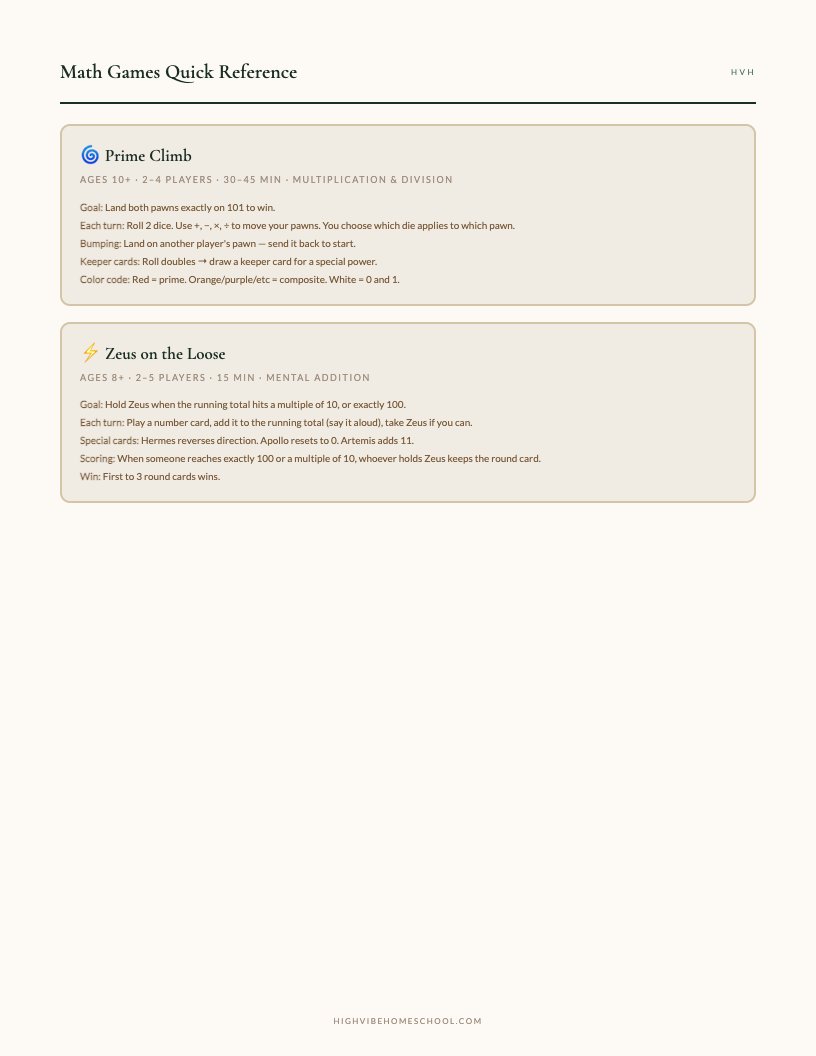
Free Download
Math Games Instruction Cards
Print-and-play instruction and scoring cards for 5 math games: Prime Climb, Zeus on the Loose, Sleeping Queens, Sum Swamp, and Tiny Polka Dot.
No spam. Unsubscribe anytime.
Delight-directed learning is the philosophical companion — the child's genuine interest is what makes a unit study work rather than just filling time. And living books are the reading material that gives unit studies their depth.
Written by
The High Vibe Homeschool Team
We are a homeschool family that has been doing this for seven years across three kids. We write about what we have actually tried, what failed, what surprised us, and what we would do again. No credentials. Just lived experience.
ENJOYED THIS ARTICLE?
Get more like it every week
Real homeschool life, in your inbox.
Keep Reading
More in Curriculum
 Curriculum
Math Games That Make Numbers Come Alive (Even for the Kid Who Hates Math)
My son cried at math worksheets for two years. Then we found games. Here are the ones that changed everything — no flashcards required.
 Curriculum
Living Books: What They Are and How to Find Them
Charlotte Mason's term for books that feel alive. Here's what makes a book 'living,' why it matters, and a list of the ones that have done the most for our homeschool.
 Curriculum
Teaching Writing at Home (When You Don't Feel Like a Writing Teacher)
Writing is the subject most homeschool parents fear most. Here's how we finally made it work — and the approach that produces the most growth for the least friction.