Nature Journaling with Kids: How to Start (and Keep Going)
A nature journal is one of the simplest and most rewarding tools in a homeschool. Here is how we started ours, what keeps my kids actually using them, and what to do when the habit fades.
A little note: Some links in this post are affiliate links. If you click through and buy something, we earn a small commission at no extra cost to you. We only ever link to things we would genuinely recommend to a friend.
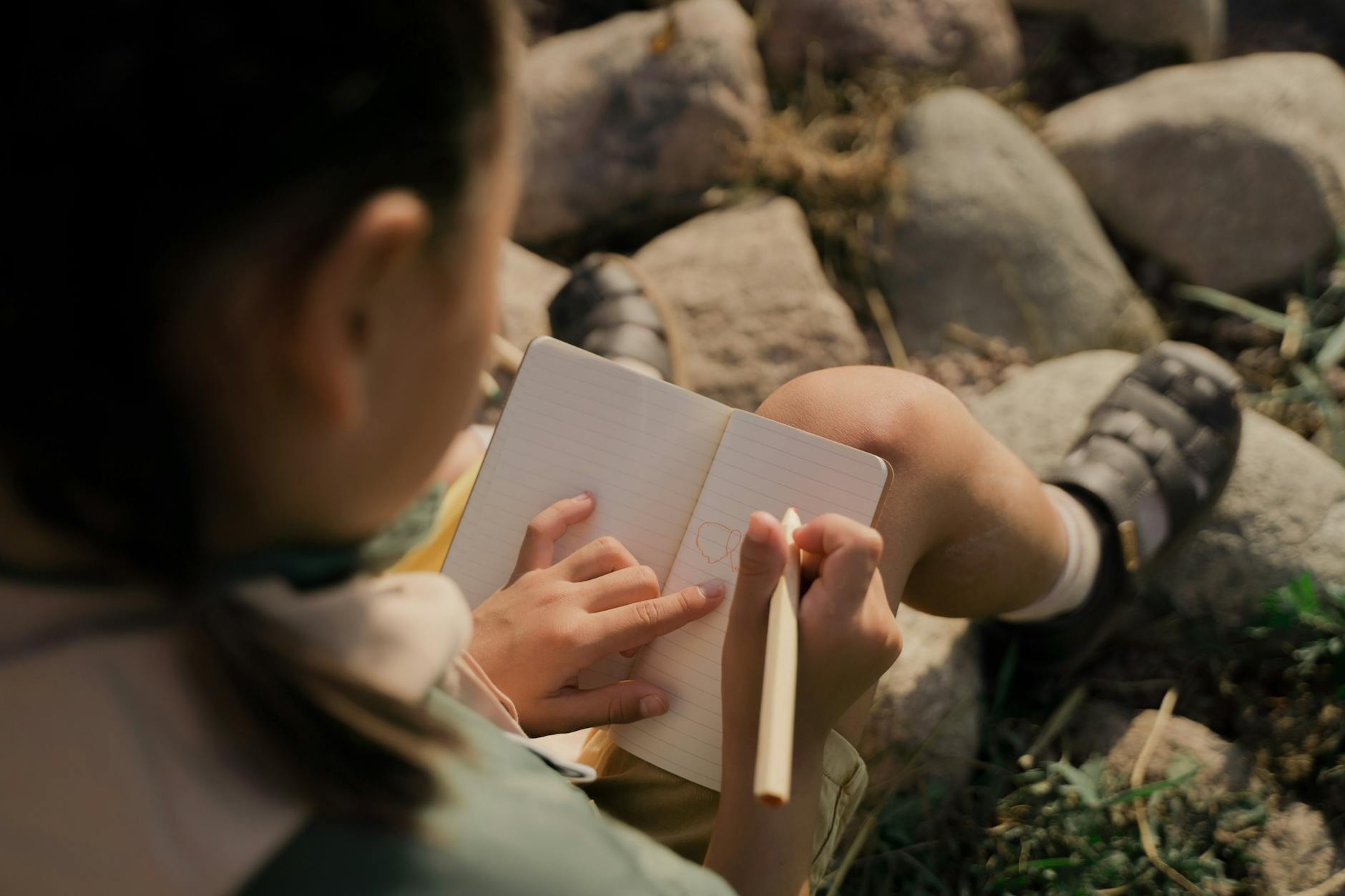
My daughter's first nature journal entry was a drawing of a potato bug.
It took her twenty minutes. She found the potato bug under a rock, put it on a leaf so it would not move, and drew it with a pencil while I sat next to her and did not say anything.
She labeled it "bug I found." She wrote the date. She drew an arrow to its legs and wrote "many."
That was it. That was a complete nature journal entry. It has been three years since then and she still draws bugs, but now she knows what pill bugs are, what they eat, why they roll into spheres, and what the scientific family is. None of that was taught. All of it came from the habit of noticing.
Why a Nature Journal
The nature journal is Charlotte Mason's most enduring practical contribution to education, though it appears in many traditions under different names. A sketchbook used in the field. A scientific log. A personal record of the natural world.
What makes it work is the combination of three things: going outside, paying close attention, and recording what you notice. Any one of the three is valuable. Together they produce a habit of observation that transfers into every subject a child will ever study.
Children who keep nature journals tend to notice more. They notice things before they record them, which means they look more carefully before the habit is established, and then more carefully still as it deepens.
This is not about science specifically, though it supports science. It is about training the eye and the mind to slow down and see what is actually there. That skill is useful in literature, in art, in writing, in any field that rewards careful observation.
How to Start
Choose the right journal. Not too precious, not too flimsy. A spiral-bound blank sketchbook in a mid-range size works well. Too nice a journal makes children afraid to make mistakes. Too cheap and it falls apart. A few blank pages between entries leaves room to add things later.
Let the first entry be small. One thing. One observation. One drawing, however rough. The first entry should take no more than ten minutes. You are establishing the habit, not the quality.
Go outside first. The journal is for recording what you found outside, not a substitute for going outside. Sit at the table after the walk. Draw the rock you picked up. Write down what the air smelled like. But go outside first.
Model it yourself. Children whose parents keep nature journals are more likely to keep them persistently. You do not have to draw well. You have to draw honestly. The child will follow the habit, not the skill level.
What Goes In a Nature Journal
Anything noticed. There are no wrong entries.
Drawings of what you found. Rubbings of leaves and bark. Pressed flowers, if your journal is thick enough. Written observations. Questions. Date and weather. Location.
What we have found in our family journals over the years: a drawing of a red-tailed hawk seen through a window. A description of frost on glass at 7 AM on a January morning. The exact color of the light on a late afternoon in October. A pressed bee. A question about whether all mushrooms in our area are edible. (The answer is no. Many are not.)
The questions are the best part. A nature journal becomes a record of curiosity. You can read backward through it and see what your child was wondering about, and how those questions evolved.
What to Do When Your Child Says "I Can't Draw"
This comes up in every family eventually. Usually around age seven or eight, when children start comparing their drawings to a standard they cannot yet meet.
The answer is not "you draw great!" The answer is to separate drawing as art from drawing as seeing.
A nature journal drawing is not supposed to be beautiful. It is supposed to be accurate. The goal is to look closely enough to notice details. Does the leaf have smooth edges or serrated ones? Is the bird's beak thick or thin? Are the spots on the mushroom white or cream?
When you reframe drawing as looking rather than making art, the performance anxiety usually drops. Help your child count the legs on the spider. Measure the leaf in their hand. Count the colors in the mushroom cap. Then draw what they measured and counted. That is scientific observation and it has nothing to do with talent.
Age-by-Age Expectations
Ages 4-6: Drawings with labels are more than enough. One or two words. The date written by you at first, then by them. The point is the sitting still and looking.
Ages 7-9: More detailed drawings, attempt at color, written observations in full sentences. Start encouraging them to describe textures, patterns, and behavior alongside shape.
Ages 10-12: Adding field guide references, writing common and sometimes Latin names, including more contextual information about habitat and season. Drawing from multiple angles.
Ages 13+: Some kids continue. Some naturally transition into more formal science notebooking or photography. Both are fine. The habit of observation is the thing that carries forward regardless of the format.
Keeping the Habit When It Fades
All habits fade. A nature journal that has not been touched in three weeks is not a failed journal. It is a journal waiting for the next entry.
What revives the habit for our family:
A new season. Spring after winter. The first real cold day of fall. New things are appearing, and the urge to record them is strong.
A specific finding. An unusual insect. A bird you have never seen before. One real thing to draw is often enough to restart the habit.
Sitting outside together. Not prompting, not directing. Just being outside and being available. The child picks up the journal when they need to record something. The habit requires only presence.
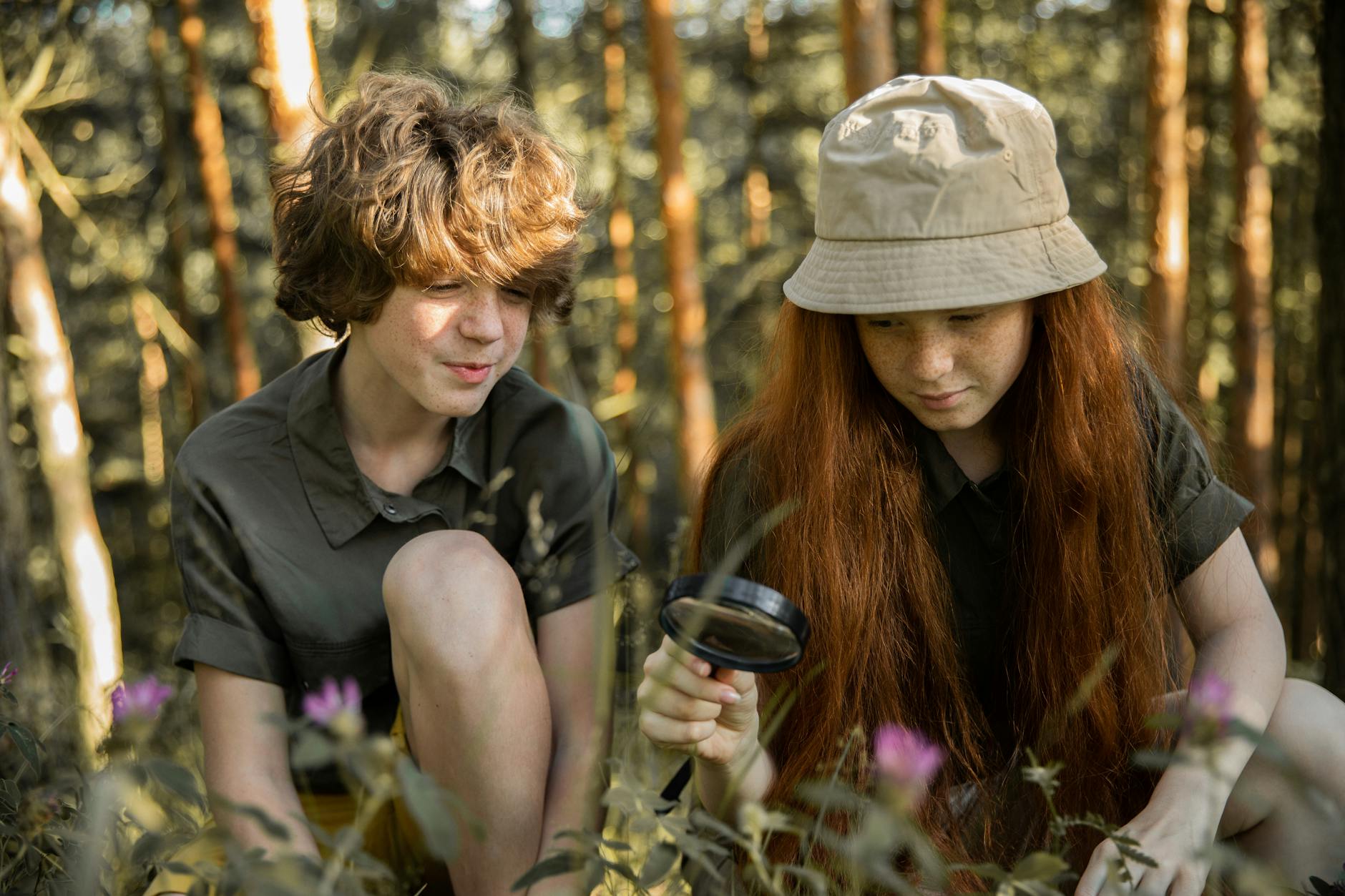
A new tool. A set of colored pencils they have not used before. A new blank journal when the old one is full. A magnifying glass. The novelty is usually enough to pull them back in.
Field Guides: Having the Right References
A field guide changes what a nature journal can become.
Without one, a child records "a bird" or "a brown mushroom." With one, they can look it up, find the match, and write the name. That process of matching what you saw to the book entry is itself a form of close observation. You have to remember details you might not have recorded. It teaches you to look harder next time.
For children, start with a regional guide rather than a complete North American one. A guide to the birds of your state, or the wildflowers of your region, is more manageable and more likely to contain what they actually find. A complete guide can be overwhelming and discouraging when nothing they find seems to be in it.
The Peterson First Guides series is worth knowing. Slim, focused, designed for beginners, and genuinely useful for identifying common species without overwhelming detail.
The Long View
My daughter's nature journal from three years ago sits on her bookshelf now. She takes it out occasionally and looks at it. She has opinions about which drawings she likes and which ones she would do differently.
A nature journal, kept over years, becomes a record of a child's attention. Of what they found worth noticing. Of how their eye developed, and their vocabulary, and their relationship with the place they live.
You cannot purchase that. You can only give them the time, the blank pages, and the habit of going outside.
Free Download
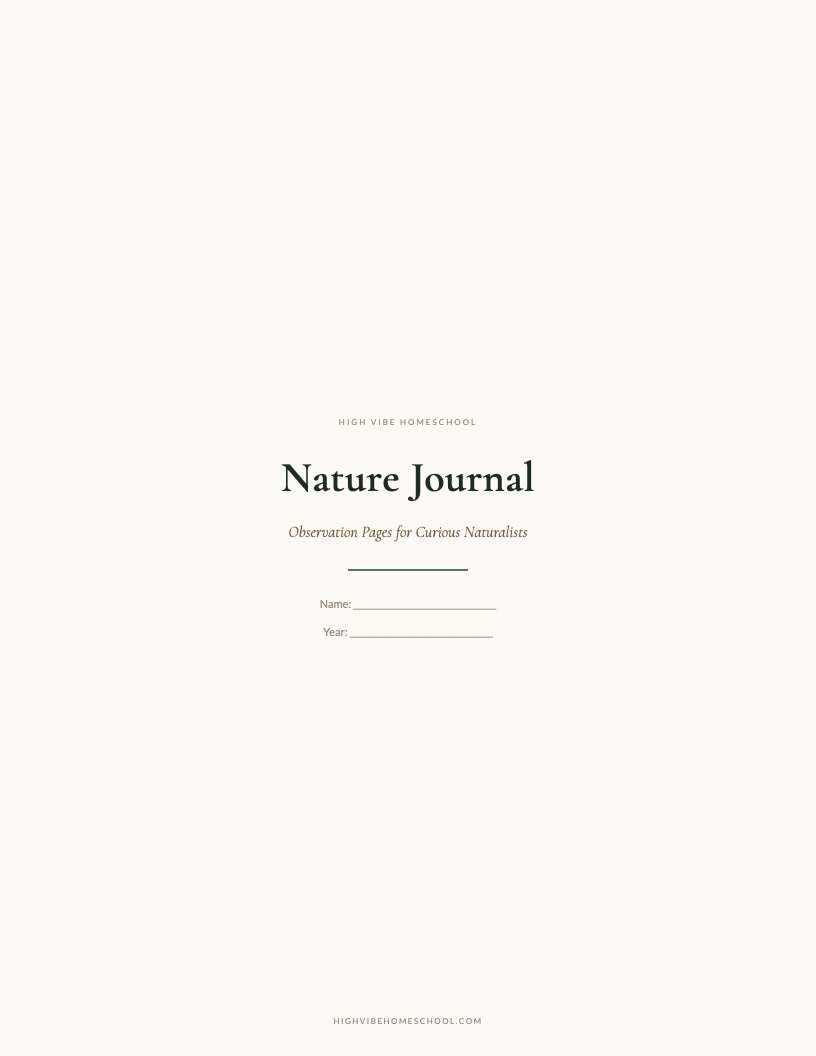
Nature Journal Pages
5 illustrated pages for outdoor observation: drawing box, date, weather, and 'I wonder' prompts.
No spam. Unsubscribe anytime.
The journal is the tool; nature study for beginners is the practice it belongs to. And nature study in winter covers why the cold season is often the richest time to fill the journal.
Written by
The High Vibe Homeschool Team
We are a homeschool family that has been doing this for seven years across three kids. We write about what we have actually tried, what failed, what surprised us, and what we would do again. No credentials. Just lived experience.
ENJOYED THIS ARTICLE?
Get more like it every week
Real homeschool life, in your inbox.
Keep Reading
More in Daily Life
 Daily Life
How to End the Homeschool Year Well
The end of the homeschool year deserves more than quietly stopping. Here is how we close out the year intentionally — what we review, what we celebrate, and how we rest well before the next one begins.
 Daily Life
Homeschool Summer: How to Rest Without Losing Everything You Built
Summer in a homeschool is not the same as summer vacation. Here is how we structure ours — enough rest to restore everyone, enough continuity to make September feel like a continuation rather than a restart.
 Daily Life
Outdoor Science: The Homeschool Advantage You're Not Using
Most science curricula are indoor, textbook-based affairs. The outdoor world offers something they cannot: real science, happening in real time, available every day.