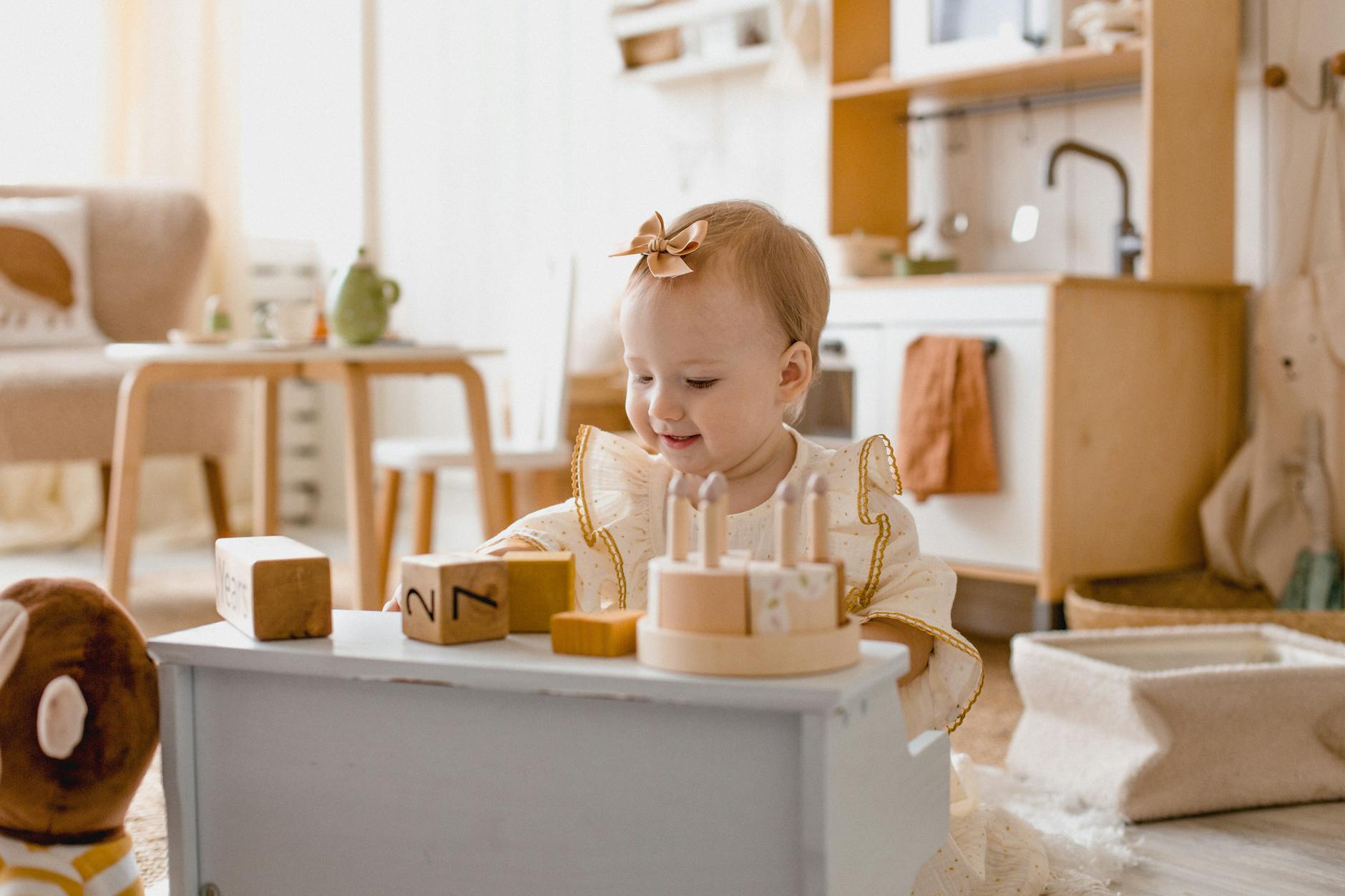
Homeschooling with a Baby or Toddler at Home (And Not Losing Your Mind)
Naptime school is real. So is the chaos. Here's what actually worked when I was trying to teach a seven-year-old while a toddler systematically destroyed the living room.
My youngest daughter was born in March of our second year of homeschooling.
By April, I was trying to do phonics with a seven-year-old while the baby screamed on my shoulder. By May, I had developed the particular skill of holding a baby in one arm and reading aloud with the other. By June, I had stopped pretending I could do everything at full quality and started figuring out what actually mattered.
Here is what I learned.
The Season Adjustment
Homeschooling with a baby or toddler is not a permanent state. It is a season. A hard one, often. But it ends.
The mistake I made in the beginning was trying to maintain the same output as before the baby arrived. Same number of subjects, same lesson length, same daily rhythm. That comparison made everything feel like failure. The right comparison is: what is achievable right now, with a newborn or a toddler, for this family?
Lowering the expectation is not lowering the standard. It is accuracy.
Naptime School Is Real, But It Has Limits
Every homeschool parent of a baby has heard the advice: do your school work during naptime.
It is not wrong. Naptime can be your most focused block. The older child gets undivided attention, you can read aloud without interruption, and table work happens without constant interference.
The problem is that naptime is unpredictable, especially in the early months. You cannot build an entire homeschool day around a thirty-minute window that may not materialize.
What I found more sustainable:
Core work during naptime, everything else woven in. Phonics, math, and read-aloud go in the protected window. Nature walks, art, building, and audiobooks happen around the baby.
Babywearing for read-alouds. With a younger baby, a good carrier means hands-free reading. Some of my favorite read-aloud memories from that year are of walking slowly around the living room with the baby asleep against my chest and my daughter sprawled on the couch listening.
Independent work bins for the older child. When the baby needs all of your attention, the older child needs something absorbing they can do without you. Lego sets, puzzles, drawing prompts, audiobooks, and simple workbooks that do not require instruction can buy you twenty minutes of parallel activity.
Toddlers Are a Different Challenge
Babies sleep. A lot, in the early months. Toddlers do not sleep, do not sit still, do not understand that you are in the middle of explaining long division, and absolutely will not stop emptying that drawer.
The strategies that helped us:
Toddler "school boxes." Special bins that only come out during school time. Small bins with things the toddler finds absorbing: stickers, chunky puzzles, a container of dry beans and cups, a lacing card, a water painting book. The novelty keeps them engaged longer than anything they have free access to all day.
Assign the older child as "helper." My oldest learned to read with her little brother "helping" by handing her bookmarks and pressing his nose into the pages. I reframed interruption as assistance. It did not always work, but it helped more than it did not.
Accept interruptions as the cost of the season. Interrupted lessons are not failed lessons. A thirty-minute lesson with four interruptions still covered thirty minutes of material. Stop grading the process.
Short, frequent bursts. Fifteen minutes of focused work is more achievable than forty-five. Three fifteen-minute blocks, spread across the morning with toddler activity between them, adds up to the same time with far less friction.
The One Non-Negotiable
Read aloud every single day, even if nothing else happens.
With a newborn, I sometimes read aloud while nursing. With a toddler who would not nap, I read aloud with the toddler in my lap turning pages too fast and the older child listening across the room.
Read-aloud is the connective tissue of homeschooling. It keeps learning happening even when everything else falls apart. It does not require prep, materials, or both hands free. It is available every single day, no matter what.
If your homeschool during the baby and toddler years consists entirely of read-aloud, math facts, and occasional nature walks, you are doing more than you think.
Curriculum Choices That Work Better with a Baby at Home
Not all curricula are equally suited to interrupted days. When you have a baby or toddler, the curriculum that requires you to be fully attentive for a forty-minute presentation is the wrong curriculum for this season.
What works better:
Math programs that the older child can do mostly independently. Math-U-See is built around a short video lesson and then a worksheet the child does alone. That model works. The parent-intensive mastery-conversation programs are better suited to later when you have both hands.
Phonics with a script. Programs like All About Reading come with a detailed, scripted teacher's guide. When you have not slept properly in three weeks, a script is a gift. You do not have to decide what to say next. You just say the next thing on the page.
Audiobooks and audio courses. Story of the World on audio has covered a lot of history in this household. The child listens, you nurse the baby, and somewhere around chapter four they are asking questions about ancient Mesopotamia that you did not expect. Learning happens.
Short daily tasks over long weekly projects. A ten-minute daily habit survives chaos better than a ninety-minute weekly project. Five math problems every day will get done. A one-hour math session three times a week will not, because something always derails it.
What to Tell Yourself on the Hard Days
There will be days when the baby cries all morning, the toddler dumps an entire container of rice on the kitchen floor, and the seven-year-old has completed exactly zero school. This will happen multiple times.
On those days: you are not behind. You are in a season with a baby. The rice-dumping toddler is developing fine motor skills and cause-and-effect understanding. The seven-year-old who spent the morning reading quietly while you dealt with chaos is building exactly the independent learning habits that will serve them for the rest of their education.
I am not being falsely optimistic. I mean this practically. The children who grow up in homes with younger siblings and a homeschool that sometimes falls apart because someone needs care are often remarkably self-sufficient learners by the time they are ten. They learned early that they cannot always have your full attention. They learned to find things to do. They learned to pick up their own schoolwork when there was a moment for it.
Those are not small things.
Building in Help Where You Can
If there is any way to get even a few hours of outside help per week, take it.
A co-op where your older child goes for three hours on Tuesday morning is not just socialization. It is three hours where someone else is in charge of their learning and you can focus entirely on the baby.
A grandmother who takes the toddler for a Wednesday morning playdate is three hours of phonics without interruption.
Even a teenager in the neighborhood who comes over for two hours on Friday afternoon to play with the toddler while you do school with the older child is worth whatever it costs in gratitude or payment.
You are not supposed to do this entirely alone. Asking for help with the small people while you teach the bigger one is not a failing. It is logistics.
What This Season Produces
My daughter, who was seven when her brother was born into our homeschool, learned something I could not have planned.
She learned to work independently. She learned to entertain herself. She learned how to learn without someone hovering over her. She learned patience with interruption.
Those skills are not on any curriculum checklist. They have served her more than most of the subjects we covered that year.
The season is hard. It ends. And it teaches everyone in the house something the textbooks do not cover.
Organizing your space without a dedicated room becomes especially important when a baby is part of the household. And homeschool schedule ideas covers the specific frameworks — particularly the loop schedule and short-block approach — that work best in unpredictable days.
Written by
The High Vibe Homeschool Team
We are a homeschool family that has been doing this for seven years across three kids. We write about what we have actually tried, what failed, what surprised us, and what we would do again. No credentials. Just lived experience.
ENJOYED THIS ARTICLE?
Get more like it every week
Real homeschool life, in your inbox.
Keep Reading
More in Daily Life
 Daily Life
How to End the Homeschool Year Well
The end of the homeschool year deserves more than quietly stopping. Here is how we close out the year intentionally — what we review, what we celebrate, and how we rest well before the next one begins.
 Daily Life
Homeschool Summer: How to Rest Without Losing Everything You Built
Summer in a homeschool is not the same as summer vacation. Here is how we structure ours — enough rest to restore everyone, enough continuity to make September feel like a continuation rather than a restart.
 Daily Life
Outdoor Science: The Homeschool Advantage You're Not Using
Most science curricula are indoor, textbook-based affairs. The outdoor world offers something they cannot: real science, happening in real time, available every day.