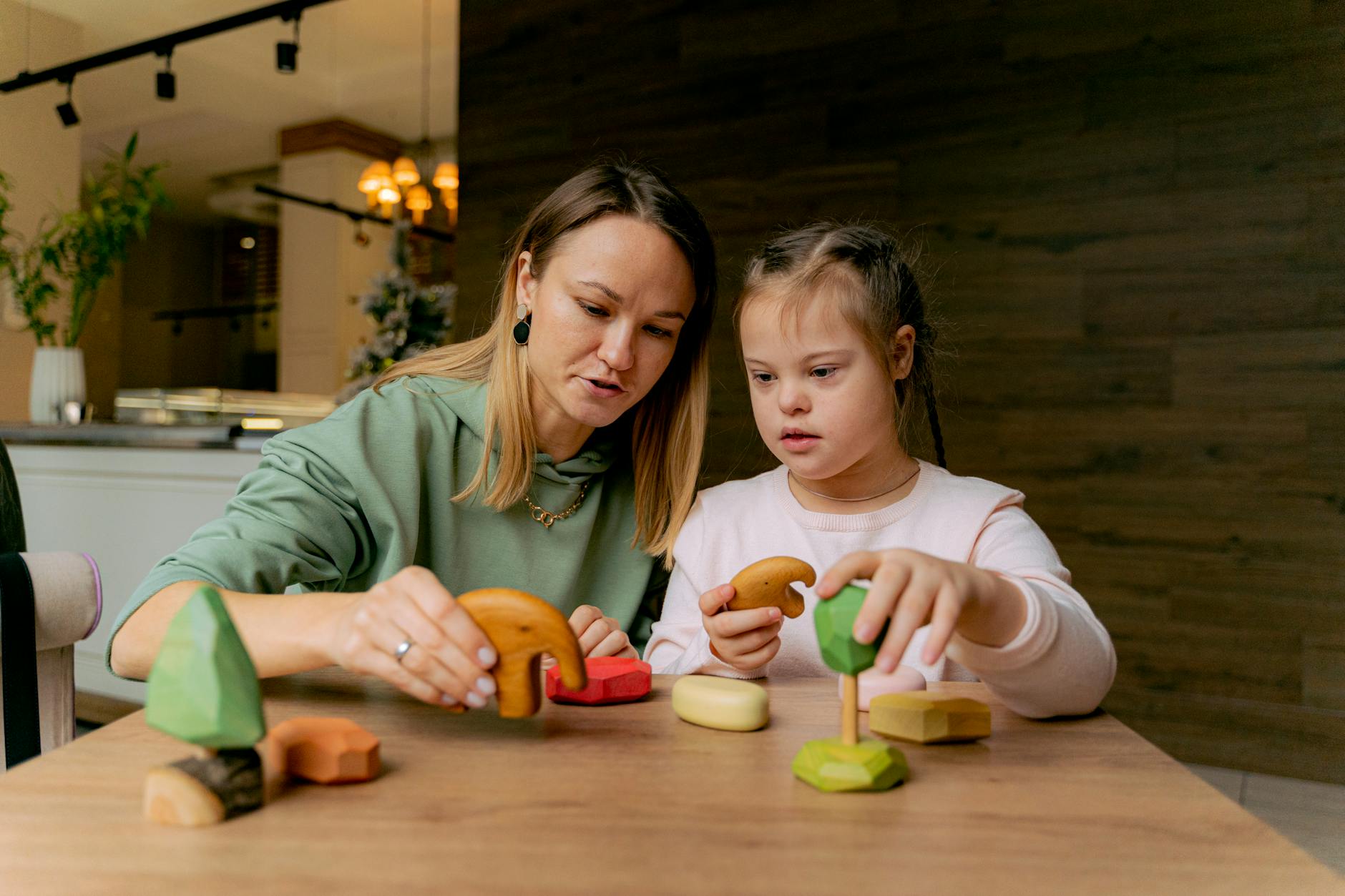
Homeschooling a Child with Learning Differences: Where to Start
Many families pull their children out of school precisely because the school was not able to meet their child's needs. Homeschooling a child with learning differences is possible. Here is the honest guide.
My daughter was told, at the end of second grade, that she was "behind" in reading and might have a learning disability. The school's recommendation was a reading specialist program, three sessions per week, pulled from the class she was in.
I pulled her from the school instead.
What I found out over the next year: she was not behind, she was dyslexic. The school's approach had been teaching reading through whole-word memorization and guided reading, which is nearly useless for dyslexic learners. What she needed was systematic phonics with multisensory components, which no one had tried.
By the end of fourth grade, she was reading two years above grade level.
The First Thing to Understand
Many children end up being homeschooled specifically because their learning differences were not being met in conventional school. The decision to homeschool is often, for these families, not a choice against school but a choice for the child.
The second thing to understand: homeschooling gives you something that school cannot. You can adjust the approach, the pace, the environment, and the materials to what this specific child needs, in real time. You do not need to fit the child to the program. You can fit the program to the child.
Common Learning Differences and What Helps
Dyslexia. The most common learning difference affecting reading. Dyslexic learners need structured literacy instruction using systematic phonics, phonemic awareness work, and multisensory approaches (seeing, hearing, and touching the letters at once). Orton-Gillingham-based programs are the evidence base standard. All About Reading uses an Orton-Gillingham approach and works well at home.
Dyscalculia. Difficulty processing numbers and number relationships. Hands-on manipulatives are not optional for these learners, they are the instruction. Math curriculum built around conceptual understanding (Miquon Math, RightStart Math) works better than procedural drill.
Dysgraphia. Difficulty with the physical act of writing. Accommodations often work better than remediation: oral narration instead of written narration, typing instead of handwriting, speech-to-text tools. Handwriting Without Tears is designed specifically for dysgraphic learners and is the most widely recommended program.
ADHD. Children with ADHD are not bad at learning. They are bad at conventional school, which requires sustained seated attention in groups. Homeschooling can provide: short focused work sessions, movement breaks, hands-on learning, interest-led projects, and outdoor time — all of which are known to help ADHD learners. Many families report that their ADHD child's "symptoms" significantly reduced in a homeschool environment.
Autism spectrum. The range is enormous. What helps varies enormously. The consistent finding from homeschooling families with autistic children is that removing sensory overwhelm, rigid social demands, and fluorescent-lit classrooms often produces a child who can engage with learning in a way they could not at school. Curriculum choice matters less than environment.
Getting an Evaluation
Before choosing a curriculum or approach, understanding what is actually happening is helpful.
A neuropsychological evaluation can identify specific learning profiles, processing differences, and recommendations. These are expensive ($1,500-$4,000 typically) and often not covered by insurance. Some school districts will provide evaluations for free, even for homeschooled children, as part of their child find obligation under IDEA. This varies significantly by district.
An evaluation is not required to start homeschooling. But if you suspect a specific learning difference, knowing what it is will help you choose approaches that actually work rather than guessing.
If a full evaluation is not accessible right now, some practical options: a reading specialist assessment is often cheaper and specifically identifies reading processing profiles. An occupational therapist can assess fine motor and sensory processing concerns. Many who work with homeschool families offer sliding scale fees.
Curriculum That Works for Different Learning Profiles
For dyslexia: All About Reading (systematic phonics, Orton-Gillingham based, parent-led, works for a range of ages). The Barton Reading and Spelling System is more comprehensive and more expensive but well-regarded for more severe profiles.
For ADHD: any curriculum with short lesson segments. Math-U-See and RightStart both work in short, focused sessions. Singapore Math's word problem focus can be motivating for children who need a concrete reason to solve something. Avoid any curriculum with very long daily lesson requirements.
For dyscalculia: RightStart Mathematics, Miquon Math, and any program that uses manipulatives as instruction rather than illustration. The key is that the manipulative represents the concept, not just provides a backdrop for it.
For dysgraphia: dictate everything until handwriting is genuinely painless. This is not giving up. This is working around a motor processing challenge so you can continue developing thinking and expression. Typing instruction from an early age is important. The Writing With Ease program from The Well-Trained Mind Press is specifically designed for children who find writing physically difficult.
The Deschooling Period Is Not Optional
Most parents who pull their child out of school due to learning differences arrive at homeschooling already exhausted. Years of school frustration, of watching their child fail at something they could clearly learn if it were taught differently, of advocating and being told their concerns were exaggerated.
The temptation is to start intensive remediation immediately. To make up for lost time. To do everything at once.
This does not work. What works is:
A period of deschooling first. Rest. Relationship repair. Time to do things the child is good at and loves. This matters for neurotypical children. For children who have been failed by school, it is not optional.
Many specialists suggest one month of deschooling for every year the child was in school. That can feel impossibly long when you are anxious to catch up. But a child who associates learning with failure needs to have that association interrupted before new instruction can take hold. You cannot remediate through panic.
Start with strengths. Identify what the child can do well and build from there. A child who cannot read but builds extraordinary structures with Lego, who understands spatial relationships intuitively, who can hold complex information in their head — that child is not globally behind. They are specifically challenged in one area. Feed the strengths while working steadily on the challenge.
One intervention at a time. If a child has dyslexia, prioritize structured literacy instruction before anything else. Not three new curricula, not remediation in every subject simultaneously. One thing, consistently, for six months.
What the Progress Actually Looks Like
Progress with a child who has a learning difference is not linear. It does not look like a textbook chart moving steadily upward.
It looks like a month where everything clicks, followed by two weeks that feel like you have gone backward. It looks like a skill consolidating in a way that is not visible until suddenly it is. It looks like a child who could not read a single-syllable word in September reading a chapter book in April, with no obvious inflection point in between.
Your job is to stay consistent, to keep the instruction targeted and gentle, and to not catastrophize the bad weeks. The bad weeks are part of the process. Every specialist who works with dyslexic learners will tell you this.
Track progress over months, not days. A photo of your child reading something in January and something else in June tells you more than how a session went on a Tuesday.
The Overwhelm Trap
There is so much information available about learning differences now — Facebook groups, Instagram educators, Substack newsletters, podcasts. All of it well-intentioned. A lot of it contradictory.
The overwhelm trap is real. You can spend two hours reading about different approaches, end up more confused than when you started, and do nothing.
The simplest framework I know: pick one approach based on the most reliable information you have. Use it consistently for six to eight weeks. Evaluate based on whether your child is making progress with less stress than before. Adjust from there.
You do not need the perfect program. You need a good program, used consistently, with someone who loves your child teaching it. That combination beats any specific curriculum.
You Do Not Need to Do This Alone
Every large city and most mid-sized ones have homeschool groups specifically for parents of children with learning differences. These groups share curriculum recommendations, connect parents with similar children, and provide the peer support that makes a hard path manageable.
SPED Homeschool is a national organization with a resource library and community specifically for homeschooling families with special needs children.
You found your way here because you know your child better than the system does. That knowledge is not nothing. It is the most important qualification for what you are doing.
Homeschooling an anxious child addresses one of the most common co-occurring needs. And teaching the resistant learner covers the behavior patterns — avoidance, shutdown, refusal — that often accompany learning differences.
Written by
The High Vibe Homeschool Team
We are a homeschool family that has been doing this for seven years across three kids. We write about what we have actually tried, what failed, what surprised us, and what we would do again. No credentials. Just lived experience.
ENJOYED THIS ARTICLE?
Get more like it every week
Real homeschool life, in your inbox.
Keep Reading
More in Getting Started
 Getting Started
Homeschool Portfolios: What They Are and How to Build One That Works
A portfolio is more than a legal requirement. When done right, it becomes the most useful thing in your homeschool — a record of real growth that no standardized test can capture.
 Getting Started
What Grade Is My Homeschooled Child In?
When people ask what grade your homeschooled child is in, the honest answer is often complicated. Here is how to think about grades, what they actually matter for, and what you can say.
 Getting Started
Deschooling: What It Is and Why You Should Not Skip It
Every family that pulls their child out of school needs a period of deschooling first. Most skip it. Here's why that's a mistake and what it actually looks like.