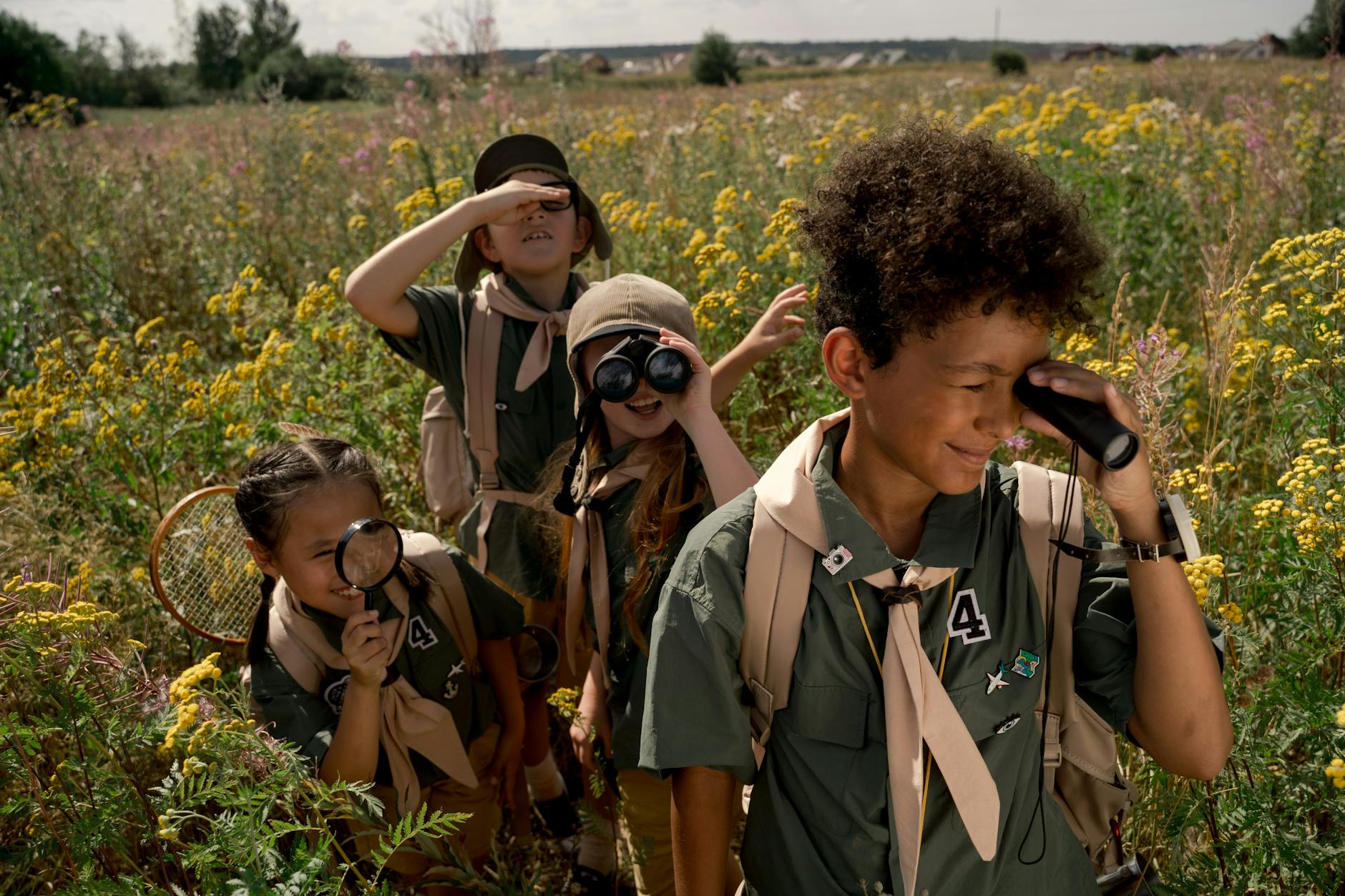
Charlotte Mason Nature Study: A Complete Curriculum Guide
Charlotte Mason called nature study the 'great revivifier' of homeschooling. Here is a complete guide to building a year-round nature curriculum — what materials you need, what you actually do, and how to assess it.
A little note: Some links in this post are affiliate links. If you click through and buy something, we earn a small commission at no extra cost to you. We only ever link to things we would genuinely recommend to a friend.
Charlotte Mason called nature study the "great revivifier" of education. When children are indoors too long, when learning feels dry, when engagement drops — the reliable remedy was outside.
After years of experimenting, I think she was right.
But nature study is not just going outside. It is going outside with intention, with the right tools, and with the practices that turn experience into education.
Here is the complete framework we use.
The Three Components
1. Regular outdoor time. The minimum is three times per week. Daily is better. The length matters less than the consistency. Twenty minutes in the backyard three times a week produces more nature literacy over time than one long trip to a nature center once a month.
2. Nature journaling. The physical record of what was observed. This is what makes the outdoor time educational rather than merely healthy. The journal is the bridge between experience and retention.
3. Identification and naming. Learning the names — common and sometimes Latin — of what you find. Mason believed that knowing the names of living things is a form of respect for them and a prerequisite for caring about them.
What You Actually Need
A quality field guide. One good bird guide, one good wildflower guide, one good insect guide for your region. Not an app. A physical book the child can hold, flip through, and write in.
A hand lens or magnifying glass. The world at 10x magnification reveals things invisible to the naked eye. Bark, insect wings, flower structures, lichen patterns. A basic 10x loupe costs less than five dollars and opens a completely different sensory world.
A nature journal. Plain sketchbook, medium size, spiral bound so it lies flat. See our free downloadable nature journal pages for a printable starter journal.
A pencil and some colored pencils. The observation required to draw something forces seeing it more carefully than any amount of looking does.
The Weekly Rhythm
We follow this pattern with minor variations year-round:
Monday, Wednesday, Friday: 20-30 minutes outside. The child chooses what to observe. Brings journal. Makes at least one entry.
Tuesday or Thursday: Nature study "desk time." Look up what was found. Check the field guide for the name and a few facts. Add to the journal if the entry needs more.
Once a month: A longer nature outing — a trail, a park, a nature center, a beach. This is where the skills built in the backyard get applied to a wider environment.
What to Observe by Season
Spring: Birds returning (migration tracking is excellent observation practice), early wildflowers, insect emergence, amphibian breeding activity (frog eggs in ponds), leaf emergence and bud break.
Summer: Insects are everywhere — butterflies, beetles, dragonflies. Full bird activity including nesting. Maximum wildflower variety. The garden, if you have one, is an entire natural history curriculum.
Autumn: Bird migration again, but leaving rather than arriving. Seed dispersal — milkweed pods, maple helicopters, burdock burrs, acorns. Leaf color change. Last insects. The die-back of the garden.
Winter: Tracks. Bark. Seeds and galls. Bird feeders as observation stations. The structure of bare trees. Ice formation. The things that remain when everything else is stripped away.
What Good Nature Journaling Actually Looks Like
New nature journalers often produce one kind of entry: a quick sketch with a name written next to it, and little else. That is a fine start.
Over time, the journal entries become richer. Dimensions. Behavior. Questions. "This beetle was carrying something — find out what." The date, the weather, the exact location. Whether the bird was alone or in a group. What the insect was doing when you found it.
The richness comes from habit, not from instruction. The more you journal, the more you notice. The more you notice, the more you have to write. This is why consistency matters more than any particular format.
A few things we prompt:
- What does it smell like? (Smell is massively underused in nature observation.)
- Is it moving? Which direction?
- What is it near? What is the immediate habitat?
- Have you seen this before? When? Did it look the same?
These questions turn passive looking into active observation, which is the skill that transfers into science, into art, into any discipline that requires careful attention to the actual world.
Nature Study for Children Who Resist
Not every child takes to nature study immediately. Some children are indoorsy. Some are more interested in screens. Some find the outdoors uncomfortable or scary.
A few things that help:
Start with what the child already finds interesting. A child who loves dinosaurs is usually interested in birds, which are modern dinosaurs. A child who loves Minecraft is usually interested in geology, terrain, and how landscapes form. A child who loves art is usually interested in drawing plants or insects if you let them start with something beautiful.
Do not make it academic too fast. Just go outside. Bring the journal but do not require it on the first few trips. Let the child lead. The structure comes after the interest is established.
Add comfort. A blanket, a snack, a thermos of something warm. Nature observation does not require standing in the cold with a clipboard. It can look like sitting on a quilt in the backyard eating apple slices and watching what shows up at the bird feeder.
Go with them. This is the one that makes the most difference. A parent who is genuinely interested in what shows up in the backyard is more compelling than any curriculum. You do not need to know everything. You need to be curious.
How to Assess Nature Study
Nature study is assessed through the journal, not through tests.
At the end of each season, page through the journal together. Count entries. Look at the drawing quality at the beginning and end of the season — improvement should be visible. Notice what questions were asked. Celebrate what was learned.
Ask: what is one thing you know now that you did not know in September?
The answer to that question is the assessment. If it is rich and specific — the name of a bird, how a certain beetle's legs work, what galls are and why they form — the nature study has produced real learning.
If the answer is "I don't know," go outside more and let the child choose what they notice.
Connecting Nature Study to Other Subjects
The most natural integrations:
Science. Nature study IS science — observation, hypothesis, identification, classification. The skills built in the backyard translate directly into formal biology, botany, and ecology.
Art. Every nature journal entry is a drawing lesson. Over a year, the difference in observation quality and drawing skill is remarkable. Children who have been journaling for two years draw with a specificity that other children do not have.
Writing. Descriptive writing from observation is some of the clearest, most grounded writing children produce. "Describe what you saw" produces better prose than most formal writing prompts because the child is working from something they actually witnessed.
History. Natural history of a region connects deeply with human history of the same region. Why did people settle where they did? Because the land, the water, the climate made it possible. Understanding your local natural environment gives human history a physical root.
Resources Worth Having
The Handbook of Nature Study by Anna Botsford Comstock is the most complete nature study resource for homeschoolers. Written in 1911, still unmatched. Do not try to use it systematically — let it be a reference you dip into when something shows up in the yard.
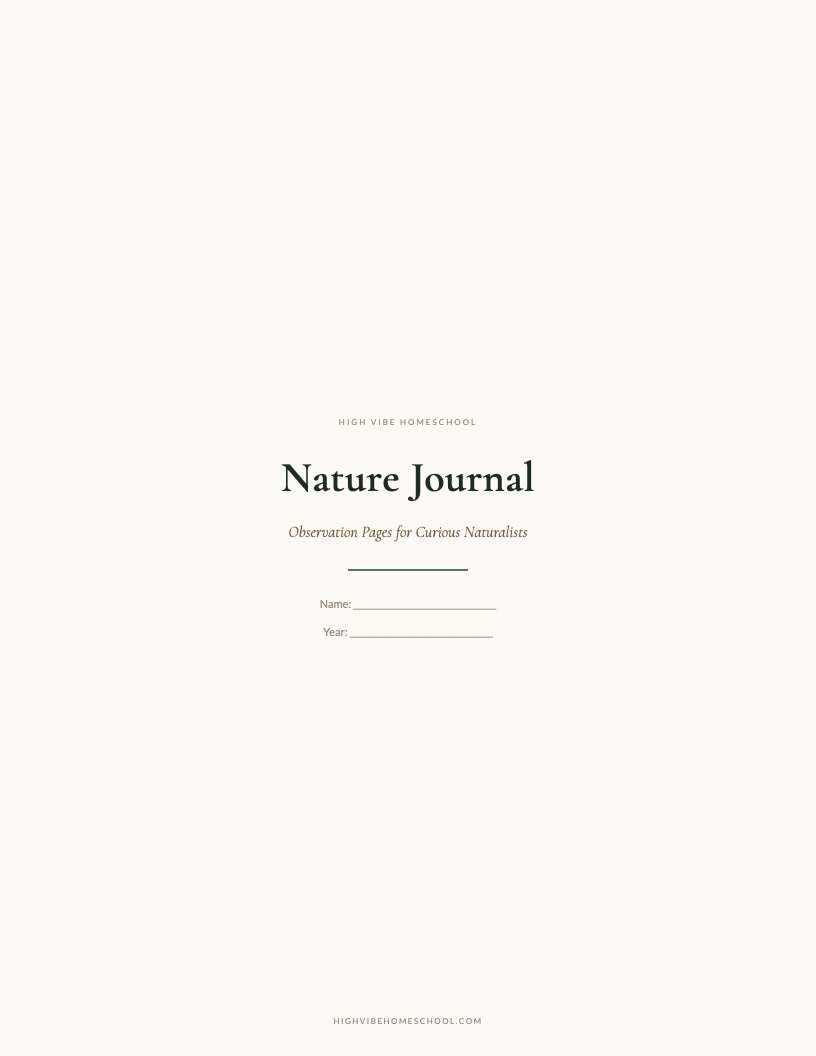
Free Download
Nature Journal Pages
5 illustrated pages for outdoor observation: drawing box, date, weather, and 'I wonder' prompts.
No spam. Unsubscribe anytime.
Nature study for beginners is the entry-level companion to this piece. And nature journaling for kids is the practice that turns observation into education.
Written by
The High Vibe Homeschool Team
We are a homeschool family that has been doing this for seven years across three kids. We write about what we have actually tried, what failed, what surprised us, and what we would do again. No credentials. Just lived experience.
ENJOYED THIS ARTICLE?
Get more like it every week
Real homeschool life, in your inbox.
Keep Reading
More in Curriculum
 Curriculum
Math Games That Make Numbers Come Alive (Even for the Kid Who Hates Math)
My son cried at math worksheets for two years. Then we found games. Here are the ones that changed everything — no flashcards required.
 Curriculum
Living Books: What They Are and How to Find Them
Charlotte Mason's term for books that feel alive. Here's what makes a book 'living,' why it matters, and a list of the ones that have done the most for our homeschool.
 Curriculum
Teaching Writing at Home (When You Don't Feel Like a Writing Teacher)
Writing is the subject most homeschool parents fear most. Here's how we finally made it work — and the approach that produces the most growth for the least friction.