
Building Math Confidence in Your Homeschooled Child
Math anxiety is real, but it is not permanent. Here is how homeschooling offers a uniquely powerful opportunity to rebuild a child's relationship with math — at any age.
Math confidence is not a fixed trait. It is built.
And one of the things homeschooling does better than almost any school environment is build math confidence — because confidence comes from success, and success requires pace, instruction, and approach to be matched to the individual child.
In a classroom of twenty-five children, the pace is a compromise. The instruction is generalized. The approach is fixed. The child who does not match the compromise often concludes that they are "not a math person" before they have ever actually encountered math taught in a way that works for them.
What Math Anxiety Actually Is
Math anxiety is not primarily about math. It is about the fear of being wrong in front of others, the experience of not understanding and being moved on anyway, the accumulated evidence that math is something you fail at.
Children who have math anxiety are often children who were not ready for a particular concept when it was introduced, who fell behind, and who were never given the opportunity to go back and actually learn it.
The good news: math anxiety responds very well to success. A child who begins experiencing consistent success with math — who solves problems they could not solve before, who sees their own understanding growing — almost always begins to feel differently about the subject.
This is something we have seen in our own household. One of our kids came to us from two years in a conventional school where math had become a source of daily tears. The problem turned out to be a single gap: she did not have solid place value understanding and it was making multi-digit work fall apart every time. We spent six weeks doing nothing but place value work with base-ten blocks and number lines. Then we moved forward. The tears stopped within the first month.
That is the math anxiety story in miniature: a gap, compounded over time, producing fear. Address the gap, and the fear subsides.
The Most Common Source of Math Anxiety: Gaps
Math builds on itself. A child who missed fractions in fourth grade will struggle with anything that requires fractions in fifth, sixth, and seventh grade. The struggle accumulates. By eighth grade, the child believes they are not good at math, when the truth is that they have a specific gap that was never addressed.
The homeschool approach to math gaps:
Diagnose precisely. Do not assume the gap is everything. Find the specific place where understanding breaks down. Often it is much more specific than "doesn't understand fractions" — it is "doesn't understand that 3/4 represents three pieces of something divided into four equal parts."
Go back. Without the pressure of keeping pace with a class, you can return to the place where understanding failed and reteach it with better tools.
Stay until it is solid. Do not move forward until the concept is genuinely understood, not just temporarily memorized.
How to Find the Gap
A simple diagnostic approach that does not require a formal assessment:
Start at a level that feels easy and work forward. Where does the child begin to hesitate? Where do correct answers become inconsistent? That is the neighborhood of the gap.
Go one level deeper. If a child is inconsistent on multiplication, look at their understanding of addition facts. If those are weak, look at their counting and number sense.
The goal is the floor: the last solid thing the child understands. You rebuild from there, not from where they "should" be by age.
This is one of the most powerful things homeschooling allows. You can go back without shame. In a classroom, going back to third-grade material in fifth grade is socially painful. At home, it is Tuesday.
Approaches That Build Math Confidence
Mastery over coverage. Move at the child's pace. Do not advance until the current concept is solid.
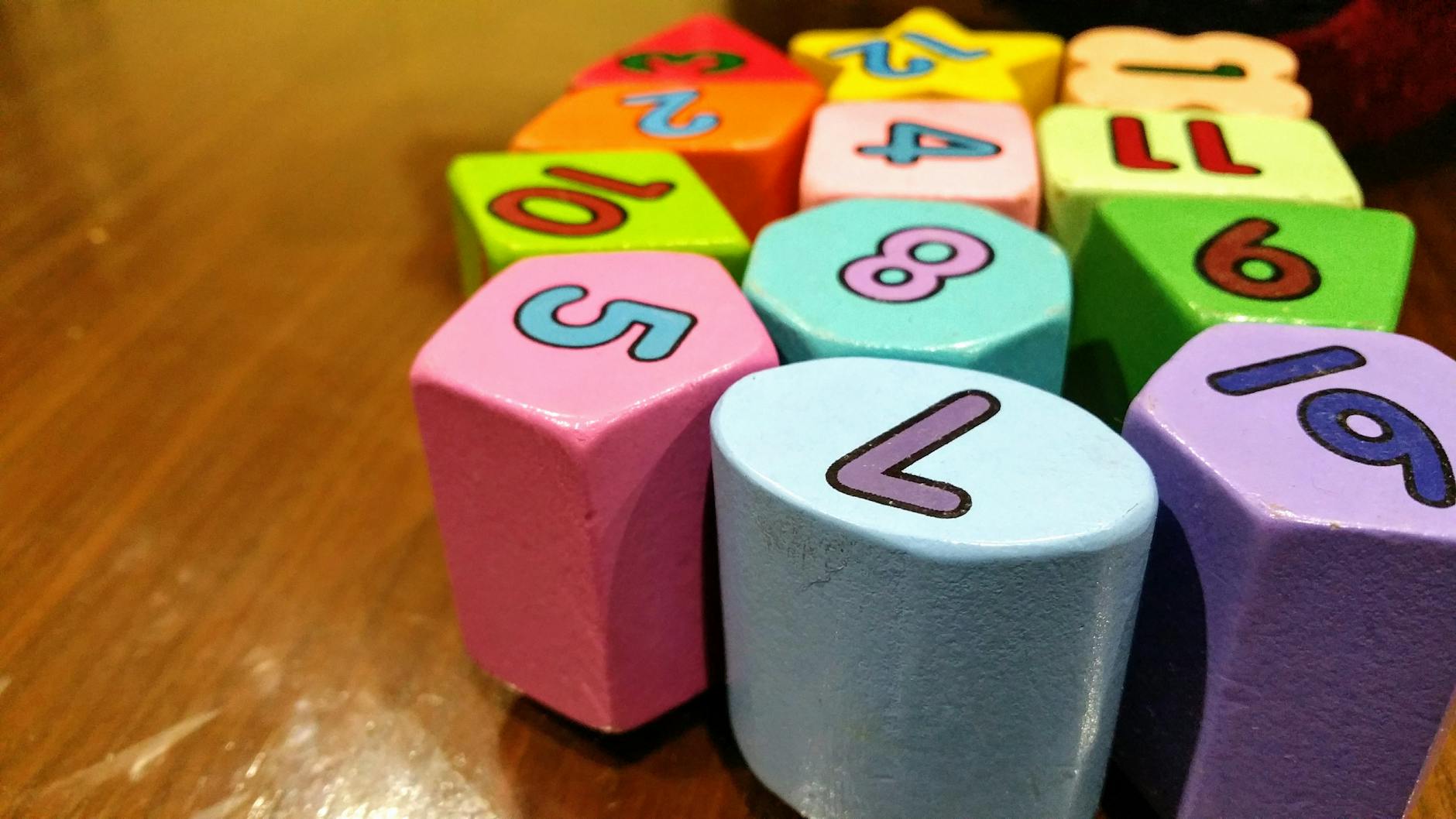
Manipulatives. Physical objects that represent mathematical quantities — base-ten blocks, Cuisenaire rods, fraction tiles — make abstract concepts concrete. They work at every age, not just in early childhood.
Daily review of previously learned material. Short daily practice of already-mastered concepts keeps skills from atrophying.
Celebrate struggle. Reframe mistakes as information rather than failure. "We found something we need to work on more" rather than "you got that wrong."
Small daily practice over long weekly sessions. Fifteen minutes of focused daily math produces better retention than an hour once a week.
Match the curriculum to the child. A child who is visual and spatial often does better with Singapore Math's visual models. A child who needs more explicit instruction often thrives with Math-U-See's video instruction and manipulatives. The curriculum is a tool; find the tool that works.
What "Mastery" Actually Means
This is worth being specific about, because "mastery" is often used loosely.
A child has mastered a concept when they can:
- Solve problems accurately without reminders of the method
- Explain what they are doing and why, not just produce the answer
- Apply the concept in a new context or a slightly different problem format
Getting five-out-of-five on a worksheet where all problems look the same is not mastery. It is procedural familiarity, which is a starting point.
A child who truly understands place value can tell you why you "carry the one" in addition. A child who truly understands fractions can tell you why 1/2 and 2/4 are the same thing without counting squares on a diagram.
The test of mastery is explanation and flexibility, not speed and accuracy alone.
The Parent's Math Anxiety
Some homeschool parents avoid math instruction because they are not confident in their own math.
This is more common than anyone admits, and it is solvable.
The curricula designed for homeschool parents — Math-U-See, Teaching Textbooks, Horizons — include parent instruction that teaches the parent as well as the child. Following a well-designed curriculum does not require mathematical expertise. It requires willingness.
More than that: working through something like Khan Academy alongside your child when you hit concepts you are shaky on is genuinely effective. I have done this. I relearned long division properly when my oldest needed it — not because I am bad at math, but because I had forgotten the reasoning behind the procedure and needed to remember it to teach it.
And here is the quiet truth: a parent who learns alongside their child models something more important than mathematical fluency. They model the willingness to work at something hard, to not know and then learn, to persist past the uncomfortable place.
That is a mathematical education in itself.
Common Questions
What if my child is years behind in math? Start where they are. The grade level on the curriculum box is not the goal; the understanding is the goal. A ten-year-old doing third-grade math at home, making real progress, is in a better position than a ten-year-old sitting through fifth-grade math that makes no sense.
How long should math take each day? At the elementary level, twenty to thirty minutes of focused practice is enough. At middle school, thirty to forty-five minutes. More than that and retention drops sharply. Daily is more important than long sessions.
What if they can do the problems but not explain the reasoning? Slow down. Explanation is evidence of understanding. A child who can produce correct answers without understanding them has a procedure, not a concept. They will hit a wall eventually. Narration and explanation are worth requiring even when they slow things down.
Best homeschool curriculum 2026 covers the main math curriculum options with honest assessments. And homeschool curriculum for struggling readers follows the same philosophy for language arts.
Written by
The High Vibe Homeschool Team
We are a homeschool family that has been doing this for seven years across three kids. We write about what we have actually tried, what failed, what surprised us, and what we would do again. No credentials. Just lived experience.
ENJOYED THIS ARTICLE?
Get more like it every week
Real homeschool life, in your inbox.
Keep Reading
More in Curriculum
 Curriculum
Math Games That Make Numbers Come Alive (Even for the Kid Who Hates Math)
My son cried at math worksheets for two years. Then we found games. Here are the ones that changed everything — no flashcards required.
 Curriculum
Living Books: What They Are and How to Find Them
Charlotte Mason's term for books that feel alive. Here's what makes a book 'living,' why it matters, and a list of the ones that have done the most for our homeschool.
 Curriculum
Teaching Writing at Home (When You Don't Feel Like a Writing Teacher)
Writing is the subject most homeschool parents fear most. Here's how we finally made it work — and the approach that produces the most growth for the least friction.