Gratitude as a Homeschool Practice: Why It Changes Everything
A brief, concrete practice that has changed the tone of our homeschool days — and why starting with what went right is more powerful than most curricula I have ever purchased.
We started ending our school day with a gratitude practice three years ago, somewhat accidentally.
I had read something about gratitude's effect on mood and had been in a particularly difficult stretch where the school days were ending in frustration more often than not. I was not feeling philosophical about it. I was desperate for something that would change the tone before dinner.
What I tried: before we close the school day, everyone says one specific thing that went well. Not "I'm grateful for our family." One specific thing from today's school time.
Three years later, we still do it. Here is what I have noticed.
What the Research Shows
Gratitude practices have a well-documented effect on wellbeing. Regular brief gratitude reflection produces measurable improvements in mood, sleep quality, and relationship quality in both adults and children.
What is particularly relevant for homeschooling: gratitude practice shifts attentional bias. The brain naturally emphasizes problems and threats. A deliberate practice of noticing what went well trains the attentional system to also notice the things that went right, which are always present even on the worst days.
In a homeschool context, where the parent is both the teacher and the evaluator of whether the day was a success, this shift matters enormously. A day that felt like failure often contained more good than was noticed in the frustration.
The research also suggests something specific about gratitude with children: children who practice gratitude regularly show increased prosocial behavior — more generosity, more kindness to siblings, more willingness to help — compared to children who do not. For families who spend significant time together, including siblings who share space all day, the social-emotional benefits are not trivial.
The Practice
One specific good thing from today's school time. Said aloud, in a sentence. By everyone.
Not gratitude for general things. Not gratitude for the homeschool as a whole. Something specific to today.
"I figured out the long division step I was stuck on yesterday."
"We read that chapter in the Civil War book and I finally understood why the battle happened where it did."
"I made a drawing today that actually looks like what I was trying to draw."
The specificity matters. "I'm grateful we got through school" is not a gratitude practice. It is relief. Finding something specific that went right requires actually looking.
This is also why "I'm grateful for my family" or "I'm grateful we get to homeschool" does not count as the practice. Those are good things to feel. They are not the practice. The practice is: what happened today, in the actual hours we just spent, that was genuinely good?
How to Start When Kids Resist
The first few times, children sometimes cannot think of anything. Or they offer something perfunctory.
Do not push. Model instead.
Go first. Every time. Say something specific and real about your own day: "I'm grateful for that conversation we had about the Revolutionary War this morning — you asked a question I didn't know the answer to and we figured it out together. That was good."
When the parent models specificity and genuine reflection, the children learn what the practice actually is. It takes a few weeks. It is worth waiting for.
For a child who consistently says "I don't know" or "nothing was good today," you can ask one gentle prompting question: "What was one thing that was even a little bit okay?" Lower the bar. One thing that was a little okay is a legitimate answer. The practice is about looking for good things, not about having had a perfect day.
What This Does Over Time
After several months, the children begin to notice good things during the school day because they know they will need to report one at the end. The anticipation of the question changes the attention during the day.
It also changes the parent's attention. When I am looking for what went right, I notice things I would have missed when I was primarily monitoring what went wrong.
The child who struggled through handwriting for twenty minutes and then produced three legible sentences — if my attention is on the struggle, I see the struggle. If I am also looking for what went right, I notice the three legible sentences and report them.
Both are true. The attention I bring determines which one shapes the end-of-day narrative.
This accumulates. Over three years, I have a different sense of our homeschool than I would have if I had spent three years primarily monitoring what was not working. The gratitude practice has not changed the facts of our days. It has changed what I remember about them, and therefore what I believe about our homeschool.
The Parent's Own Gratitude
The practice works better if the parent participates as a genuine participant, not a facilitator.
This requires the parent to actually find something that went well from their own experience of the day. Not the children's experience. Their own.
"I'm grateful that the history lesson went the way I hoped it would."
"I'm grateful I held my temper when the math got frustrating."
"I'm grateful we had time for the read-aloud today, even though the morning was chaotic."
The parent who participates authentically changes the nature of the practice. It is no longer a thing being done for the children's benefit. It is a thing the family does together, from which the parent also benefits.
If you find that you genuinely cannot locate one good thing from your own experience of the day, that is information. Not a reason to skip the practice, but information about what your days have been like. Persistent inability to find anything good is a flag worth attending to.
Variations
Gratitude at breakfast. Some families start the school day rather than ending it. This sets a different kind of intention — we are looking for good things before they happen rather than reviewing what we found.
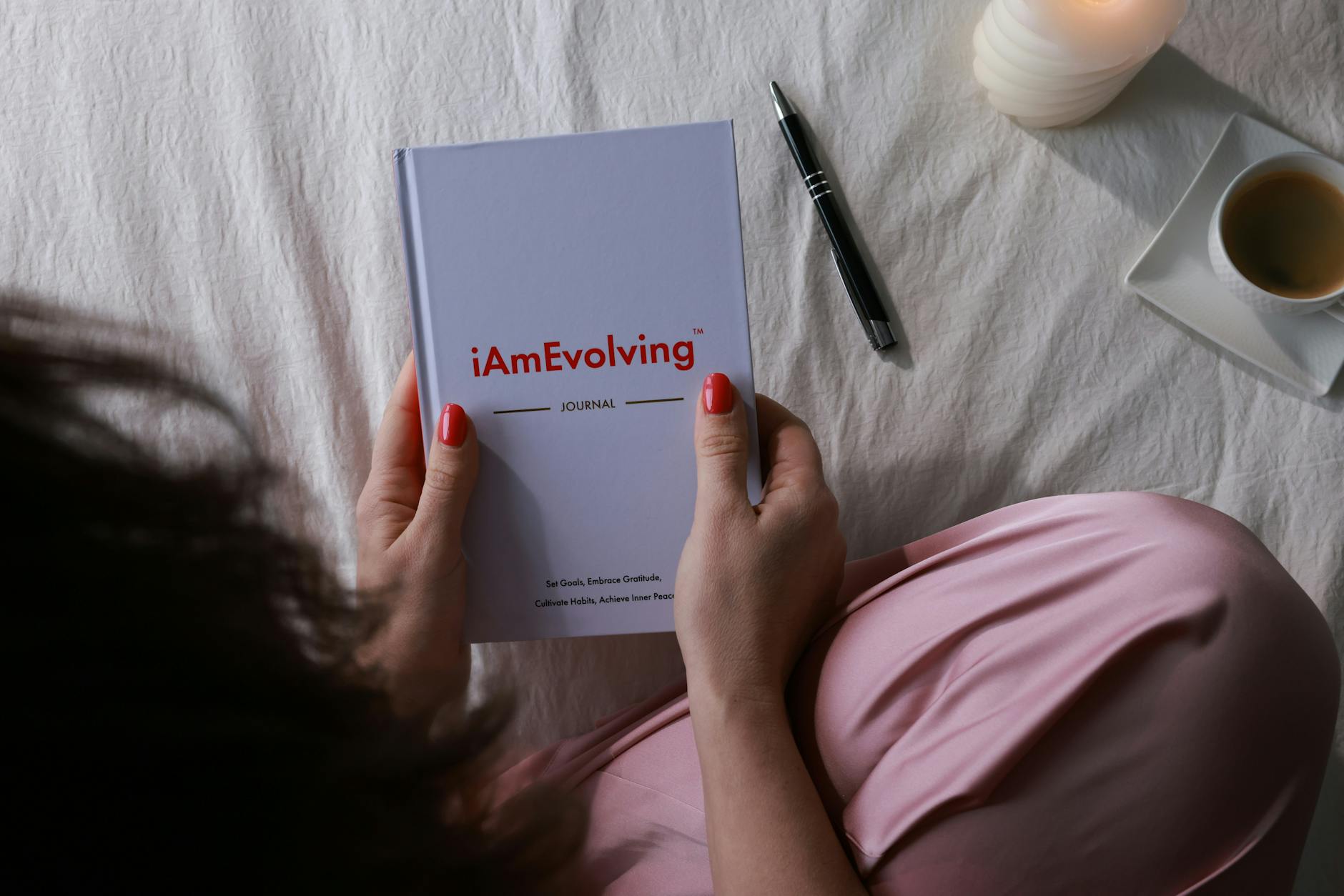
Written gratitude. A notebook. One sentence per day. Over a year, a record of what went well that can be read back through.
Gratitude + learning. "One thing that went well and one thing I learned." The addition of learning captures growth rather than just positive experience.
Gratitude + intention. "One good thing from today and one thing I want to do better tomorrow." This version adds a gentle forward-looking component. Use it carefully with younger children — it can become a vehicle for self-criticism if the "do better" piece is emphasized too much.
The Gratitude Practice and Hard Weeks
The practice is most valuable during hard weeks, and hardest to sustain then.
During a hard stretch, the discipline of finding one good thing from each day is not trivial. Some days it is genuinely difficult. The thing you find might be small: "I'm grateful the morning didn't get any worse than it was." That counts. That is still the practice.
The practice is not claiming that hard weeks are good. It is insisting that even hard weeks contain something worth noticing. This distinction matters. Children who learn it grow up with something useful: the ability to find footing in difficult circumstances without pretending the circumstances are not difficult.
The Smallest Version
If nothing else, before closing the school day, ask this question:
"What was one good thing about school today?"
That is the whole practice. It takes ninety seconds. The cumulative effect over a year, or three years, is not small.
Homeschool self-care covers the broader practices that keep parents functional over the long haul. And slow homeschooling — deliberately doing less — creates the space where noticing good things becomes possible.
Written by
The High Vibe Homeschool Team
We are a homeschool family that has been doing this for seven years across three kids. We write about what we have actually tried, what failed, what surprised us, and what we would do again. No credentials. Just lived experience.
ENJOYED THIS ARTICLE?
Get more like it every week
Real homeschool life, in your inbox.
Keep Reading
More in Wellness
 Wellness
Daily Self-Care for the Homeschool Mom (That Actually Fits in Real Life)
Not a five-step morning routine. Not an hour of meditation. The small, sustainable practices that keep homeschool moms functioning on the ordinary days.
 Wellness
Movement in Your Homeschool Day: Why It's Not a Break From Learning
The research on movement and learning is clear enough that I now consider it non-negotiable. Here is how we have woven physical movement into our school day in ways that do not feel like P.E. class.
 Wellness
Building Executive Function Skills in Your Homeschooled Child
Executive function — the skills of planning, prioritizing, and following through — is as teachable as reading. Here is how the home education environment uniquely serves its development.