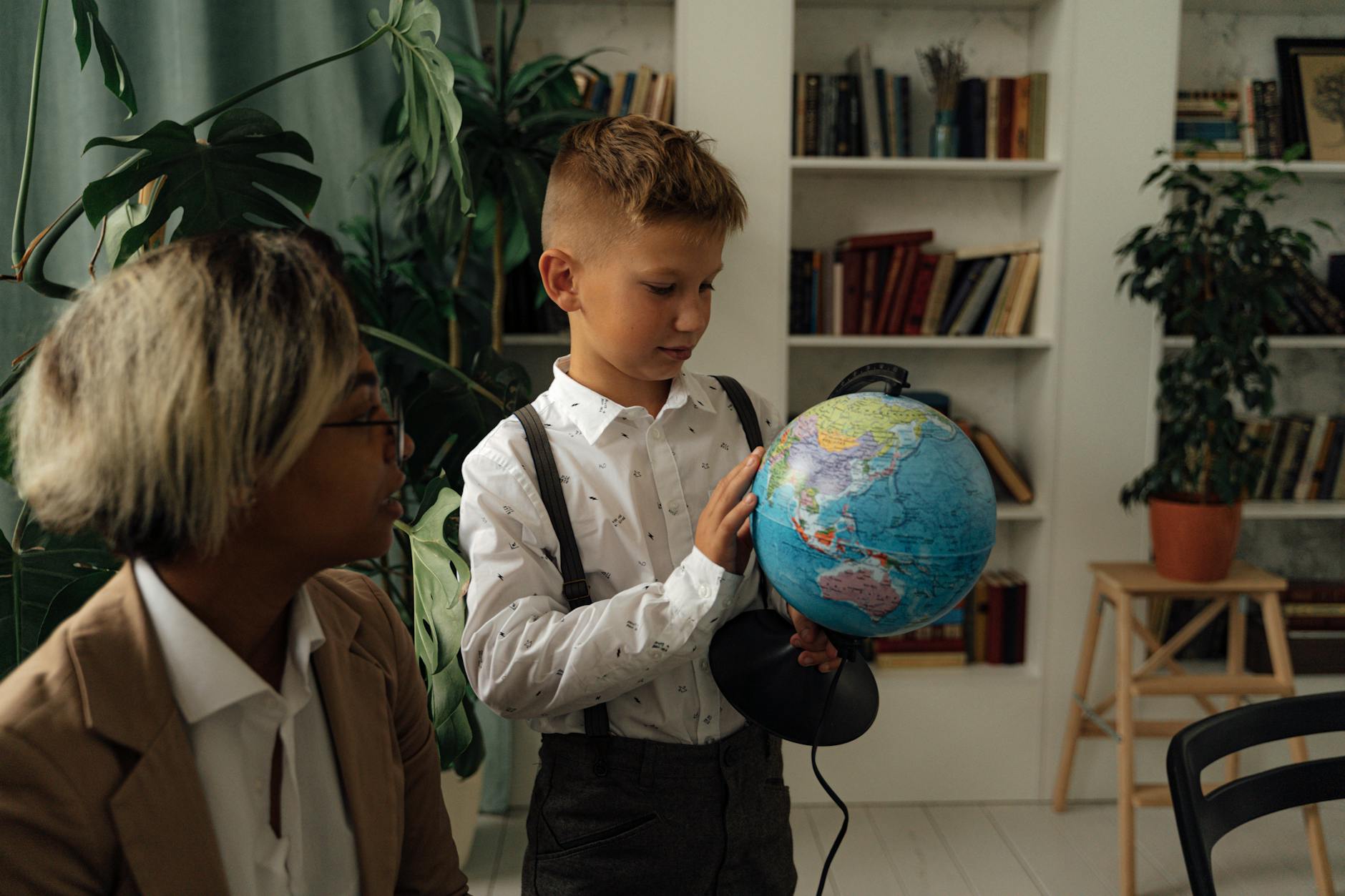
Foreign Language in Our Homeschool: What We Tried and What Actually Stuck
We tried four different approaches to foreign language before finding one that produced real retention. Here is the honest story of what failed, what worked, and why starting young is only half the answer.
A little note: Some links in this post are affiliate links. If you click through and buy something, we earn a small commission at no extra cost to you. We only ever link to things we would genuinely recommend to a friend.
In year one of our homeschool, I bought a Spanish curriculum. It was colorful, well-organized, had an audio component, and came with flashcards. My daughter did six lessons and stopped.
In year two, I tried a different curriculum. My son did four lessons and stopped.
In year three, I found the actual problem: I was treating foreign language like a subject to complete rather than a language to acquire. The distinction sounds abstract, but it is the difference between everything that has not worked and everything that has.
The Acquisition Problem
Languages are not learned by studying them. They are acquired by being exposed to comprehensible input in the target language — hearing and reading things you mostly understand, with just enough unknown to stretch you.
Stephen Krashen's input hypothesis has been around for decades and is supported by extensive research: the brain acquires language through exposure to meaningful, understandable content in that language. Direct instruction in grammar rules and vocabulary lists produces test-taking ability. It does not reliably produce communication ability.
For homeschooling parents, the practical takeaway is this: the best foreign language programs for children are the ones that maximize time spent understanding the language, not time spent studying it.
What We Tried
Traditional curriculum, Year 1. Colorful, structured, vocabulary-focused. Produced zero retention after three months.
Duolingo, Year 2. Better than nothing. My son still opens it occasionally. Has not produced any conversational ability.
Rosetta Stone. Expensive, immersive, and actually reasonably good for adults. Too much text reading and too little listening for young children. My daughter found it frustrating.
Comprehensible input via video. The turning point. We found a YouTube channel with slow, clear native speech, lots of cognates, and visual context. My daughter watched it voluntarily. She started picking up phrases within two weeks. She asked to watch it again.
What Has Actually Worked
Slow-speed native content with visual context. YouTube channels designed for Spanish learners (not children's cartoons, but slow-speech channels where a native speaker speaks clearly and supports meaning with gestures and images) have produced more retention than any curriculum we tried.
Real conversation, however brief. We found a Spanish-speaking family at our co-op. My daughter's Spanish advanced more in three months of weekly conversation practice than in two years of curriculum. There is no substitute for actual communication.
Stories before grammar. Reading simple illustrated stories in Spanish, even very simple ones, produces acquisition. The brain figures out the grammar from the patterns. Explicit grammar instruction before fluency produces very little.
Pimsleur for oral fluency. Pimsleur is audio-only, conversation-based, and built around spaced repetition. It is the program that has produced the most usable spoken language for my husband, who started studying Spanish as an adult.
Choosing a Language
Most homeschool families default to Spanish, and for families in the United States this makes practical sense. Spanish is widely spoken, there are speakers in virtually every community, content is widely available, and the language has genuine utility.
But the best language to study is often the one that intersects with something the child already cares about.
If your child is obsessed with anime, Japanese has an obvious motivational hook. If you have family roots in a specific country, the ancestral language has emotional resonance that a randomly chosen language cannot replicate. If you live near a French-speaking community or have family friends who speak French, French has built-in conversation opportunities.
Motivation and access are the two factors that matter most. A child who desperately wants to understand her grandmother's Italian and practices with a living speaker will outpace a child doing a structured Spanish curriculum with no real-world connection, every time.
We chose Spanish because we live in a city with a large Spanish-speaking population and have Spanish-speaking neighbors. That community connection has been worth more than any resource we purchased.
The Hard Truth About Starting Young
Children who begin a language before age seven acquire it with a native accent and natural fluency that older learners cannot fully replicate. This is real.
What is also real: a seven-year-old who does thirty minutes of Spanish curriculum per week and never hears the language outside of that thirty minutes will not be fluent by age twelve. Starting young matters only if the exposure is consistent and meaningful.
The families I know whose homeschooled children speak second languages well share one thing: the language appears throughout their life, not just in a lesson slot. Family movie night in Spanish. A Spanish-speaking neighbor they see regularly. A language learning app that gets opened on car trips. A pen pal. The lesson is the starting point, not the whole thing.
What About Starting Older
There is a widespread assumption that if you did not start a language in the early years, you have already lost. This is not true.
Older children and adults cannot acquire a native accent as easily. That is real. But older learners have significant advantages that young children do not: a developed understanding of language structure, the ability to use grammar references deliberately, the ability to study independently, and the metacognitive awareness to notice what they are and are not understanding.
A motivated twelve-year-old who wants to speak Spanish can make more visible progress in six months than a six-year-old in a passive exposure program. Motivation is the biggest variable at any age.
If you are starting a language with a middle school or high school student, lean into their advantages. They can use a grammar reference productively. They can work through Pimsleur independently. They can read graded readers and track their progress. They can manage a language exchange with a pen pal. You do not need to compensate for starting late. You need to teach in a way that fits their stage.
Our Current Approach
For our youngest, who is six, we play Spanish songs in the car and watch a single Spanish video on most school days. No curriculum. No flashcards. Just exposure.
For our nine-year-old, we have moved to thirty minutes of Duolingo as a baseline plus weekly conversation with our co-op family and a simple illustrated Spanish chapter book she reads with me.
For our twelve-year-old, who is actually interested, we are using Pimsleur for conversation and a grammar reference for written Spanish. She wants to be conversational. That desire is doing more than any curriculum has.
The desire to communicate is the engine. Everything else is fuel.
Common Questions
Do I need to speak the language myself? No. Plenty of families successfully use comprehensible input resources, audio programs, online tutors, and community connections without the parent being a speaker. What you do need is willingness to find and create exposure opportunities, and to not rely only on what happens during the formal lesson slot.
How much time per day is enough? Consistency matters more than quantity. Twenty minutes daily produces more acquisition than ninety minutes once a week. For young children, ten to fifteen minutes of exposure plus ambient integration (songs, videos, occasional conversation) is a solid foundation. For older children actively working toward conversational ability, thirty to forty-five minutes of focused practice makes a real difference.
What if my child refuses? This is common and worth taking seriously as information. A child who refuses foreign language consistently is often reacting to an approach that does not fit, not to the language itself. Try switching from curriculum to comprehensible input. Try making it ambient rather than formal. Try finding a community connection that gives the language a reason to exist. If none of that works, set it aside for six months and come back. Forced language instruction produces almost nothing.
Language learning is a long game — it shows up differently at different ages. If you are in the early years, strewing a few books or songs in the target language can spark an organic interest before formal instruction begins.
Written by
The High Vibe Homeschool Team
We are a homeschool family that has been doing this for seven years across three kids. We write about what we have actually tried, what failed, what surprised us, and what we would do again. No credentials. Just lived experience.
ENJOYED THIS ARTICLE?
Get more like it every week
Real homeschool life, in your inbox.
Keep Reading
More in Curriculum
 Curriculum
Math Games That Make Numbers Come Alive (Even for the Kid Who Hates Math)
My son cried at math worksheets for two years. Then we found games. Here are the ones that changed everything — no flashcards required.
 Curriculum
Living Books: What They Are and How to Find Them
Charlotte Mason's term for books that feel alive. Here's what makes a book 'living,' why it matters, and a list of the ones that have done the most for our homeschool.
 Curriculum
Teaching Writing at Home (When You Don't Feel Like a Writing Teacher)
Writing is the subject most homeschool parents fear most. Here's how we finally made it work — and the approach that produces the most growth for the least friction.